



Frequently Asked Questions
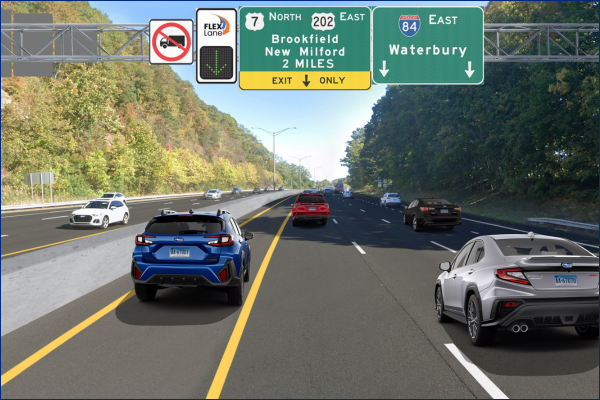
A Flex Lane is an innovative, yet proven solution to ease traffic backups during the busiest times of the day. Where a Flex Lane is used, the shoulder on the median side would be repurposed into a temporary travel lane to keep travelers moving. By repurposing the median interstate shoulder into a temporary travel lane, a Flex Lane can improve safety and the flow of vehicles on I-84.
When in operation, the Flex Lane would function like a left-hand lane on a divided, limited-access highway and would be open to all standard passenger vehicles. However, trucks, commercially registered vehicles, motor buses, vehicles with trailers, and school buses are not permitted to use the Flex Lane.
I‑84 between Exits 3 and 7 in Danbury experiences significant recurring congestion that shifts by direction depending on the time of day. For instance, traffic is heaviest in the mornings going westbound towards New York and going eastbound towards Waterbury in the evening rush hours. A dynamic lane, like the Flex Lane, would help in this area by opening when and where traffic is heaviest—during the busiest times of day and in the direction most people are traveling—to help keep traffic moving. By making better use of the existing I-84 footprint, the Flex Lane would create a more reliable, safe, and efficient experience for everyone.
Opening the Flex Lane only during the busiest times would allow cars and buses to also use the general-purpose travel lanes on I-84 more reliably, when they need it most. The Flex Lane would also support the local transportation network by providing benefits to those who may not even use I-84, by reducing the need for drivers to use local streets as workarounds for interstate delays. This includes drivers, but also bus riders and people walking and biking.
The Flex Lane on I-84 would be installed between Exits 3 and 7 in Danbury. This stretch of interstate, approximately four miles long, has been identified as a high-congestion area. The Flex Lane would be constructed within the existing right of way on the median shoulder.
The Flex Lane is currently in design and anticipated to start construction in 2028. Construction is anticipated to take 2 – 3 years.
The Flex Lane is not intended to be a full-time lane. It would be closed when the regular travel lanes are uncongested and moving.
The Flex Lane would only be used when I-84 is congested with slow-moving traffic, typically during weekday morning and afternoon rush hours in the direction where traffic is heaviest. Keeping the Flex Lane closed during the less busy times would provide a wider shoulder for other critical functions, such as maintenance, emergency response, or vehicle breakdowns.
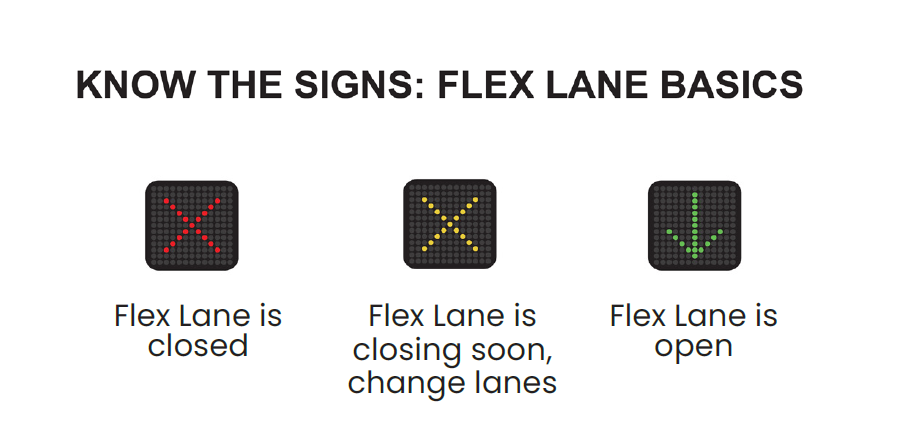
Signs over the lane would indicate when a lane is open (green arrow) or closed (red X). A yellow X means drivers should merge right, as the lane is closing soon. While the Flex Lane would be separated from the adjacent travel lane by one solid yellow line, drivers may freely enter or exit the Flex Lane any time it is open.
The right shoulder would always be available for emergency response vehicles, and the median shoulder, which is used as a Flex Lane, could be switched back to a shoulder for emergencies, when needed. A two-foot buffer would always remain between the Flex Lane and the center median barrier.
Safety is a top priority for CTDOT. Flex Lanes have been successfully implemented in other states and have proven to reduce congestion and thereby improve safety.
By improving how vehicles flow through the corridor, the Flex Lane would reduce the potential for bottlenecks and sudden slowdowns that can lead to crashes.
The right shoulder would always be available for emergency response vehicles, and the median shoulder, which is used as a Flex Lane, could be switched back to a shoulder for emergencies, when needed.
By improving how vehicles flow through the corridor, the Flex Lane would reduce the potential for bottlenecks and sudden slowdowns that can lead to crashes.
The right shoulder would always be available for emergency response vehicles, and the median shoulder, which is used as a Flex Lane, could be switched back to a shoulder for emergencies, when needed.
The Flex Lane is designed to be constructed quickly and efficiently on the existing roadway, which means fewer disruptions and faster improvements to traffic flow. Shorter construction timelines and fewer disruptions reduce risks for both drivers and workers by limiting the need for extended lane closures.
Signs over the lane would indicate when a lane is open (green arrow) or closed (red X). A yellow X means drivers should merge right, as the lane is closing soon. While the Flex Lane would be separated from the adjacent travel lane by one solid yellow line, drivers may freely enter or exit the Flex Lane any time it is open.
Yes, the lanes are designed to improve traffic flow typically during peak hours by allowing dynamic use of the median shoulders. This will help reduce bottlenecks and improve mobility during high-traffic periods.
Yes, opening the Flex Lane to improve traffic flow on I-84 during the busiest times would also support the local transportation network benefits to those who may not even use I-84 by reducing the need for drivers to use local streets as workarounds for interstate delays. This includes drivers, but also bus riders and people walking and biking.
Dynamic lanes, such as the Flex Lane, that use the inside median shoulder are now being implemented in many other states across the country, including:
- The Wisconsin Department of Transportation installed a Flex Lane on the inside median shoulders on US 12/18 (Beltline), between Whitney Way and I-39/90, in Madison.
- The Ohio Department of Transportation has successfully implemented this concept in the I-275 corridor. Please click on I-275 SmartLane for more information