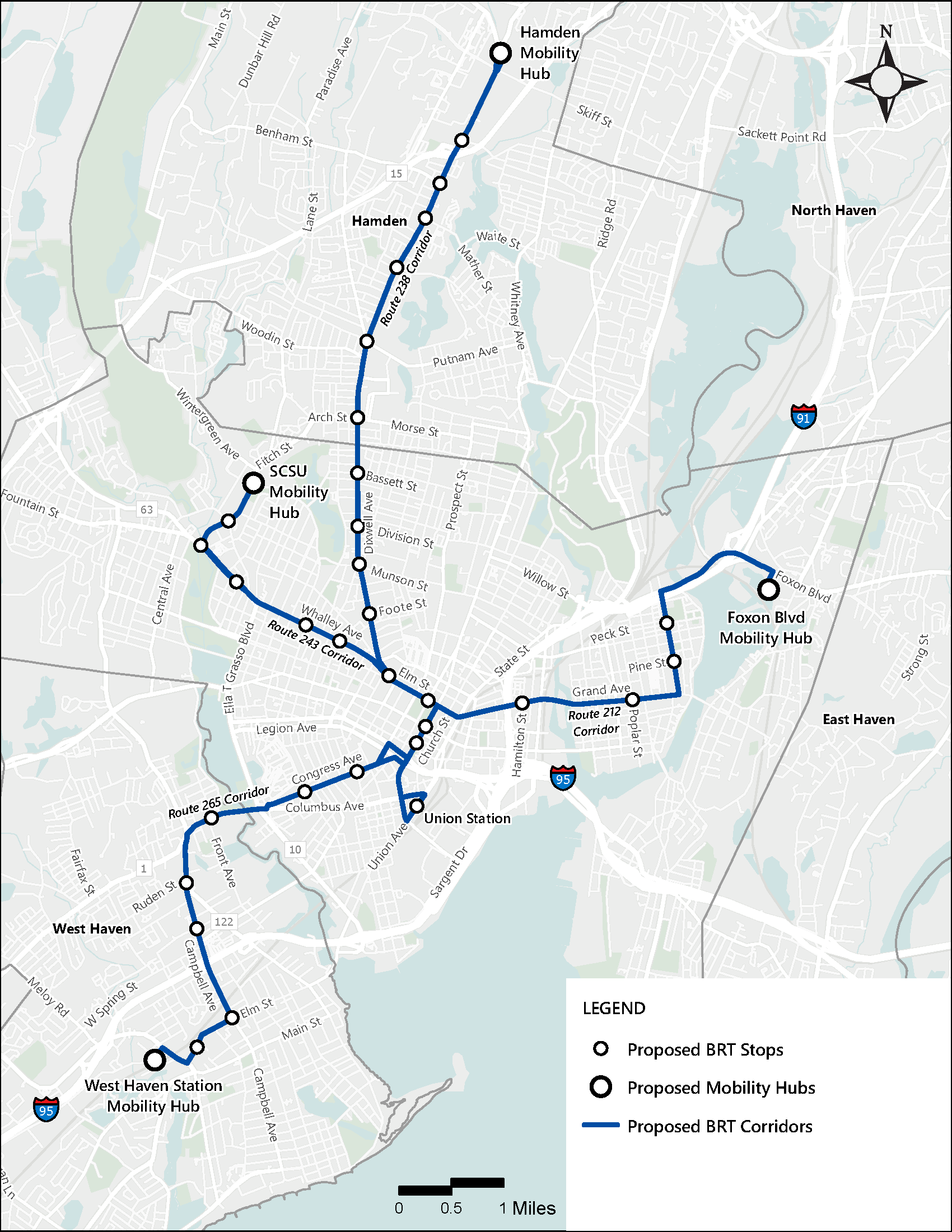
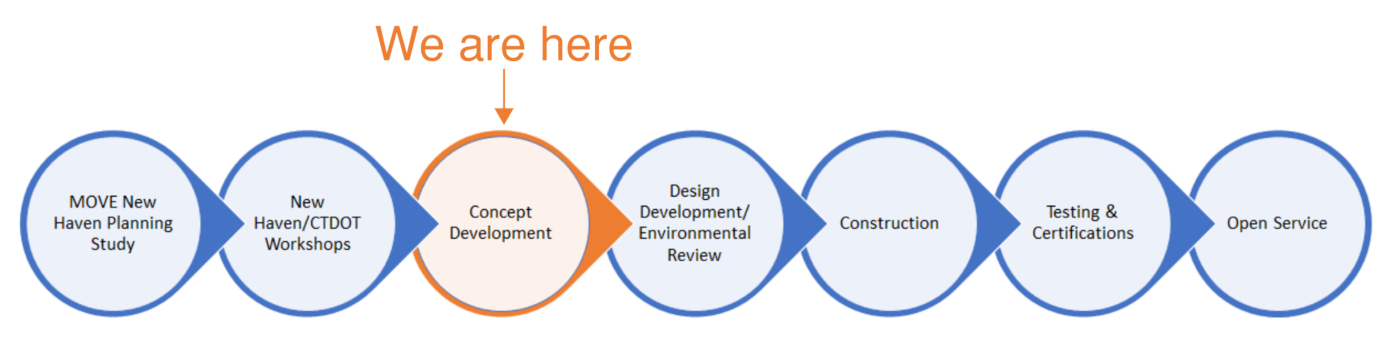
The MOVE New Haven Bus Rapid Transit (BRT) Project builds on previous efforts to identify and develop BRT service along key corridors in the CTtransit New Haven Division to improve service along the four most heavily ridden routes (212, 238, 243, and 265).
Building on the recommendations of the 2019 MOVE New Haven Transit Mobility Study, the project seeks to enhance the quality, reliability, and speed of bus service through the introduction of limited-stop, on-street BRT service while also improving the safety of all corridor users. This effort is supported by a $25 million federal RAISE grant and additional state funding, reflecting a commitment to improve bus service, infrastructure, safety, and accessibility.
The project includes dedicated bus lanes, as well as transit signal priority (TSP), upgraded signal equipment, and enhanced pedestrian safety measures. Improvements will also include BRT-branded stops with amenities, multimodal accessibility upgrades, and mobility hubs designed to facilitate transfers and accommodate electric bus charging at the end of each BRT line. These elements aim to deliver shorter travel times, improve schedule reliability, and create a safer, more accessible environment for all road users.
Building on the recommendations of the 2019 MOVE New Haven Transit Mobility Study, the project seeks to enhance the quality, reliability, and speed of bus service through the introduction of limited-stop, on-street BRT service while also improving the safety of all corridor users. This effort is supported by a $25 million federal RAISE grant and additional state funding, reflecting a commitment to improve bus service, infrastructure, safety, and accessibility.
The project includes dedicated bus lanes, as well as transit signal priority (TSP), upgraded signal equipment, and enhanced pedestrian safety measures. Improvements will also include BRT-branded stops with amenities, multimodal accessibility upgrades, and mobility hubs designed to facilitate transfers and accommodate electric bus charging at the end of each BRT line. These elements aim to deliver shorter travel times, improve schedule reliability, and create a safer, more accessible environment for all road users.