

Questions About Hunting
Why use hunters?
Licensed hunters take to the woods each year to harvest deer for food and enjoy the outdoors with friends and family (Figure 28). Most hunters are willing to help landowners who are experiencing problems with deer, free-of-charge. Harvested deer provide families with lean healthy meat for the dinner table and hides for making leather goods.
Hunters who harvest more deer than their families and friends can consume may offer venison to landowners or may donate excess venison to food charities. On average, Connecticut hunters spend $6 to $7 million annually on deer hunting-related goods and services, contributing significantly to the state’s economy.(28)
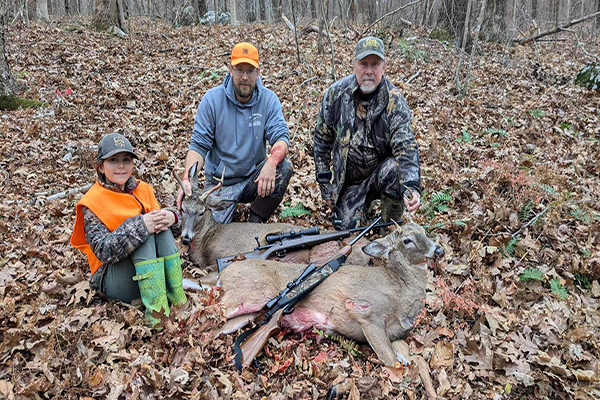
Figure 28. Hunters take to the woods to harvest deer for food, enjoy time outdoors, and spend time with family and friends.
Will hunting cause deer populations to rebound?
Removing deer from healthy populations will not increase reproductive rates of the remaining deer. Depending on the nutritional state of the doe, healthy females typically produce an average of 1.5 fawns per year. Only if a deer herd is nutritionally stressed due to lack of food will it be possible for reproductive rates to change from a suppressed level back to a normal level. Reproduction in a nutritionally stressed herd may increase to normal levels if a significant number of deer are removed and the habitat improves. However, deer reproduction physiologically cannot increase to supernormal levels to compensate for reduced deer densities.
Will hunting cause an increase in deer-vehicle accidents?
Some hunting opponents have claimed that deer-vehicle accidents are highest during fall because hunters are chasing deer through the woods and these deer are crossing roads, causing an increase in deer-vehicle accidents (DVAs). However, data show otherwise. During fall, deer naturally move more due to the shortening photoperiod, which triggers increased activity associated with the breeding season (rut), thus increasing the chance of deer-vehicle accidents. Local and state police complete and submit reports of DVAs to the DEEP Wildlife Division and Department of Transportation/The Connecticut Transportation Institute, providing data on the number of reported accidents.
During the fall firearms season, deer hunting occurs on Monday through Saturday from 1/2-hour before sunrise to sunset, and on private land only on Sundays (effective in 2025). Additionally, the Town of Westport, by special regulation, prohibits hunting within the town. If hunting activity contributed to DVAs, it would be expected that more accidents would occur on Saturday when most hunting occurs, and no increase would occur in Westport during that time. During the five-week firearms deer hunting season in November and December, Saturdays and Sundays had the lowest number of deer-vehicle accidents (Figure 29). Vehicle traffic volume was higher on weekdays and lower on weekends suggesting that traffic volume is an important factor in deer-vehicle accident rates. In Westport, 31% of DVAs still occurred during November and December between 2015 and 2023.
If hunting activity contributed to DVAs, then it would also be expected that accidents would be highest during hunting hours (1/2-hour before sunrise to sunset) when hunters are in the woods and lowest at night when hunting is prohibited. Data on time-of-day when deer-vehicle accidents occur do not support this concept. Deer-vehicle accidents actually peak about 1 to 4 hours after dark (Figure 30).
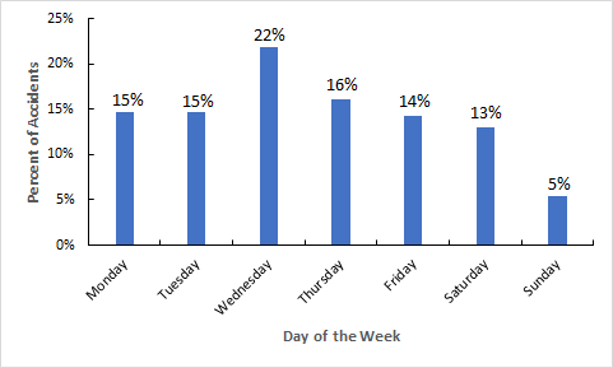
Figure 29. Deer-vehicle accidents during the 5-week firearms deer hunting season (Nov.-Dec. 2022) by day of week.
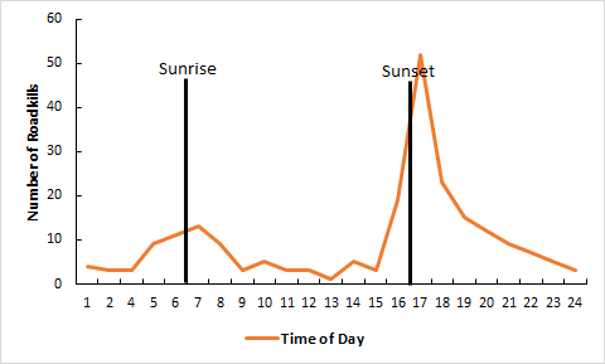
Figure 30. Number of deer-vehicle accidents that occurred in 2022 relative to time of day (24 hours).
Again, this peak closely corresponds with peak traffic volume at the end of the workday. These data suggest that vehicular traffic patterns in combination with typical deer movement patterns have a significant influence on deer-vehicle accidents.
Removing deer through hunting or other deer management techniques are effective methods for reducing deer populations, which can then lower the risk of deer-vehicle accidents.
Where can I find hunters to hunt on my property?
Connecticut issues over 40,000 deer hunting permits each year. Landowners who would like to use hunters on their property should talk to friends or neighbors who may hunt or know someone who hunts. They could also contact a local sportsmen’s club. Landowners and communities can interview hunters and select only those hunters they are comfortable with.
How much land do I need to allow hunting?
No minimum property size is required for hunting with a shotgun or bow and arrow. However, loaded firearms cannot be carried or discharged within 500 feet of an occupied dwelling while deer hunting (Regulations of Connecticut State Agencies Sec. 26-66-1d) unless written permission from the owner of the dwelling is obtained. No minimum discharge distance exists for bowhunters. A minimum of 10 acres is required for hunting with a rifle. Landowners also have the option of placing additional restrictions (beyond existing hunting laws) on hunters before allowing access to their property, such as time of day or days of the week that hunting can occur. Persons who hunt deer on private property are required to obtain and carry written consent from the landowner dated for the current year. Hunting consent forms can be found in the current Connecticut Hunting and Trapping Guide, which is available at town halls or on the DEEP website.
When can I allow hunting on my property?
Archery hunting (Figure 31) is permitted from mid-September to the end of December statewide and until the end of January in deer management zones 11 and 12 (Figure 3). The firearms season occurs from mid-November to late December.
Deer hunting is permitted from 1/2-hour before sunrise until sunset. Currently, deer hunting is allowed on Sundays on private land only. For specific season dates and hunting laws, consult the current Connecticut Hunting and Trapping Guide(5), which is available at town halls or on the DEEP website.
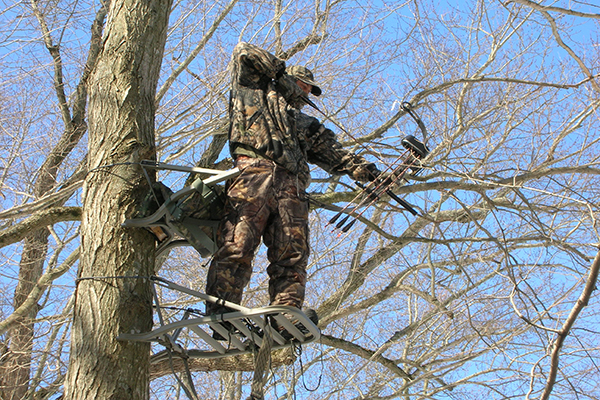
Figure 31. Archery hunting is the preferred method of hunting in developed areas. The archery season is 4 1/2 months long and there is no minimum property size requirement.
What is done with excess game?
Several organizations assist in distributing donated game meat to food charities. Since 1997, Farmers and Hunters Feeding the Hungry (FHFTH) has processed and distributed over 23 million servings of meat to food shelters throughout the United States. In Connecticut, local organizations, such as Hunt to Feed, and specific butchers accept venison donations and process meat to provide to local food shelters throughout the state. Most hunters either pay to have deer processed or butchers may volunteer their services at little or no cost. Food charities are extremely grateful for the donations they receive, and demand far exceeds supply. Hunters also enjoy sharing their harvested game with family, friends, and landowners who have an interest in trying various ways game meat can be prepared, similar to any other type of meat found in the store. The DEEP Wildlife Division, in conjunction with dedicated volunteers and trained hunter safety instructors, hold workshops annually on how to process, prepare, and cook venison for anyone interested in learning how to better use the natural resource (Figure 32).
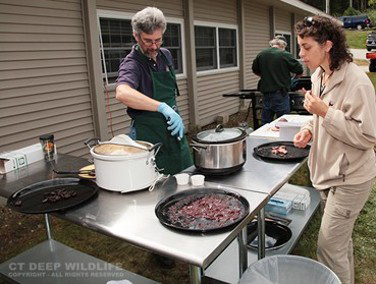
Figure 32. Wild game provides residents with the opportunity to share a local, sustainable, organic meat source at a time when some people might be facing food insecurities due to rising food costs.
Can hunters use crossbows?
Historically, crossbows were only allowed to be used in Connecticut by physically disabled hunters. Crossbows have technological advantages over traditional archery equipment, including scopes, mechanical releases, and pre-drawn arrows that are mechanically held. Crossbows are typically more powerful than traditional bows, resulting in greater arrow speed and slightly greater effective range. These advantages can increase hunter efficiency through increased range, accuracy, and precision of arrow placement.
Modern day crossbows can be used by a wider variety of hunters who may not have the physical strength to hunt with traditional archery equipment (Figure 33). They are also an effective tool for managing urban-suburban deer populations. In 2010, legislation was passed in Connecticut allowing the use of crossbows in DMZs 11 and 12 during January. In 2013, crossbows were expanded for use during the archery season on state and private land in all DMZs.
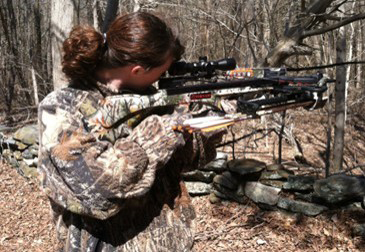
Figure 33. The technological advances of modern crossbows compared to traditional archery equipment allow them to be used by a broader group of hunters.
What about liability?
Private landowners who make land available to the public without charge, rent, fee, or commercial service for recreational purposes, such as hunting, receive protection from liability pursuant to the Connecticut Recreational Land Use Act (C.G.S. 52-557f) (Figure 34).
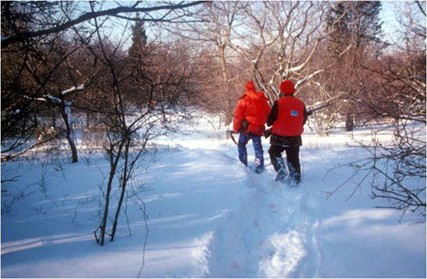
Figure 34. Hunters are required to obtain written permission from private landowners to hunt on their land and must wear 400 square inches of fluorescent orange during the firearms season.
Non-private landowners (such as municipalities) do not receive protection from liability under the Connecticut Recreational Land Use Act and may want to consult with their town attorney before allowing hunting on their property. Some towns have addressed liability concerns by requiring hunters to sign an indemnity agreement, similar to one drafted by an attorney for a town-sponsored hunt in Darien (Appendix 1).
Can my town pass an ordinance restricting hunting?
The courts have concluded that towns have no authority to regulate hunting on federal, state, or private property within their borders. This conclusion was affirmed by the Appellate Court, which concluded that local ordinances that seek to regulate hunting are illegal. Towns may restrict hunting on town-owned land only.
Ordinances that restrict or prohibit hunting on private and state-owned lands are illegal. The only exception is the Town of Westport. In 1933, Special Act 33-254 empowered the Town of Westport to determine when and where hunting could occur. Currently, a town ordinance prohibits all deer hunting within Westport’s boundaries.
How can I initiate a deer management program?
Individual homeowners, neighborhood groups, homeowner associations, and communities throughout Connecticut have initiated deer management programs due to deer problems (Figure 35). The towns of Darien, New Canaan, Redding, Ridgefield, Weston, and Wilton have appointed “deer committees” to assess the deer situation and explore options to manage the deer herds. The towns of Greenwich, New Canaan, and Wilton conducted studies to assess the distribution and abundance of deer and assess residents’ perceptions about deer and deer management. The towns of Darien, Redding, Ridgefield, and Wilton have implemented controlled deer hunting programs. Deer management is not a one-time effort and requires routine maintenance to keep populations at desired levels. Due to the support of many dedicated individuals, many of which are volunteers, these programs still continue today.
Concerned citizens interested in developing regional deer management programs should contact local officials or the Connecticut DEEP Deer Management Program at andrew.labonte@ct.gov or 860-418-5921.
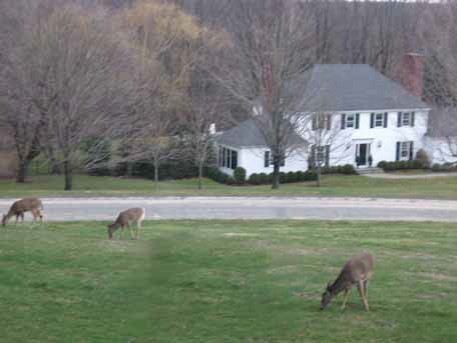
Figure 35. The DEEP Wildlife Division’s Deer Management Program has worked with communities and neighborhoods to design hunts that have safely and successfully reduced deer populations in residential areas.
Chapter 6: Examples of Special Deer Reduction Programs in Connecticut
Content last updated in August 2026.