

Introduction
Following the passage of the Deer Management Act in 1974, Connecticut established a limited, conservative hunting season to allow for use of the deer resource and for continued population growth. Not until the early 1990s, when deer populations began to rapidly increase, was the hunting season framework modified to adapt to changing circumstances and focus on the taking of antlerless deer (does) to control population growth. Liberalizations in the hunting season caused deer herd growth to begin to stabilize in rural areas of Connecticut where hunters had good access to land. However, in southwest Connecticut and the shoreline towns where hunter access was limited, deer populations continued to grow. Opportunities to harvest additional antlerless deer continued to be liberalized in these areas.
Today, conflicts between white-tailed deer and humans have become a prominent wildlife management concern, especially in urban and suburban areas.(11, 22) Overabundant deer populations are associated with high rates of deer-vehicle accidents, increased risk of contracting Lyme disease and other tick-borne diseases,(27, 35) and damage to natural plant communities and landscape plantings(52) (Figure 1).
Many communities have struggled with the difficult task of selecting a publicly-acceptable management strategy to safely and effectively reduce overabundant deer populations.(26, 35) This booklet was designed to provide communities and residents concerned about overabundant deer populations with facts about deer and deer management in urban and suburban areas.
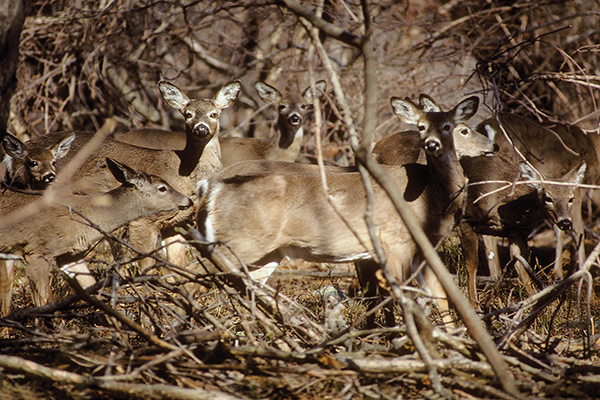
Figure 1. Overabundant white-tailed deer populations have become a prominent wildlife management concern, especially as they relate to damage to natural plant communities, tick-borne disease, and deer vehicle accidents.
Chapter 2: Consequences of Deer Overabundance
Content last updated in August 2026.