

Non-lethal Management Options
Fertility control
Fertility control agents are not widely available for managing overabundant deer populations. Options range from immunocontraception (using a vaccine that induces an immune response to block reproduction) to surgical sterilization (which involves surgically removing reproductive organs or interrupting the fertility pathway). USDA Animal Plant Health Inspection Service, Wildlife Services developed a vaccine called GonaCon™, which can cause infertility in deer and was approved by the federal Environmental Protection Agency (EPA) in 2009. GonaCon™ can be remotely delivered using a modified gun that fires a dart (Figure 14).
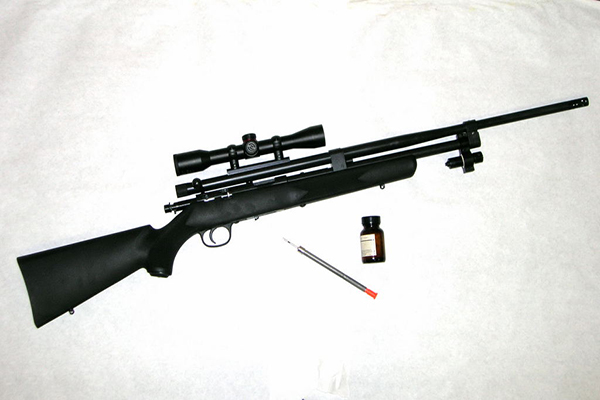
Figure 14. A dart gun is most commonly used to remotely deliver birth control agents to free-ranging deer and for chemically immobilizing deer.
A recent study in North Carolina found that deer darted with one dose had an overall efficacy of 33% and those darted with two doses had an efficacy of 86%. Although two doses of GonaCon™ was effective at reducing pregnancy, it was not successful in reducing the deer population abundance in the study area.(52)
Sterilization requires capturing animals with a modified gun and a dart containing a chemical immobilization agent. Once deer are immobilized, they are brought to an area where surgeries are performed by a veterinarian. After surgery, deer are returned to the field, given a reversal agent, and monitored (Figure 15). Both males and females have been sterilized(1), although due to the polygynous nature of males and increased concerns about their movements, sterilizing females is thought to be more effective.(1)
The most effective process is to remove the females’ ovaries, which requires only the handling the animal once in its lifetime, does not change its breeding behavior, is 100% effective, and has a very low mortality.(56) This process is not permitted as a management option in most states.
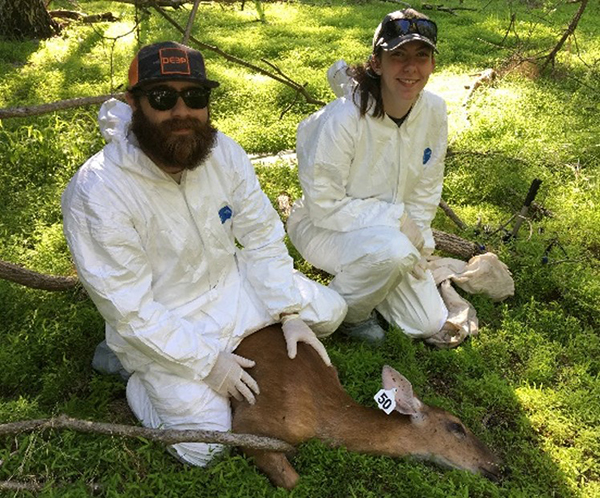
Figure 15. Immobilized female deer captured and marked as part of a research project similar to those involved in fertility control.
Summary: As of 2009, GonaCon™ was federally approved for commercial use on free-ranging deer populations in the United States. However, even after federal approval, a state permit is required prior to its use in Connecticut because DEEP regulates the application of any chemicals, including fertility control agents, to wildlife (C.G.S. 26-70). Recent increases in the efficiency of birth control agents improve the prospect for limited applications of wildlife contraception in the future. However, the cost and practicality of treating an adequate number of deer to effectively reduce free-ranging deer populations likely will limit the practical use of birth control agents ($1,000-$2,000/deer).(1, 52, 54) A survey of residents in Greenwich, Connecticut, found that most homeowners were unaware of the cost or effectiveness associated with administering birth control agents to free-ranging deer populations.(31) The high cost associated with administering birth control agents may require communities to raise funds. For birth control agents to be effective at limiting population growth, it may be necessary to first reduce deer populations to desired densities using lethal methods. Birth control may be of value on small, isolated deer populations, but will not replace hunting for controlling free-ranging deer populations on a large scale.
Capture and relocate
Capture and relocation not only requires the use of special equipment, but also a suitable location for relocating the deer (Figure 16). Studies have shown that about half of all deer captured and relocated die from capture-related stress or from wandering extensive distances after release, resulting in highway mortality.(26) Relocation can spread diseases, and cost $400 to $3,000 per deer.(20,24,25) In addition, because deer are abundant throughout most of the United States, there is no suitable location to release excess deer. Recent concerns about chronic wasting disease (CWD) have caused most states to ban the movements of live deer and whole deer carcasses. As of 2024, CWD has been documented in 36 states and 5 Canadian Provinces. CWD is always fatal, currently has no vaccines available for treatment, and, once established, is nearly impossible to eliminate. To learn more about CWD and changes in regulations pertaining to CWD, visit the Wildlife Diseases webpage or the CWD Alliance website.
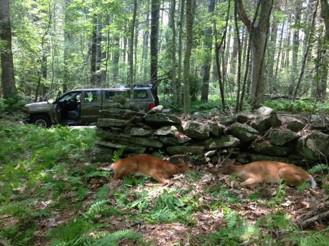
Figure 16. Trapping and relocation require special equipment and a location to release deer.
Fencing and deterrents
Many different types of fencing (electric, iron, woven wire, chain-link stockade, PVC, rubber-coated chicken wire) can be used to exclude deer from specific areas. Fencing, (8 feet high recommended) if properly installed and maintained, can be very effective in restricting deer activity around houses and reducing damage to individual plantings (Figure 17). Initial costs for fencing materials and installation are substantial, and usually requires periodic maintenance.
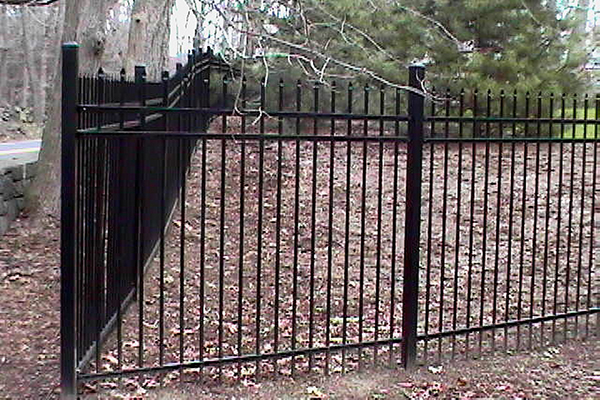
Figure 17. One example of fencing that can be used by homeowners to reduce deer impacts is the iron fence. However, deer can jump up to 8 feet, so fencing height is important as deer may end up impaled by the iron spikes.
Many different types of taste and odor repellents can be purchased commercially, or they can be made at home to reduce costs and deer damage to plantings. Generally, repellents are relatively effective at low deer densities but become less effective as deer densities increase. Repellents vary in cost, are labor intensive, have varying degrees of effectiveness, and will require multiple applications (Figure 18). Repellents are also ineffective at deterring antler rubbing by male deer. Not all repellents will perform equally, and additional investigation will be required to determine which ones are most suitable for application.
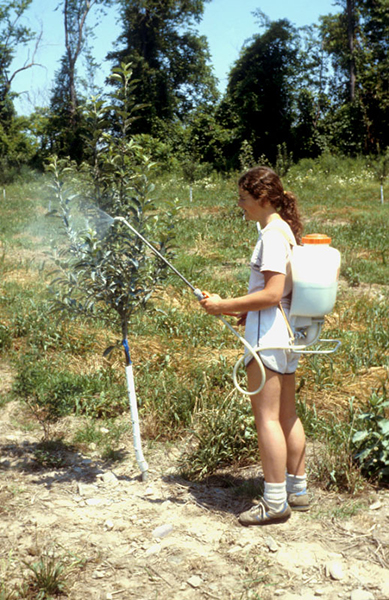
Figure 18. Several different types of deterrents (taste, sound, or noise) are available to reduce deer damage to plantings.
Recently, ultrasonic devices have been used as an alternative to standard fencing and repellents. The detection of motion often triggers the emission of sound waves at frequencies inaudible to humans but disturbing to deer (Figure 19). Sound configurations on devices need to be adjusted frequently to minimize the likelihood of deer habituating to one particular sound. To date, only one scientific study evaluated the effectiveness of one of these devices and found it had limited success.(15) Fencing, repellents, and ultrasonic devices provide varying degrees of success at protecting specific areas from deer damage; however, they do not address the underlying problem of there being too many deer.
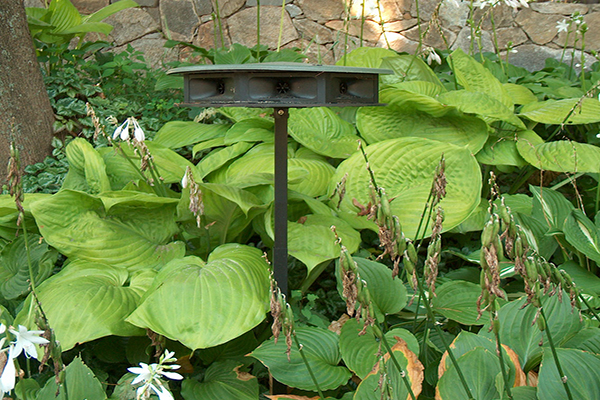
Figure 19. Motion-activated ultrasonic devices emit high-frequency sound waves to deter deer as an alternative to standard fencing and repellents.
Deer resistant plants
Deer preferences for specific plants vary seasonally and geographically. Deer are considered generalists; however, they do have preferences for certain plant species. When deer populations are low and food is abundant, deer select more desirable plant species. As deer populations increase, or food becomes less available, less-desirable species will be consumed. Planting less-desirable species around homes may reduce the likelihood of damage caused by deer. In areas with high deer densities, almost all plant species are at risk. Some recommendations of less-desirable plants are black cohosh, wild columbine, wild ginger, butterfly milkweed, Pennsylvania sedge, hay-scented fern, winterberry, switchgrass, little bluestem, foamflower, and New England aster.(43) Check with your local nursery for other recommendations.
Use of a “4-poster device” to reduce ticks
A “4-poster device” consists of a supplemental feeding station with 4 rollers that apply a pesticide to kill ticks on deer as they feed (Figure 20). The “4-poster device” was patented by the U.S. Department of Agriculture, Agricultural Research Service in 2004 and became commercially available to the public to help kill ticks on deer as a means of reducing tick populations. Per the U.S. Environmental Protection Agency and the manufacturer of the tickicide, the device cannot be used within 100 yards of any home, apartment, playground, or place where children may be present without a 28- to 30-inch-high protective fence around it. Caution signs must be posted at each device, and anyone who comes in contact with the device or a treated animal is required to wear protective gloves. A limitation or concern about this device is providing supplemental feed (up to 1 ton of corn per year per device), with the cost for operating and maintaining a single 4-poster device that may exceed $10,000 (including device, corn, rollers, tickicide, signs, maintenance, and licensed pesticide operator to apply the product every 7-10 days)(44).
Studies in Lyme, Connecticut, have shown a reduction in tick populations when 4-poster devices were used.(49) However, infection rates of the remaining ticks increased, and it is unknown if the treatment of deer reduced human incidence of Lyme disease in the treatment area.(49) Studies in Stonington, Connecticut, showed a significant reduction in mean nymphal tick densities (65%) from the pre-treatment to treatment period when using 4-poster devices and, although not significant, infection rates declined 33% from pre-treatment to treatment period (CT DEEP). Similarly, mean number of resident-reported human cases of Lyme disease declined 61% from pre-treatment period to treatment period (CT DEEP). The ability to treat an adequate number of deer each year to affect tick populations will vary annually and be influenced by abundance of alternate food sources, such as acorns. DEEP permits are required for use of 4-poster devices due to the application of chemicals (C.G.S. 26-70) and may be issued experimentally on a site-specific basis. Contact the DEEP Wildlife Division for additional information at andrew.labonte@ct.gov or 860-418-5921.
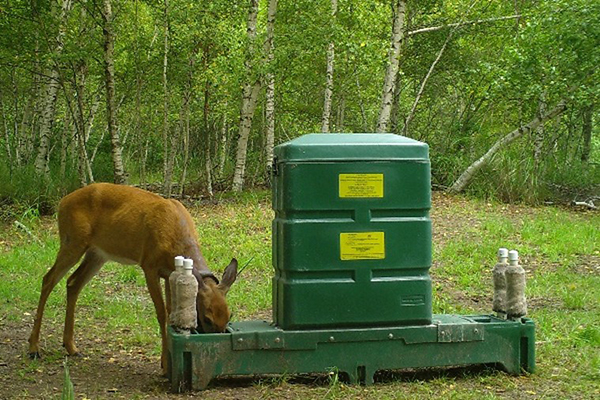
Figure 20. A "4-poster" device consists of a bait station that supplies corn to attract deer and 4 rollers that apply a pesticide to kill ticks on the deer.
Chapter 4: Herd Reduction Options
Content last updated in August 2026.