

Herd Reduction Options
Sharpshooting
“Sharpshooting” usually means hiring experienced marksmen who have special authorization from the state wildlife agency to remove overabundant deer. Sharpshooting has been successful in addressing small-scale deer problems in many states.(16, 18, 20, 27)
For sharpshooting to be successful, special equipment and techniques, such as noise suppressors, bait, and the ability to shoot deer at night with the aid of lights or night-vision equipment, are required (Figure 21). Deer harvested during sharpshooting programs often are donated to food charities. In 2003, the Connecticut General Assembly passed a bill (Public Act 03-192) that allows municipalities, homeowner associations, and nonprofit land holding organizations to use methods, such as sharpshooting, when severe nuisance or ecological damage can be demonstrated (C.G.S. 26-82). Individual landowners are not eligible under the law to implement sharpshooting programs.
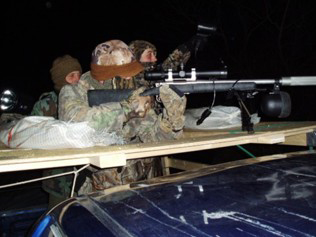
Figure 21. Sharpshooters are experienced marksmen with special equipment who have authorization from the state wildlife agency to remove deer outside the regular hunting season.
Authorization to conduct a sharpshooting program must be obtained from the Connecticut DEEP. Applicants must be experiencing severe nuisance (deer-vehicle accidents, property damage, agricultural damage) or ecosystem damage caused by deer. Applicants must prepare and submit a deer management plan to the DEEP for review and approval. Specific qualifications are required for individuals identified in plans as shooters. For complete details about requirements for implementing a sharpshooting program, contact the DEEP’s Deer Management Program at andrew.labonte@ct.gov or 860-418-5921.
In March 2005, the Town of Greenwich contracted sharpshooters who removed 80 deer in 4 nights at an estimated cost to the community of $646 per deer. A total of 2,400 pounds of venison was donated to the lower Fairfield County food pantry. No other town or community has implemented a sharpshooting program. However, many municipalities have opened their lands to regulated hunting as they have begun to see the value it can provide to the community.
Regulated hunting
Regulated hunting results in immediate removal of animals from the population, is cost- effective, and is the principal management tool used by all state wildlife agencies to manage free-ranging deer. Deer spend their life in a defined area called a home range. In urban-suburban areas in Connecticut, deer home ranges are relatively small (about 100 to 300 acres). Research on urban deer has shown that when deer are removed from an area, other deer will not abandon their home range to fill that void.(35, 41, 45) However, over time, young deer searching for their own home range will disperse in random directions, slowly repopulating the area. Because urban deer typically have small home ranges, hunting can produce localized reductions in deer populations.
In Connecticut, all new firearms hunters are required to take a 16-hour Conservation Education/Firearms Safety (CE/FS) course administered by the DEEP before they can purchase a hunting license. All Connecticut bowhunters are required to pass an 8-hour CE/FS bowhunting safety course before they can purchase an archery permit (Figure 22). Hunting is a carefully regulated and extremely safe activity(5) and no hunting accidents have occurred during special controlled hunts implemented in residential communities.(16, 33, 37) In many circumstances, additional hunting requirements, such as passing a shooting proficiency test, hunter interviews, and restricting hunting hours or hunting methods (i.e., archery only or hunting from tree stands), have been imposed to address specific concerns of communities (Figure 23).(16,33, 37)
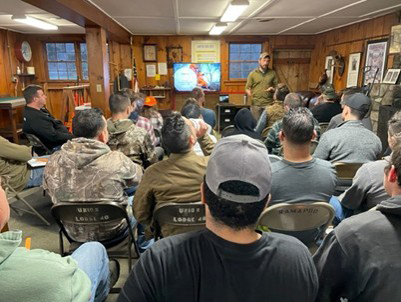
Figure 22. CE/FS class administered by one of the training officers as part of the requirements needed prior to purchasing a hunting license.
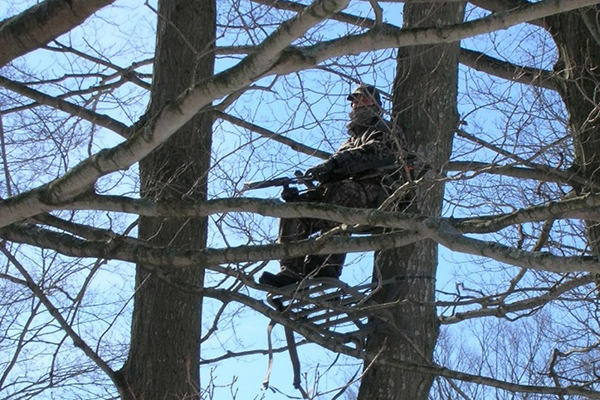
Figure 23. Hunters use tree stands to get off the ground for concealment from deer and eliminate any shot safety concerns from property owners.
The DEEP continues to liberalize the regulated deer hunting season framework to control population growth, especially in urban-suburban areas (deer management zones 11 and 12) (Figure 24, Table 1) where deer populations are high. In 1998, an antlerless replacement tag program allowed hunters to harvest unlimited numbers of antlerless deer in these management zones. The reported annual archery harvest increased four-fold during the first 6 years of the antlerless tag program (Figure 25).
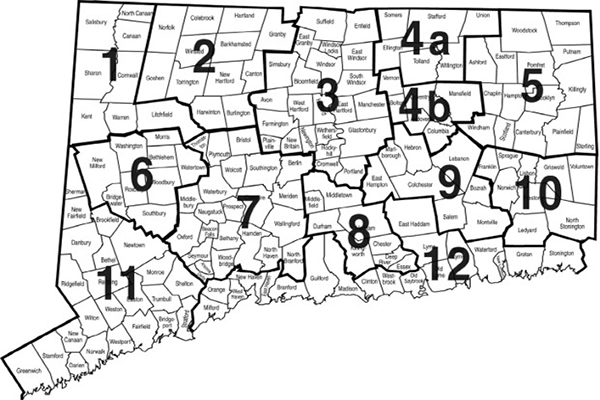
Figure 24. Connecticut Deer Management Zones, 2025.
Table 1. Bowhunting opportunities statewide and in management zones 11 and 12.
| Bowhunting Opportunities | Statewide | Zones 11 and 12 |
|---|---|---|
| Minimum Property size |
No | No |
| Minimum distance from house |
No | No |
| Hunter safety course required | Yes | Yes |
| Landowner permission required |
Yes | Yes |
| Archery season length |
9/15-12/31 |
9/15-1/31 |
| Sunday hunting (private land) | Yes | Yes |
| Crossbow | Yes | Yes |
| Use of bait | No | Yes |
| Unlimited antlerless tags | No | Yes |
| Earn-a-buck program | No | Yes |
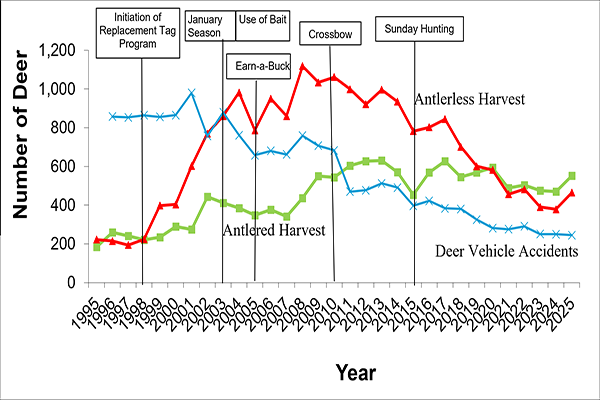
Figure 25. Comparison of trends in deer vehicle accidents and the antlered and antlerless deer harvests during the archery deer season in Deer Management Zone 11, 1995-2025.
Removal of antlerless deer (primarily adult females) is the most effective method for reducing population growth. In 2002, the archery season in deer management zones (DMZs) 11 and 12 was extended to include the month of January and, in 2003, hunters were allowed to hunt over bait (private land only).
Using bait during the hunting season increases hunter ability to position deer for better shot placement, shooting safety, and hunter success (Figure 26). In 2005, hunters could "earn-a-buck" after harvesting 3 antlerless deer during the same season in DMZs 11 and 12. In 2010, hunters were allowed to use crossbows in January in DMZs 11 and 12 and use was expanded statewide in 2013. In 2015, Sunday hunting on private land was allowed in DMZs 11 and 12 and expanded to all zones in 2018.
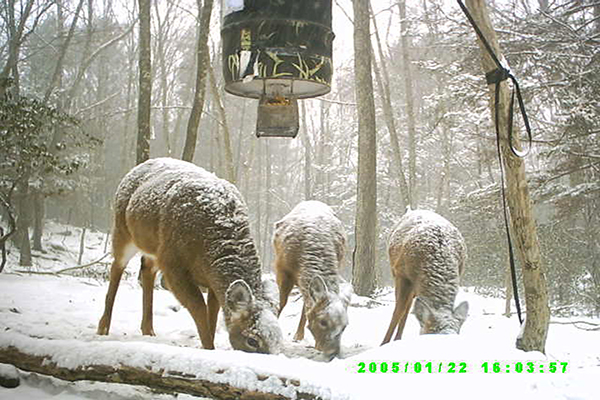
Figure 26. Use of bait increases the ability to position deer for better shot placement, shooting safety, and hunter success.
A survey of deer hunters in Connecticut found that the opportunity to earn an additional buck tag was an important incentive for hunters to harvest additional antlerless deer.(30, 31) Based on this information, the Earn-a-Buck Program was initiated to provide hunters an incentive to harvest additional antlerless deer. After harvesting 3 antlerless deer from DMZs 11 or 12 during the same hunting season, hunters were eligible to receive an extra either-sex tag that allows a buck to be harvested. These liberalizations have increased the harvest of antlerless deer, slowing down population growth while reducing deer vehicle accidents substantially (Figure 25). The DEEP Wildlife Division continues to monitor harvest trends and develop innovative strategies for controlling deer population growth.
Controlled Hunts
Controlled deer hunts are specialized hunts tailored to meet the needs and objectives of landowners.(20, 21) They have been implemented by conservation organizations, communities, and towns throughout Connecticut. Controlled hunts usually include restrictions imposed by the landowner, such as limiting hunter numbers, restricting days or times for hunting, requiring shooting proficiency tests, and strategically distributing hunters on the property, often in elevated tree stands.(40)
In some cases, homeowner’s associations have waived the 500-foot firearms discharge ordinance to allow more efficient access for removing deer during the hunt (Figure 27).(33) The DEEP can provide technical assistance to large landowners in developing effective controlled hunt programs.
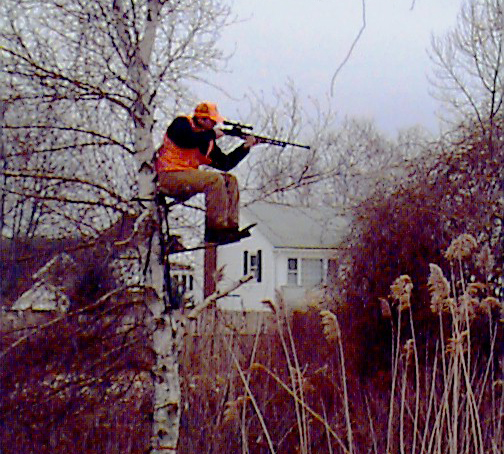
Figure 27. Controlled hunts are special hunts designed to meet the needs and objectives of landowners.
Chapter 5: Questions About Hunting
Content last updated in August 2026.