
Environmental Justice
DEEP reinforces our commitment to Environmental Justice and supports equitable access to our energy and environmental permit processes and programs through Goals 7, 8, and 19.

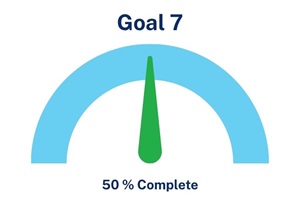
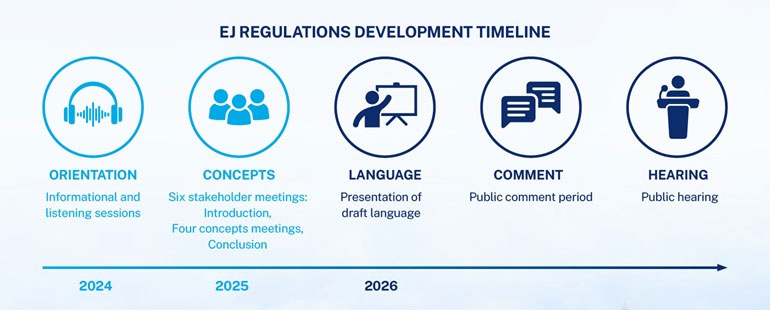
Goal 7 of 20BY26 reinforces our commitment to Environmental Justice (EJ) by guiding DEEP’s work drafting regulations to implement the Legislature’s mandates in Public Act 23-202. This statute increased the public participation requirements for applications for DEEP permits and, for the first time, authorized the Commissioner to consider the cumulative impact of existing health and environmental stressors in an EJ community when evaluating certain permit applications. DEEP will engage community members from the outset of regulations development, resulting in a new set of rules to protect our most vulnerable communities. Background on this goal is presented in DEEP’s 20BY26, Setting the Target: CT DEEP 2026 Goals (February 2024).
 Latest Progress (as of April 1, 2026)
In Q1 2026, DEEP, alongside our consultant, Industrial Economics Incorporated (IEc), convened the Mapping Advisory Committee (MAC), composed of state agencies, academic institutions, EJ community representatives, and researchers to advise DEEP in identifying appropriate datasets and methodologies for calculating cumulative impacts. In February 2026, IEc led an orientation with the MAC that provided an overview about DEEP’s regulatory authority and why cumulative impacts regulations matter and how this tool will assist permit applicants and agency staff. Additionally, IEc facilitated a discussion about the methodology for calculating cumulative impacts and a potential geographic point of comparison, both of which are necessary to determine whether a location may be cumulatively impacted and thus subject to permit conditions. In March 2026, IEc presented the draft webpage design and data quality objectives, which will be used to determine which datasets can be incorporated into the tool. These meetings have increased collaboration between DEEP and other state agencies including, the Department of Labor, Office of Policy and Management, Department of Economic and Community Development, Department of Housing, and Department of Public Health.
 Up Next
DEEP and IEc will continue developing the tool and the regulations determining the use of the tool as a part of DEEP’s permitting process.
- Webpage: Environmental Justice Law Regulations Development
- Email List: Environmental Justice Regulations email list subscription form
GOAL 7 PROGRESS FROM PREVIOUS QUARTERS
Fall 2025
In Q4 2025, DEEP continued working with their consultant, Industrial Economics, Inc. (IEc) to develop the new Cumulative Impacts (CI) Tool, which will provide transparency and accessibility for industry and community stakeholders to implement key permit requirements for cumulative impacts assessments. DEEP and IEc specifically focused on different methodologies to calculate cumulative impacts that would work best for stakeholders in Connecticut.
Summer 2025
In Q3 2025, DEEP continued its work to draft regulations that will incorporate cumulative impacts (CI) assessments into DEEP’s permitting framework. Staff from the Air Bureau and the Waste Engineering and Enforcement Division provided substantive input on the appropriate points within the permitting process for consideration of CIs.
In parallel, DEEP began evaluating circumstances under which public health or socioeconomic stressors may necessitate expertise beyond DEEP’s charge. Staff met with the Department of Public Health to explore opportunities for inter-agency collaboration.
Throughout the summer, DEEP continued its partnership with Industrial Economics, Incorporated (IEc) to advance the development of the CI tool that the Legislature required and associated methodology. Within IEc, separate teams are focusing on (1) identifying and evaluating analytical tools and approaches for quantifying and comparing CI, (2) developing the underlying software and a user-friendly web interface, and (3) coordinating the Mapping Data Advisory Committee through a subcontract with Illume Advising.
Spring 2025
DEEP continues to develop the framework for EJ regulations by engaging key stakeholders, including regulated industries, environmental justice communities, and environmental advocates. We are happy to announce that we have begun collaborating with Industrial Economics, Inc. (IEc) on the development of the Cumulative Impacts tool that is required by statute. DEEP is required to develop a tool “for stakeholder industries and sectors to use that take account of environmental or public health stressors, including tools to help inform decisions about potential locations for proposed affecting facilities.” IEc is a leader in environmental justice mapping tools, having recently worked with EPA on updating its EJScreen tool. IEc is surveying other Cumulative Impacts tools around the country to make recommendations to DEEP on which functions and indicators to include in Connecticut’s tool. They are building on the work done by UConn CIRCA when it made Connecticut’s EJScreen tool 2.0.
Winter 2025
 DEEP continues to develop the framework for EJ regulations by engaging key stakeholders, including regulated industries, environmental justice communities, and environmental advocates. In March 2025, DEEP held 3 workshops to engage participants about what types of data are important to measure in a cumulative impacts assessment - DEEP’s Industry Working Group hosted staff from New Jersey’s Department of Environmental Protection to share what they learned from the development of their 2023 EJ regulations; DEEP convened a meeting of the Environmental Justice Program Manager from CT DPH and the Executive Director of Yale’s Center on Climate and Health to speak to the Advocates Task Force about public health and cumulative impacts; and DEEP hosted two public workshops, one virtual and the other at Housatonic Community College in Bridgeport, for about 100 people including community educators, members of the public, city councilman, members of PT Partners, and other residents.
Fall 2024
DEEP received 10 proposals and selected 1 vendor to develop 2 EJ mapping tools, including a cumulative impacts tool, starting in 2025. In November 2024, DEEP met with 20 advocates to receive feedback on the EJ Public Participation Plan presentation and worksheet. DEEP kicked off a new Industry Working Group to advise on model regulatory language. The first meeting occurred in November 2024, was attended by 38 participants, and included a discussion of takeaways from New Jersey's EJ public participation notice and engagement regulations and requirements. DEEP also held and recorded the second Public Participation Plans workshop virtually and in-person in Hartford, with over 100 participants.
Summer 2024
DEEP hosted 12 stakeholder sessions on the history of the EJ Law in CT and key regulatory concepts with a timeline for development, including meeting with the Commission on Racial Equity and Public Health. In September 2024, DEEP hosted the official kickoff meeting for regulations development, which was well attended by 90 participants. We also launched a Campaign Monitor subscription email list for EJ updates, published a webpage for regulations development materials and schedule, and established a contact email inbox at DEEP.EJrulemaking@ct.gov . DEEP also released a Request for Proposals (RFP) that closed at the end of September for a consultant to develop a cumulative impacts assessment tool to help industry comply with the upcoming new regulations.
Winter and Spring 2024
DEEP held informational sessions for stakeholder groups to introduce the rulemaking process, timeline, underlying framework, and need for the EJ regulations. DEEP partnered with Save the Sound and community EJ advocates to set up an Advocates Task Force to advise the rulemaking process.

Goal 8 challenges DEEP to learn from and incorporate all communities in its mission. This goal commits DEEP to developing tools to increase the awareness and accessibility of information about what meaningful public participation is, in accordance with Connecticut’s Environmental Justice Law’s (EJ Law), and how to get involved in the permitting process. Background on this goal is presented in DEEP’s 20BY26, Setting the Target: CT DEEP 2026 Goals (February 2024).
Latest Progress (as of April 1, 2026)
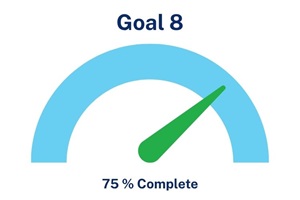
This goal is 75% complete.
In Q1 2026, DEEP finalized updates to the Affecting Facilities Map, which identifies all historical and current Affecting Facilities, as defined by CT’s Environmental Justice Law (CGS chapter 439 section 22a-20a). This map is a tool that, among other things, helps permit applicants and DEEP to determine if a Community Environmental Benefits Agreement (CEBA) is required. DEEP further improved public accessibility regarding Public Comment Hearings and Contested Case Hearings with DEEP’s new Adjudications Docket system (Goal 10).
Up Next
DEEP is working on updating guidance on the environmental justice statutes with additional guidance for Community Environmental Benefits Agreements (CEBA).
GOAL 8 PROGRESS FROM PREVIOUS QUARTERS
Fall 2025
In Q4 2025, DEEP worked on updates to the Affecting Facilities Map, which identifies all historical and current Affecting Facilities.
DEEP published FAQs about environmental justice communities to explain the datasets used to calculate environmental justice census block groups and other key concepts used in EJ laws and tools in CT. DEEP also published all available EJ public participation materials produced as part of the EJ law, including public participation plans, reports, and CEBAs, on Connecticut’s Open Data Portal to enhance public accessibility and transparency.
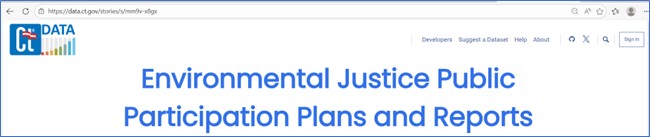
CT Open Data Portal allows users to search for current affecting facilities ("Active") or by "Town" to see approved EJ Plans, Reports, and/or CEBAs. This dataset is updated quarterly.
In addition, DEEP finalized its own internal Standard Operating Procedures (SOPs) for the Environmental Justice public participation process. The SOPs provide clear and consistent guidance to staff—from the initial notification to permit applicants of the public participation requirement through review and approval of public participation reports.
Summer 2025
In Q3 2025, DEEP achieved significant progress for Goal 8 by updating the list of Affecting Facilities located within Environmental Justice (EJ) communities and compiling a new inventory of Affecting Facilities located outside EJ communities. This enhanced dataset provides a more comprehensive understanding of the geographic distribution and concentration of Affecting Facilities statewide. DEEP’s Air Bureau and Waste Engineering and Enforcement Division (WEED) conducted data quality assurance on this dataset, as it will serve as the foundation for the improved version of DEEP’s Affecting Facilities Map .
DEEP continues to digitize and organize EJ public participation materials, including public participation plans, reports, and Community Environmental Benefits Agreements for upload to Connecticut’s Open Data Portal.
Spring 2025
DEEP continues work on digitizing EJ Public Participation Plans and Reports that will be uploaded to CT Open Data Portal to broaden public access. DEEP is also working with the Office of Adjudications to incorporate environmental justice concerns in the Office of Adjudication’s procurement of docketing software.
Winter 2025
DEEP is working to upload EJ Public Participation Plans and Reports to CT Open Data Portal to broaden public access.
Fall 2024
DEEP held a December 2024 stakeholder workshop for EJ rulemaking that covered public participation (described above in Goal 7).
Summer 2024
DEEP digitized all EJ public participation plans, reports, and Community Environmental Benefit Agreements produced pursuant to CGS section 22a-20a and developed a tracking protocol for these documents.
Winter and Spring 2024
DEEP’s Office of Equity and Environmental Justice, along with its permitting and programmatic partners, created new guidance on public participation requirements in CT's EJ Law and a webpage on how to participate in the permitting process.

Through Goal 19 of 20BY26, DEEP will establish Community Resource Hubs, through multi-year contracts in partnership with qualified organizations to serve in urban and rural Environmental Justice (EJ) communities across the state. This initiative is part of DEEP’s broader mission of ensuring equitable access to environmental and energy programs, grants, and services, particularly in communities historically overburdened by environmental challenges. Background on this goal is presented in DEEP’s 20BY26, Setting the Target: CT DEEP 2026 Goals (February 2024).
Latest Progress (as of April 1, 2026)
 This goal is 25% complete.
In Q1 2026, DEEP began working on the contract negotiation process with the vendor.
Up Next
More information to come.
GOAL 19 PROGRESS FROM PREVIOUS QUARTERS
Fall 2025
In Q4 2025, DEEP selected a vendor for the pilot Community Resource Hub.
Summer 2025
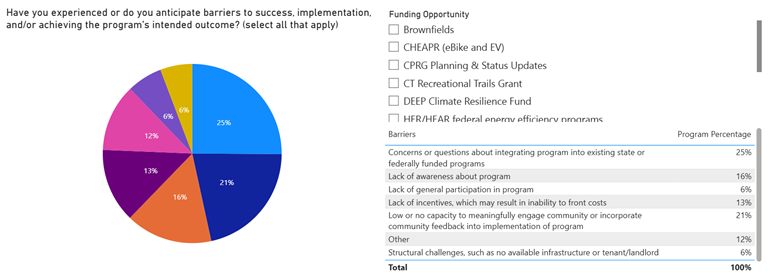
In Q3 2025, DEEP made substantial progress toward establishing the pilot phase of the Community Hubs Program, including completing finalist interviews and reference checks for Hub candidates. In parallel, DEEP advanced program administration by posting the position for a Durational Program Manager / Community Resource Hubs Senior Policy Advisor to oversee implementation of the Hubs initiative, manage vendor contracts, evaluate program performance, and advise DEEP leadership on strategies to strengthen community engagement and equity across agency programs. DEEP also developed a program dashboard that will assist in coordinating agency efforts and inform data-driven implementation of the Hubs model. The dashboard provides an interactive look at DEEP’s various programs, perceived barriers, and community engagement metrics.
Spring 2025
 DEEP worked with Emerald Cities Collaborative (ECC), a national nonprofit organization focused on economic and climate justice matters. As we previously reported (see Winter 2025), DEEP worked with ECC to assist the Hubs team in developing key internal resources and collaboration for helping Hubs engage communities in DEEP programs. ECC presented the results of their programmatic survey to the Goal 19 team in April 2025. Additionally, the ECC team conducted 3 Multifamily Affordable Housing Roundtables with DEEP’s BETP team to engage developers, landlords, residents, and housing advocacy organizations to learn what are the barriers to and their solutions for integrating energy efficiency into multifamily affordable housing in the state. These roundtables took place in June 2025 and resulted in ideas that DEEP is hoping to integrate into future programs.
The RFQ review team evaluated the five applications that DEEP received for Community Resource Hubs and made final recommendations.
Winter 2025
DEEP released the Community Hubs Request for Qualifications (RFQ) on January 15, 2025.
In February 2025, DEEP hosted an informational session and a Meet and Greet over Zoom. About 50 participants from across Connecticut’s 8 counties joined the meeting to learn more about the RFQ and how their proposals will be evaluated. The Meet and Greets were a great success in facilitating discussions between eligible entities and sparking collaboration on Hub applications! DEEP also created a Community Hub Clearinghouse, a database for interested applicants to the Community Resource Hubs RFQ. Staff were able to use the information from the database to facilitate potential partnerships between organizations and to connect with organizations who provide technical support.
In March 2025, DEEP received 5 complete proposals for the Hub initiative and began its review. The evaluation committee for this RFQ included at least one staff from each bureau across the agency and a member of CEEJAC. Additionally, DEEP worked with Emerald Cities Collaborative (ECC) to assist the Hubs team in developing key internal resources and collaboration for helping Hubs engage communities in DEEP programs. ECC surveyed DEEP’s programmatic staff on urban forestry, energy efficiency, and clean vehicles to learn more about existing community engagement, key barriers, and expectations.
Fall 2024
DEEP launched its Community Hubs webpage and released a Public Notice and Draft Request for Qualifications (RFQ) to solicit public feedback on the initial design and evaluation of potential applicants in October 2024. We conducted 2 public meetings, solicited feedback from CEEJAC, and then held public office hours to answer any specific questions and receive additional public comments.
Overall, DEEP received 10 formal written responses to the draft RFQ and received more comments during the public meetings. DEEP worked to transform the comments into a final draft RFQ based on public feedback and provided a technical assistance clearinghouse to connect potential applicants with each other. DEEP required Letters of Support as a part of all applications to address public concerns about an organization’s level of involvement with the EJ Community.
Summer 2024
This stakeholder-suggested goal was launched in August 2024. DEEP developed a short concept paper to capture the goals and potential services Community Hubs could provide and began developing a draft Request for Qualifications (RFQ) to be released for extensive stakeholder comment and engagement before being finalized. The Hubs concept was presented to the Connecticut Equity & Environmental Justice Advisory Council (CEEJAC) in June 2024.
Content last updated July 2026.