

Materials, Energy and Transportation
Electricity Zero-Carbon Energy Solar PV Transportation
Waste Diversion

In 2023, (most recent data available) approximately 41.1 percent of the state’s solid waste was diverted* from disposal. The amount (tonnage) of solid waste diverted in 2023 was three percent lower than last year, but six percent greater than the previous ten-year average.
Approximately 1.3 million tons of the state’s solid waste were disposed of at one of the resource recovery facilities (RRF) in the state, while approximately 850,000 tons were transported out of state for disposal.69 With the closure of the Material Innovation and Recycling Authority’s RRF in Hartford in July 2022, and limited capacity for additional material at the other in-state RRFs, it is expected that the in-state capacity deficit to manage the state’s solid waste will continue in the near term.
Goal: The diversion goal of 60 percent by 2024 was established with the adoption of Public Act 14-94 and is identified in Connecticut’s 2016 Comprehensive Materials Management Strategy, The Connecticut Solid Waste Management Plan.
In 2023, approximately 497,000 tons of designated recyclables, 267,000 tons of “Other MSW Recycling”, 360,000 tons of organics, and an estimated 77,000 tons recovered through the beverage container redemption program were sent to end markets and reuse facilities or composted/digested. There was a 36 percent decline in 2023 for “Other MSW Recycling Marketed” tonnage from 2022, which is attributed primarily to the amount of recycled wood reported.70
Beverage Container Redemption
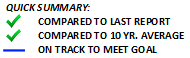
The rolling 4-quarter redemption rate in Connecticut in fiscal year (FY) 2024 was 51.6 percent, which was higher than in FY 2023 (43.2 percent), reversing the trend of decline for more than a decade.71
The redemption rate for FY 2024 was also greater than the ten-year average of 49.1 percent. In the Council’s 2020 special report, Low Deposit, Low Return, the Council recommended ways to increase the redemption rate and divert more beverage containers from disposal. Public Act 21-58 revised the beverage container redemption program with several provisions, including 1) an increase in the handling fee paid to retailers and operators of redemption centers; 2) an expansion of the types of beverages covered to include several new item categories, such as sports drinks, energy drinks, and juices, which began on January 1, 2023; and 3) an increase in the deposit amount from $0.05 to $0.10, which began on January 1, 2024.
Public Act 24-2 prohibits a person from obtaining a refund value or handling fee for any empty beverage container that the person knows or has reason to know was not originally sold in this state or that was previously redeemed.
Technical Note: *Diversion includes the reduction of materials before entering the waste stream for disposal (i.e., reuse, recycling, composting). Estimated "Diversion" is based on the 2005 baseline of 3.8 million tons, which is a planning value taken from the Solid Waste Management Plan; it is not actual solid waste generation.
—————
69 DEEP, Bureau of Materials Management and Compliance Assurance; personal communication from B. Gianetti, December 11, 2024.
70 DEEP, Bureau of Materials Management and Compliance Assurance; personal communication from B. Giannetti, December 12, 2024.
71 DEEP, Bureau of Materials Management and Compliance Assurance; CT Bottle Bill Redemption Data, accessed November 6, 2024; portal.ct.gov/-/media/deep/reduce_reuse_recycle/bottles/bottle-bill-data---aug-2024---thru-q2-2024.pdf.