

Wildlife
Piping Plovers Raptors Forest Birds State-Listed Species
Lobster and Fishes of Long Island Sound

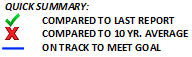
Lobster landings in the state have declined dramatically from a high of over 3.7 million pounds in 1998 to 126,729 pounds in 2023 (most recent data available). Lobster landings in 2023 increased by 26 percent from 2022 levels but was 13 percent less than the previous ten-year average.52
Researchers have investigated several possible causes for the dramatic downturn in lobster populations since 1998, including disease, changes in water quality, changes in climatic conditions and other human impacts to Long Island Sound, such as the presence of pesticides. The increase in water temperature might not negatively affect the availability of thermally suitable habitat; however, warmer temperature has been linked to the increased prevalence of epizootic shell disease, which weakens lobsters’ shells.53

The decline in lobsters was also confirmed by the Department of Energy and Environmental Protection’s (DEEP) spring and fall trawl surveys, which recorded a geometric mean of approximately 0.01 lobsters per tow (fall) in 2023 (most recent data available).
The chart above shows the mean number of fish species caught during the spring and fall surveys combined. The trends show that the average number of warm-adapted species increased while the average number of cold-adapted species decreased over time. The difference is particularly evident in the fall when water temperatures are highest. Although overall finfish diversity in the Sound remains high, the composition of the finfish community is changing in favor of species tolerant of warmer temperatures.54
Technical Note: *Data from 2010 and 2020 are missing for the marine species chart because no fall and/or spring surveys were conducted during those years. Finfish species captured in the Connecticut DEEP Long Island Sound Trawl Survey were divided into adaptation groups based on their temperature tolerance and seasonal spawning habits.
—————
52 NOAA, Annual commercial landing statistics, 1970-2023, accessed December 5 2024; www.fisheries.noaa.gov/national/sustainable-fisheries/commercial-fisheries-landings.
53 Kisei R. Tanaka, Michael P. Torre et al., “An ensemble high-resolution projection of changes in the future habitat of American lobster and sea scallop in the Northeast US continental shelf”; April 27, 2020; doi.org/10.1111/ddi.13069.
54 DEEP, Division of Marine Fisheries; personal communication from K. Gottschall February 22, 2024.