

Materials, Energy and Transportation
Waste Diversion Electricity Zero-Carbon Energy Transportation
Solar Photovoltaics

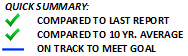
Thousands of Connecticut homes and businesses now use solar energy to generate much of their own electricity. In 2024, total installed Distributed Energy Resources (DER) solar photovoltaic (PV) capacity, for systems generally under five megawatts (MW) of capacity, exceeded 1,269 MWs at over 106,830 installations in the state.86 On January 1, 2022, the new Residential Renewable Energy Solutions (RRES) program replaced the previous net metering and Residential Solar Investment Program, administered by the Green Bank, for residential renewable energy projects. The RRES program offers those with residential solar installations the opportunity to sell the energy produced and the renewable energy certificates (RECs) at a fixed 20-year price by selecting one of two incentive rate structures (tariffs).
The primary advantage of solar PV technology is that it produces electricity with zero emissions – no air pollution, wastewater, or significant noise at the point of electric generation. The 1,269+ MW of installed PV DER capacity in the state in 2024 is estimated to have produced more than 1.6 million megawatt-hours (MWh) of electricity, which could potentially have displaced over 432,000 metric tons of carbon dioxide equivalent (CO2e) emissions.87 The Independent System Operator for New England (ISO-NE) projects that a total of approximately 3,100 MW of solar PV DER capacity could be installed in Connecticut through 2034.* 88
Public Act 24-31 included provisions to expand and study solar facility deployment in the state, by authorizing more capacity, subject to funding, for the Non-Residential Energy Solutions (NRES) program and the Shared Clean Energy Facility (SCEF) program and requiring DEEP to include information on the potential siting of solar projects in the state in its next Integrated Resource Plan.
An issue with land-based solar PV installations, primarily utility scale installations, is the impact such development has on farmland, forests, shrublands, and the species that inhabit these ecosystems. As a result of citizens’ concerns regarding the proliferation of land-based solar PV systems in Connecticut, the Council issued a special report in 2017, Energy Sprawl in Connecticut, that identified deficiencies in state policy regarding the selection and siting of land-based PV installations and made recommendations to ensure prime farmland and core forest habitats were better protected. In response to citizen concerns, Public Act 17-218 requires certain solar PV projects, such as those with a proposed capacity greater than two MW that seek approval from the Connecticut Siting Council (CSC) by Petition for Declaratory Ruling, to acquire written confirmation, from the Departments of Agriculture and Energy and Environmental Protection that the subject proposal would not “materially affect” the status of such land as prime farmland or core forest. In 2024, there were 20 proposals for solar projects submitted to the CSC; twelve of those projects were exempt from the provisions of Public Act 17-218.89
Energy Storage
To more efficiently manage electricity generated by intermittent renewable generation and to improve energy management and reliability, Public Act 21-53 requires the state to develop and implement one or more programs, and associated funding mechanisms, for electric energy storage resources connected to the electric distribution system. In 2022, the Connecticut’s Public Utilities Regulatory Authority (PURA) launched a statewide energy storage program (Energy Storage Solutions) for all Eversource Energy and United Illuminating (UI) residential, commercial, and industrial customers. The nine-year program, administered by the Connecticut Green Bank along with Eversource and UI, is expected to continue through at least December 31, 2030. In 2024, approximately 209 MWh of energy storage capacity was approved/completed throughout Connecticut. The approved/completed capacity for the period 2022-2024 was approximately 380 MWh,90 which is estimated to be enough capacity to provide approximately 404,000 residential customers with electricity for one hour.
Goal: Connecticut General Statutes Section 16-243cc identifies three goals for the deployment of energy storage systems in Connecticut: 1) 300 MW by December 31, 2024; 2) 650 MW by December 31, 2027; and 3) 1,000 MW by December 31, 2030.
Technical Note: *Distributed Energy Resources (DER) refers to any generator or energy storage facility located on the distribution system, any subsystem thereof, or behind a customer meter that is capable of providing energy injection, energy withdrawal, regulation or demand reduction.
—————
86 ISO-New England, Distributed Generation Forecast Working Group, December 2024 DER Photovoltaic Interconnection Data Update, February 10, 2025; www.iso-ne.com/static-assets/documents/100020/dec_2024_der_pv_installations.pdf.
87ISO-New England, 2023 ISO New England Electric Generator Air Emissions Report: Appendix, October 16, 2024; TABLE 3.2; www.iso-ne.com/static-assets/documents/100016/2023-air-emission-report-appendix-20241016.xlsx.
88 ISO-New England, 2023 Photovoltaic (PV) Forecast, slides 34 and 43, October 16, 2024; www.iso-ne.com/static-assets/documents/100016/2023-air-emission-report-20241016.pdf.
89 Connecticut Siting Council, Decisions and Pending Matters; portal.ct.gov/CSC.
90 Energy Storage Solutions Performance Report, slide 10 of 19, accessed 2-5-2025; energystoragect.com/ess-performance-report/.