


Taxon Overviews
Select from the following species groups for an overview of status and conservation progress in Connecticut from 2015 to 2025: Amphibians and Reptiles | Birds | Fish | Invertebrates | Mammals | Plants
Amphibians and Reptiles
Amphibian and reptile populations are declining worldwide (Gibbons et al., 2000; Araujo et al., 2006; Alroy, 2015), with amphibians and reptiles representing the most threatened of all vertebrate groups globally (Cordier et al., 2021; Luedtke et al., 2024). While habitat degradation and disease remain the primary threats, changing and shifting environmental conditions are emerging threat amplifiers for amphibians and reptiles, which have been and will continue to be a significant obstacle to recovery efforts for these species (Burgio et al., 2024; Lubeck et al., 2024). This is especially true for Connecticut since many of our species have restricted distributions due to being at or near their northeastern biogeographical range limits. The large number of peripheral species adds a special regional responsibility to the conservation of Connecticut’s amphibians and reptiles that may not be apparent in many range-wide reviews. These range-edge species are the ones most likely to possess the genetic adaptations that will best prepare them to respond to the challenges of shifting environmental conditions. Therefore, conservation of range-edge species may be vital to the long-term resiliency of biodiversity in our region and beyond (Lesia and Allendorf, 1995; Fraser, 2000; Channell, 2004; Klemens et al., 2021).
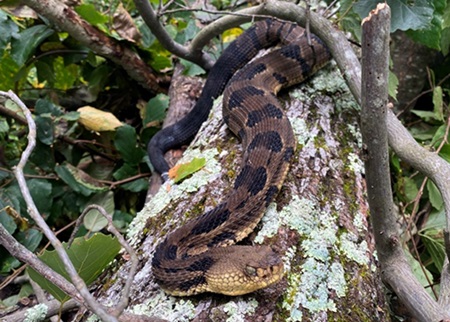
Since 2015, CT DEEP and our conservation partners have been active in conservation efforts for amphibian and reptile SGCN. The state and our partners have contributed to numerous region-wide initiatives aimed at better understanding and protecting amphibian and reptile SGCN in the Northeast. Connecticut has been collaborating with other states and regional organizations on RCN grant projects, including one focused on the conservation of Timber Rattlesnakes, Diamond-backed Terrapins, Atlantic Coast Leopard Frogs, and various terrestrial turtle species. Additionally, Connecticut has been involved in multiple Competitive State Wildlife Grant (C-SWG) funded projects, including one on snake fungal disease, as well as initiatives focused on the Wood Turtle, Bog Turtle, and Spotted Turtle. For more details, refer to the subtaxon sections for information about species-specific projects conducted in the state.
Distribution and Abundance in Connecticut
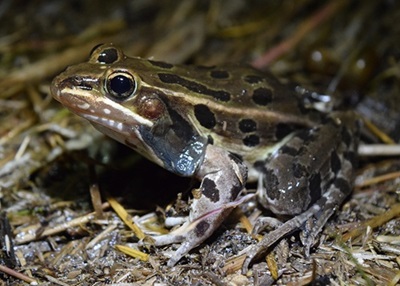
In 2021, CT DEEP published an authoritative report on the status and distribution of amphibians and reptiles in the state (Klemens et al., 2021). Overall, elevation is a significant factor shaping the distribution of amphibians and reptiles in Connecticut, leading to a greater number of species appearing in the western part of the state. The underlying bedrock geology and Pleistocene de-glaciation patterns, including the presence of glacial lake deposits, strongly influence the biogeographic range of many amphibians and reptiles in the state. Some, such as the Northern Slimy Salamander and Bog Turtle, are confined to bedrock geological formations that extend northwestward into Connecticut from much larger contiguous habitat areas to the west in New York and beyond. Other species, such as the Blue-spotted Salamander and Eastern Spadefoot, show a strong affinity to former glacial lake beds. The Atlantic Coast Leopard Frog has a coastal plain distribution, entering Connecticut via two different dispersal routes from non-glaciated coastal plain areas to the southwest.
Additionally, CT DEEP’s Natural Diversity Data Base (NDDB) provides some data on the distribution of threatened species. For other sources of distribution and abundance information, records from natural history collections worldwide, including those at the Peabody Museum at Yale and the UConn collection, have been digitized. This information can be found on the Global Biodiversity Information Facility (GBIF) and VertNet. Another valuable resource for the distribution of Connecticut amphibians and reptiles can be found on the Map of Life website. Community-science surveys (e.g., Connecticut Amphibian Monitoring Project, iNaturalist, FrogWatch USA, and UCONN’s Amphibian Tracker) have significantly contributed to our understanding of the distribution of Connecticut’s amphibians and reptiles over the past few decades. If you would like to contribute to these community-science efforts, we encourage you to explore the websites at the links above to get involved.
To find photos of amphibian and reptile species that occur in Connecticut, as well as species identification tips, visit Connecticut Herpetology.
Photos in this section, top to bottom: (1) Timber Rattlesnake (Crotalus horridus), a Species of Greatest Conservation Need in Connecticut. Photographed in Connecticut by Paul Benjunas / CT DEEP. (2) Atlantic Coast Leopard Frog (Lithobates kauffeldi), a Species of Greatest Conservation Need in Connecticut. Photographed in Connecticut by Paul Benjunas / CT DEEP.
Birds
Merriam (1877), Sage et al. (1913), and Bevier (1994) have summarized the avian diversity in Connecticut. The Atlas of Breeding Birds of Connecticut (1982-1986) identified 173 species nesting in the state, with an additional 14 species exhibiting breeding behavior (Bevier 1994). The Atlas provided distribution maps for each of Connecticut’s breeding birds, as well as a narrative account for each species with information about its migratory/non-migratory status, comparative breeding population abundance, and wintering areas in the state (Zeranski and Baptist, 1990; Bevier, 1994 and1996; and Perkins, 2001). More recently, a project led by the University of Connecticut and CT DEEP updated the Connecticut Bird Atlas, completed in 2024, and provided a systematic survey of Connecticut’s breeding birds and their distributions and abundance within the state. The most current checklist of Connecticut birds, updated annually by the Connecticut Ornithological Association (COA, 2024), includes 450 species, some of which occur infrequently, while others are only present during migration or as overwintering species.
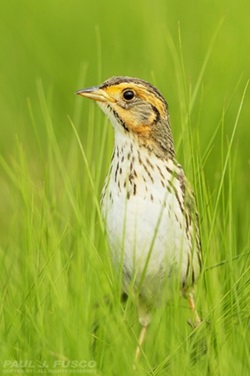
While species-specific progress is provided in each subtaxon section of Chapter 1, CT DEEP and conservation partner organizations have been active in regional conservation efforts for our states’ landbirds, taking part in many regional initiatives, including the Saltmarsh CSWG Project, serving on the Atlantic Flyway Landbird Committee, participating in the Saltmarsh Sparrow and Black Rail Working Groups, and contributing to the National Audubon Society Flight Plan.
Connecticut has contributed to local and regional monitoring efforts to expand our knowledge base and assess the status of birds in our area. This has included increasing the Motus Receiver Network to 16 towers, which helps monitor various bird species, including shorebirds and migratory landbirds. Perhaps most importantly, CT DEEP, UConn, and many of our conservation partners spearheaded a statewide effort to map the distribution and abundance of all of Connecticut’s Breeding Birds, as well as continued involvement in the National Audubon Society’s annual Christmas Bird Count and USGS's Breeding Bird Atlas programs. Over the past decade, these efforts have addressed an important data gap identified in the 2015 Wildlife Action Plan, enabling a more comprehensive assessment of Connecticut’s birds.
The state and our conservation partners have also been active in developing public awareness surrounding bird mortality from window-strikes and artificial lighting. The Lights Out Connecticut initiative is an example of this. This initiative has helped create and provide outreach materials, led to a new state statute (HB 6607) in 2023 to eliminate unnecessary nighttime lighting on state-owned buildings, and resulted in ongoing efforts to pass local ordinances to reduce artificial lighting.
Distribution and Abundance in Connecticut
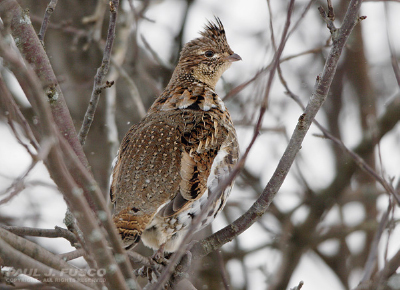
Bird populations have been declining rapidly over the last 30 years, with estimates suggesting that 29% of the total abundance (~3 billion birds) has been lost since 1970 (Rosenberg et al., 2019). With 20% of Connecticut’s bird SGCN showing a long-term decline of over 90% and over half of all SGCN declining, Connecticut’s birds follow the same patterns of abundance loss as birds worldwide. Given the importance of birds in providing pollination, seed dispersal, and many other ecosystem services, identifying the most significant threats to birds (Chapter 3) and the actions we can take to protect them from further decline (Chapter 4) are vital. Birds represent one of the world's most studied groups of organisms, primarily due to their relative ease of study, as they are mostly active during the day and are conspicuous, making them of public interest. Despite long-term population trends being unknown for 78% of all SGCN, only 19% of bird SGCN remain unknown (but many SAPS are still unknown); however, this still highlights a need for more research, even in this relatively well-studied group.
Additionally, like other taxa in the state, CT DEEP’s Natural Diversity Data Base (NDDB) provides some data on the distribution of threatened species. For other sources of distribution and abundance information, records from natural history collections worldwide, including those at the Peabody Museum at Yale and the UConn collection, have been digitized. This information can be found on the Global Biodiversity Information Facility (GBIF) and VertNet. Another valuable resource for the distribution of Connecticut’s birds can be found on the Map of Life website. Bird distribution information can also be found in various community science applications and websites, including eBird andiNaturalist. If you want to contribute to these community-science efforts, we encourage you to explore the websites linked above to become involved.
Photos in this section, top to bottom: (1) Saltmarsh Sparrow (Ammospiza caudacuta), a Species of Greatest Conservation need in Connecticut. Photographed by Paul Fusco / CT DEEP. (2) Ruffed Grouse (Bonasa umbellus), a Species of Greatest Conservation Need in Connecticut. Photographed by Paul Fusco / CT DEEP.
Fish
Connecticut’s warmwater fisheries are important to the state’s overall angling activity. Anglers spend approximately 3.3 million trips per year fishing for Largemouth Bass and Smallmouth Bass (2.1 million trips/year), and 1.2 million trips/year fishing for other warmwater species such as Northern Pike, panfish, Walleye, and catfish. Our diverse coldwater fisheries attract many anglers, particularly those interested in trout fishing. Many coldwater fish are stocked for recreational fishing every year. Annually, trout are stocked in 200 Connecticut rivers and streams and over 100 lakes statewide. Many high-quality streams also have productive wild trout populations. Nevertheless, stocking Brook, Brown, Rainbow, and Tiger Trout, broodstock Atlantic Salmon, and Kokanee Salmon fry across the state, along with the monitoring of fry and fingerling stocking in many locations, comprises a statewide stocking program that enhances recreational freshwater fishing opportunities in Connecticut.
Connecticut's Long Island Sound and its tributaries support a wide variety of marine life, which attracts over 125,000 licensed anglers and sustains a total recreational fishery of more than $100 million and a commercial fishery of more than $80 million annually. Because the watershed of Long Island Sound is also one of the most densely populated areas in the United States, human impacts have significantly affected fish habitats and populations. Overfishing during the 20th century led to the depletion of stocks in many fisheries. Additionally, changes in habitat availability and quality, resulting from shoreline development, led to diminished water quality and increased hypoxic events. Furthermore, fish stock productivity in Long Island Sound is also impacted by shifting environmental conditions, which have compounded the loss of fishing opportunities for species once considered abundant. Local and regional fisheries management bodies have incorporated harvest restrictions to mitigate population declines and support increases in spawning stock biomass. The DEEP Fisheries Division conducts long-term resource monitoring surveys that are incorporated into fisheries stock assessments of the Atlantic States Marine Fisheries Commission (ASMFC). The ASMFC is an interstate compact of eastern U.S. states that cooperatively manages shared migratory fishery resources and protects and promotes Atlantic coastal fishery resources.
 Since 2015, the Fisheries Division’s Inland Fisheries Program has continued to assess the potential for upgraded streams to support trout and other recreational fishing opportunities. Through information sharing with other CT DEEP agencies, municipalities, conservation commissions, and other stakeholders, Inland Fisheries has worked to mitigate impacts on headwater streams and watersheds, thereby conserving and protecting aquatic systems that support trout, other fish, and aquatic fauna. Other past and present efforts have included monitoring flow changes on the Shepaug and Housatonic Rivers, monitoring catch-and-release areas of the Farmington River, developing and monitoring Wild Trout Management Areas, reviewing allocation methods for stocked trout in streams and lakes, conducting angler surveys, and performing electrofishing surveys. Backpack electrofishing surveys are completed in cold water streams, and tow-behind shockers are used in larger streams to capture and collect trout to monitor and evaluate populations.
Due to the variability of fish populations over time, the Fisheries Division Inland Fish Program directly monitors fish populations in various waterbodies throughout the state. Approximately 10-15 headwater stream sites are sampled annually via electrofishing. The EBTJV map serves as a guide to identify new sampling sites. Since 2015, warm-water fisheries have been sampled in selected lakes via night boat electrofishing during spring and fall. The sampled fish were counted and measured, and scale samples were taken for age-growth analyses. Ongoing evaluations since the early 2000s have shown variations in warmwater species abundance, recruitment, and distribution. Angler surveys are also conducted regularly, which determine angler catch, effort, catch rates, and attitudes. The data gained from direct population and angler surveys allow the Fisheries Division to make informed management decisions and implement management strategies and new tools that best support warmwater fisheries in Connecticut.
Other ongoing survey efforts include an open-water forage abundance analysis conducted by the Long Island Trawl Survey (LISTS), which encompasses 14 forage species and aims to measure the available food base that supports these species within Long Island Sound, including SGCN species such as Alewife, Blueback Herring, and American Shad. The geometric mean biomass is calculated using the aggregate of the 14 species per tow. The average forage biomass from 1992 to 2023 was 14.4 kg/tow (not including 2020 due to COVID-19). The highest biomass was seen in 2016 (30.9kg/tow). Biomass levels were below average from 2018 to 2021. In 2023, the forage biomass was just above average.
The CT DEEP Water Monitoring Program monitors nutrient levels, dissolved oxygen, and algal blooms in Long Island Sound. The data collected are used to model nutrient transport to monitor the effects of eutrophication in the Long Island Sound.
Distribution and Abundance in Connecticut
 Whitworth (1996) and Thomson et al. (1971, 1978) described the distribution and abundance of the state's saltwater fish. The Fisheries Division’s Marine Fisheries Program conducts an annual Long Island Sound Trawl Survey (LISTS) to measure the abundance and distribution of living resources in Long Island Sound. Since its inception in 1984, the survey has documented over 114 finfish species and 64 invertebrate taxa. Data on the distribution and abundance of Connecticut’s marine and diadromous fishes can be found on the CT DEEP Fisheries website (e.g., 2020, 2022) and the Long Island Sound Study website. Estuarine fish are surveyed using a seine survey, conducted each September since 1988, which has documented 63 finfish species and 19 invertebrate taxa in Connecticut’s sub-tidal habitat since it started. The most recent survey data can be found on CT DEEP’s website. CT DEEP Marine Fisheries Program also conducts an annual Connecticut River seine survey to monitor the juvenile alosine population, which includes American Shad, Alewife, and Blueback Herring. Since 1978, the survey has been conducted annually from summer to fall to determine the relative success of spawning in the Connecticut River, based on the juvenile fish population. More information on this survey and other American Shad monitoring efforts can be found on CT DEEP’s American Shad Assessment website.
The abundance and distribution of freshwater fishes in Connecticut are described by Thorpe et al. (1968), Whitworth (1996), and Jacobs and O’Donnell (2009). There are 26 native freshwater fish species (three are extirpated). Observations indicate that 50 non-native freshwater species have been released into Connecticut waters or imported into the state. At least half of these non-native species lack viable reproductive populations (Whitworth 1996). The most recent data on the distribution and abundance of inland fish species can be found on CT DEEP’s Website.
Additionally, like other taxon in the state, CT DEEP’s Natural Diversity Data Base (NDDB) provides some data on the distribution of threatened species. For other sources of distribution and abundance information, records from natural history collections worldwide, including the Peabody Museum at Yale and the Biodiversity Research Collections at UConn, have been digitized. This information can be found on the Global Biodiversity Information Facility (GBIF), Vertnet, and FishBase. Another valuable resource for the distribution of Connecticut’s fish can be found on the Map of Life website. Fish distribution information can also be found in various community science applications and websites, including iNaturalist. If you would like to contribute to these community-science efforts, we encourage you to explore the websites linked above to get involved.
Photos in this section, top to bottom: (1) Brook Trout (Salvelinus fontinalis), a Species of Greatest Conservation need in Connecticut. Photographed in West Virginia by Ryan Hagerty / USFWS. (2) Winter Flounder (Pseudopleuronectes americanus), a Species of Greatest Conservation Need in Connecticut. Photo by CT DEEP Fisheries Division.
Invertebrates
Connecticut's invertebrate fauna is incredibly diverse. At least 20,000 species of invertebrates are present in the state, with many more likely to be present; however, very little information exists for the majority of them (CT DEEP, 2015). Many other species likely live here but have yet to be discovered. Due to a lack of information and capacity, invertebrate groups such as nematodes and ants have yet to be assessed as SGCN. This lack of information and capacity isn’t limited to Connecticut; invertebrates are underrepresented on national and global lists of rare species. As a result, many scientists support a landscape-level approach to the conservation of endangered invertebrates since so little data exists to support species-specific conservation actions. Species groups that have been assessed for this Wildlife Action Plan include insects (dragonflies and damselflies, butterflies and moths, bees, wasps, and flies), mollusks (freshwater and marine mussels and gastropods), crustaceans, and starfish. Invertebrates are among the least understood taxa, and efforts to acquire baseline information are vital to understanding their conservation needs.
In 2018, the implementation of the Revised Connecticut Wildlife Action Plan report indicated that minimal surveys, research, and management initiatives regarding invertebrates have occurred in Connecticut. Therefore, many invertebrate species are listed as state-endangered under the Connecticut Endangered Species Act. Many invertebrate species require specific habitats or specific host plant associations, making them vulnerable to a variety of threats. While shifting environmental conditions may have had global repercussions for invertebrates, the 2020 Implementation of the Revised Connecticut State Wildlife Action Plan indicates that in Connecticut increased development and urbanization and human interactions that degrade key habitats, such as habitat management practices, invasive plant introductions, pesticide use, pollution, water quality changes (water flow, turbidity levels, pH fluctuations) and lake drawdowns, have resulted in increased invertebrate mortality. Therefore, since 2015, developing baseline information on the population abundance and distribution of SGCN, as well as developing and implementing recovery and management plans, have been the primary objectives for restoring terrestrial and aquatic SGCN in Connecticut.
Distribution and Abundance in Connecticut
Like most aspects of invertebrate species biology, little is known about Connecticut’s invertebrate SGCN distribution and abundance. Not many resources exist that quantify their distribution and abundance within the state. However, like other taxon in the state, CT DEEP’s Natural Diversity Data Base (NDDB) provides some data on the distribution of threatened species, and there is an ongoing effort to map the distribution of Connecticut’s butterflies, moths, and skippers, which can be accessed through the Connecticut Butterfly Atlas Project’s website.
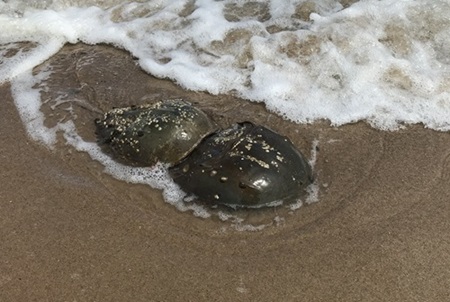
Data for the abundance and distribution of marine invertebrate species, especially crustaceans and mollusks, are tracked through the Marine Fisheries Program’s annual Long Island Sound Trawl Survey (LISTS), which monitors 60 different invertebrate species (e.g., 2020, 2022), and the Long Island Sound Study website. For example, they have been tracking Horseshoe Crab abundance, American Lobster abundance, and overall invertebrate biomass in the Sound over time. Similarly, 19 invertebrate species are surveyed during the Estuarine Seine Survey, conducted each September since 1988 in Connecticut’s sub-tidal habitat. Additionally, CT DEEP has created an interactive map highlighting the distribution of freshwater mussels in the State.
Other distribution and abundance information has been compiled by the Peabody Museum at Yale (Motz, 2025), the Arthropod Collection at the Connecticut Agricultural Experiment Station (CAES, 2025), and the Biodiversity Research Collections at UConn. These records can also be accessed through Global Biodiversity Information Facility (GBIF). Another valuable resource for the distribution of Connecticut’s invertebrates can be found on the Map of Life website. Information on invertebrate species distributions can also be found in various community science applications and websites, including BugGuide and iNaturalist. If you would like to contribute to these community-science efforts, we encourage you to explore the websites linked to above to get involved.
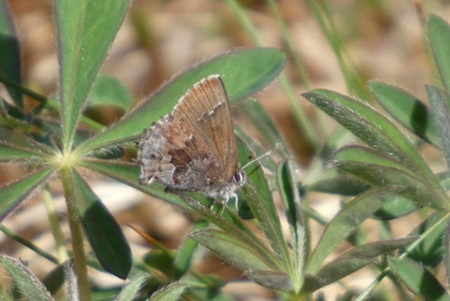
Photos in this section, top to bottom: (1) Frosted Elfin (Salvelinus fontinalis) perched on its host plant, Lupine. Species of Greatest Conservation Need in Connecticut. Photo courtesy of Charlotte Brennan / UConn Natural Resources and the Environment. (2) Two horseshoe crabs (Limulus polyphemus) breeding in West Haven, Connecticut. Species of Greatest Conservation Need in Connecticut. Photographed by Tyler Mahard / CT DEEP.
Mammals
While Connecticut is home to 17 mammal SGCN, little is known about many of the species, especially the small mammals, which include rodents and shrews. Conservation actions for mammals in the state over the past 10 years have primarily focused on the New England Cottontail and bats. The New England Cottontail was once common throughout New England and eastern New York, but its range has declined by 86 percent since 1960, largely due to habitat loss and competition from the introduced Eastern Cottontail (Litvaitis et al., 2006). Since 2000, CT DEEP has conducted active and passive surveillance to assess the statewide distribution and occurrence of this species. To date, it has been found in 65 of the 169 Connecticut towns. In July 2023, surveys were initiated to detect the North American Least Shrew in Guilford, which is only town know to harbor this species in Connecticut. Least shrews have since been detected at four locations within the study area and plans are underway to expand these surveys.
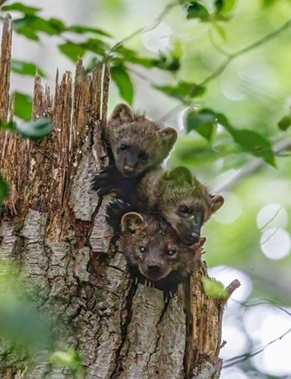
For carnivores, regional population decline in Fisher populations has prompted research initiatives. In Connecticut, we are soliciting public observations of this species and biologists are engaged in radio telemetry to track Fisher movements, learning more about causes of mortality, habitat use, and reproduction. Solicitation of public observations were also initiated for Gray Fox, which was identified as a State Assessment Priority Species.
CT DEEP and our partners have been actively involved in regional mammal conservation, particularly in initiatives related to bats. Mobile acoustic monitoring continues throughout Connecticut, with three new routes established. Acoustic data being collected by the state has been used in many regional efforts, including a project in conjunction with the U.S. Fish and Wildlife Service and Virginia Tech University to help develop habitat suitability models for the Northern Long-eared Bat, as well as contributing acoustic data to NABat (North American Bat Monitoring Program), a continent-wide effort to track bat distribution and abundance. In 2023, a grant was approved for the installation of permanent acoustic bat monitoring stations, which resulted in three stations being built and installed in Stonington, New Fairfield, and North Branford. This is in addition to temporary stationary bat detectors which have been deployed for surveys at numerous locations statewide. Also, in 2023, a grant was approved for mist netting and radio telemetry of Myotis species to understand key habitat features and identify maternity roost locations. These efforts began in summer 2024 and will continue.
Distribution and Abundance in Connecticut
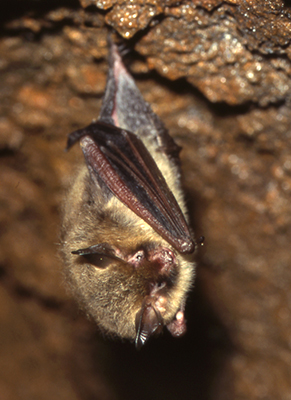
Unlike other groups, such as amphibians and birds, mammals do not have a comprehensive systematic survey atlas for Connecticut. However, like other taxon in the state, CT DEEP’s Natural Diversity Data Base (NDDB) provides some data on the distribution of threatened species and a map specifically for the Long-eared Bat. More broadly, a recent effort to update and digitize the distribution of all mammals worldwide (Marsh et al., 2022) can be found on the Map of Life website. The Long Island Sound Study surveys marine mammals in Long Island Sound, and information on their distribution and abundance can be found on their website.
For other sources of distribution and abundance information, records at natural history collections worldwide, including the Peabody Museum at Yale and the collection at UConn, have been digitized. This information can be found on the Global Biodiversity Information Facility (GBIF), VertNet, and the Mammal Diversity Database. Mammal distribution information can also be found in various community science applications and websites, including iNaturalist. If you want to contribute to these community-science efforts, we encourage you to explore the websites linked to above to become involved.
Photos in this section, top to bottom: (1) Fisher (Pekania pennanti), a Species of Greatest Conservation Need in Connecticut. In tree stump with young. Photo courtesy of Frank Bartlett Sr. (2) Northern Long-eared Bat (Myotis septentrionalis), a Species of Greatest Conservation Need in Connecticut. Photographed by Paul Fusco / CT DEEP.
Plants
Plants comprise a significant proportion of Connecticut’s biodiversity. Assessments of plant populations are crucial in determining the condition of the habitats in which these plants are found. Conserving Plant Diversity in New England (Clark, 2021) is an online tool and report produced through a collaboration between the Native Plant Trust and The Nature Conservancy. The report, "Conserving Plant Diversity in New England," identifies areas for plant conservation actions across New England (Anderson et al., 2021), listing 234 Important Plant Areas in New England and several in Connecticut (Figure 1.14).
The New England Plant Conservation Program (NEPCoP) submitted the second edition of Flora Conservanda: New England Plants Needing Conservation (Brumback and Gerke, 2013). The list included globally, regionally, and/or locally rare plants growing in New England. It also listed plants considered historic to New England (though they may exist elsewhere) and plants whose status in the region was undetermined but believed to be rare.
Since 2015, CT DEEP has created a species review sheet for the state-listed or SGCN plants, giving each species a rank. Under development are habitat circumscription spreadsheets, including habitat types, bloom times, and other relevant information, for these species, which will be used for environmental review. However, they are expected to be posted online so the public can do botanical assessments on their properties. The Natural Diversity Data Base (NDDB) map program in CT DEEP created a Survey 123 app for use on mobile devices and desktop computers for observers to report state-listed species observations, and it can also be used for non-state-listed SGCN and SAPS species in the future.
Distribution and Abundance in Connecticut
Little is known about Connecticut’s plant SGCN distribution and abundance, and few resources exist that quantify their distribution and abundance within the state. However, like other taxa in the state, CT DEEP’s Natural Diversity Data Base (NDDB) provides some data on the distribution of threatened species. Other sources of distribution and abundance information include records at natural history collections worldwide, such as the Peabody Museum at Yale and the collection at UConn, which have been digitized. This information can be found on the Global Biodiversity Information Facility (GBIF). Another valuable resource for the distribution of Connecticut’s plants can be found on the Map of Life website. Plant species distribution information can also be found in various community science applications and websites, including iNaturalist. If you would like to contribute to these community-science efforts, we encourage you to explore the websites linked to above to get involved.
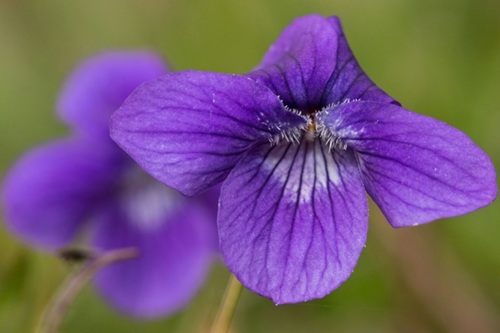
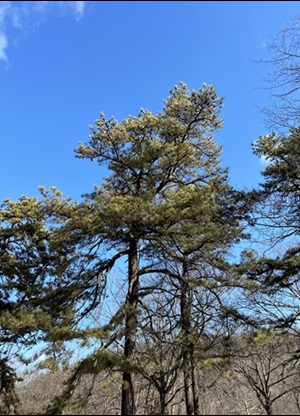
Photos in this section, top to bottom: (1) Sand Violet (Viola adunca), a Species of Greatest Conservation Need in Connecticut. Photographed by Peter Pearsall / USFWS. (2) Pitch Pine (Pinus rigida), a Species of Greatest Conservation Need in Connecticut. Photographed in New Haven, Connecticut, by Tyler Mahard / CT DEEP.
For references and more information, view Chapter 1 of Connecticut's 2025 Wildlife Action Plan.
Content last updated on November 13, 2025.