

Educator Literacy Competencies
Empowering Educators Through Structured Literacy and Dyslexia Competencies

Connecticut’s vision for effective education is designed to ensure that all students are prepared for learning, life, and work beyond the classroom. Every child deserves the opportunity to become a competent and confident reader and writer, and every teacher deserves evidence-based literacy preparation and ongoing training and support to help them meet this challenge. Collaboration, curiosity, and continuous learning help us all play a part in meeting the challenge of ensuring that all students are prepared for life, learning, and work beyond school. Literacy is the gateway to success and a doorway that every child has the opportunity to walk through. - Connecticut Educator Competencies for Structured Literacy and Dyslexia, 2025
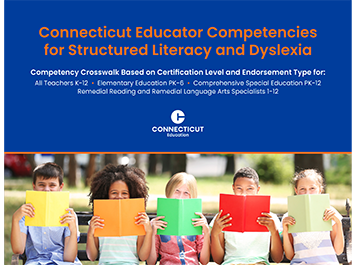
On May 7, 2025, the State Board of Education formally adopted the Connecticut Educator Competencies for Structured Literacy and Dyslexia, as prescribed in C.G.S 10-14z(d). Developed through an extensive, collaborative process involving educators, researchers, preparation providers, and family advocates, the competencies describe the knowledge and instructional practices educators must demonstrate to deliver effective, evidence-aligned instruction for all students, especially those at risk for or with dyslexia, reading difficulties or a reading disability, and are based on the body of reading research known as the science of reading. They are differentiated by certification and endorsement area and aligned with current state initiatives, certification regulations and nationally recognized standards (e.g., IDA Knowledge and Practice Standards).
The competencies apply to the endorsements below for both aspiring and practicing educators:
- Elementary Education (PK–6)
- Comprehensive Special Education (PK–12)
- Remedial Reading and Remedial Language Arts (1–12)
- And any program of study leading to professional educator certification
Key features of the competencies include:
- Early identification and intervention strategies for students at risk of dyslexia;
- Emphasis on explicit, systematic, cumulative and diagnostic instruction;
- Integration of oral language, foundational reading skills, vocabulary, comprehension, and written expression;
- Cultural and linguistic responsiveness, particularly for multilingual learners and students with co-occurring disabilities;
- Promotes alignment with the Connecticut Core Standards and other statewide initiatives and guidance, such as the K-3 Literacy Strategy, Guidance on Identifying and Supporting Students with Learning Disabilities, English and Multilingual Learners and Family Engagement
These competencies do not introduce disconnected expectations; they clarify what high-quality teacher preparation and practice should include. Whether an educator is just beginning their journey or has decades of experience, these competencies will help guide their learning and support their students.
Explore the Competencies
Download the Full Competency Framework
Click the following links to explore core sections of the Full Competency Framework:
- Competency Descriptions for each Domain
- What is Structured Literacy?
- Understanding Dyslexia
- Supporting Coherence and Integration
- Applications for Educator Preparation and K-12 Schools/Districts
"I think that teachers in CT are going to be the best prepared in the country. It's gratifying to see the high expectations for teachers in all roles!" – Dr. Louisa Moats, Co-Chair CSDE Scientific Research and Practice Advisory, LETRS Professional Learning Co-Author, Researcher and Independent Consultant
Contact Us:
Lisa Gianni
Associate Education Consultant
860-713-6712
lisa.gianni@ct.gov