


Opioids and Drug Overdose Prevention
Background and Overview
The misuse of prescription medication and opioid-based drugs has increased significantly over the years to become a public health concern in Connecticut. This misuse or abuse includes taking these medications in higher doses than prescribed, for a purpose other than that for which it was prescribed, or taking a medication that was prescribed for another person or obtained off the streets. Opioid overdose is often characterized by a decrease in breathing rate which if not quickly addressed leads to death.
Biosurveillance
What Is Biosurveillance?
Biosurveillance of drugs involved in overdoses is a type of public health monitoring. It involves tracking the types of substances identified in urine or blood samples from suspected drug overdose patients who come to the emergency department for care. This information helps add to what we already know about overdoses and makes it easier to spot patterns in the types of drugs that are causing overdoses.
Mandating Biosurveillance in Connecticut
In 2024, through Public Act 24-120 (PA 24-120), the state of Connecticut mandated that, as of January 1, 2025, hospitals share toxicology screening results for suspected drug overdose patients. Currently, emergency health care providers are urged, with the patient’s consent, to screen for substances involved in drug overdose, if it is medically appropriate. Hospitals are required to share the screening results with DPH.
Annual Biosurveillance Report
See this link for the 2025 Biosurveillance Report.
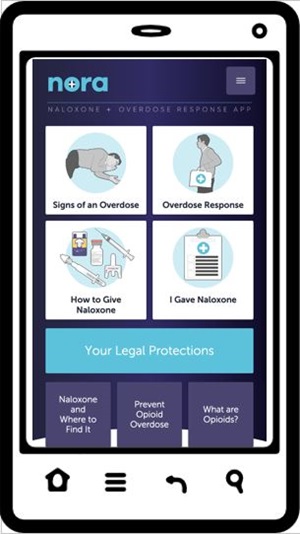
Naloxone + Opioid Response App (NORA)
The Naloxone + Opioid Response App (NORA) is a free interactive educational tool that will expand the understanding of what naloxone is and reinforce initial training given when a person fills their prescription for it. The vital role naloxone plays in reversing an opioid overdose has been cited by the Surgeon General's office,
The app will:
- provide resources for people interested in learning about opioids;
- recognize the signs of an opioid overdose and how to respond;
- explain the protections offered by the Good Samaritan Law;
- provide information on proper storage and disposal;
- connect people with other resources to prevent overdose and;
- to find treatment and recovery supports.
Updates will be ongoing with input from users of the app, with the intent that local coalitions and support staff at hospitals will share the app with family, friends and persons at risk of overdose. A train-the-trainer sheet is available to help integrate the app into other educational programs.
You can access the app through the following link: NORA - Naloxone + Overdose Response App. Contact our program for more information.
Fentanyl Test Strips and Counterfeit Pills
Fentanyl test strips are a tool that can be used to prevent an opioid overdose. Many illicit drugs contain fentanyl, which can be lethal. If they test positive, the person can then think about changing the way they are taking the drug (using less or going slow), making sure they don't use alone, or choosing not to use it. Watch the fentanyl test strip video to learn the proper steps to test for fentanyl. Contact your local SSP or local health department for more information about where to get the strips.Fentanyl Testing to Prevent Overdose Information for Healthcare Providers and People Who Use Drugs: https://portal.ct.gov/-/media/Departments-and-Agencies/DPH/AIDS--Chronic-Diseases/Prevention/DPH_FentanylTestStrips.pdf?la=en
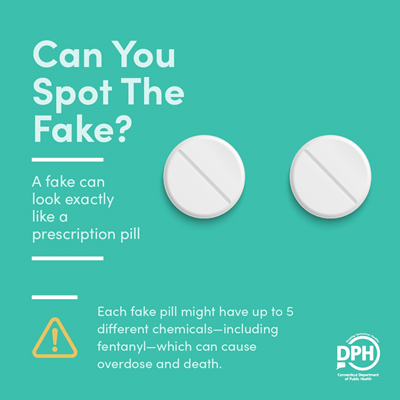
"Fake pills", also known as counterfeit pills, are often being sold through the illicit drug market. These pills can be laced with other drugs (like fentanyl) that can be deadly. They are produced without safety controls in substandard conditions, labeled incorrectly, and have many unknown substances. It is important to be aware that a number of these drugs are being sold through social media and online, not just on the street. Pills marked as Adderall, Xanax, and Oxycodone can be pressed by illegal drug mills to resemble these prescription drugs. Over 25% of these pills tested positive with a lethal dose of fentanyl. The DEA has stated that the best way to avoid counterfeit medication is to take only medications prescribed by a licensed medical professional and dispensed by a registered pharmacist.
Change the Script
'Change the Script' is a statewide public awareness campaign to help communities address the prescription drug and opioid misuse crisis. In collaboration with the Connecticut Department of Mental Health and Addiction Services (DMHAS), Department of Consumer Protection (DCP), and Department of Children and Families (DCF), DPH has launched an educational campaign for state residents that helps to increase awareness of the dangers of opioid and prescription drug misuse while focusing on decreasing the stigma of addiction and promoting life-saving measures such as naloxone and treatment. The campaign materials available for use include social media messages, PSAs (radio and TV), billboards, posters, and brochures.
"Change the Script" is a toolkit that contains creative materials such as advertisements, posters, billboards, direct-distribution pieces, radio scripts, and other materials that can be co-branded and used locally. Ready-to-use materials that do not require customization are also available for distribution and use at the state level.
"Change the Script RX" is a targeted campaign to prescribers to increase awareness and utilization of the CT Prescription Monitoring and Reporting System (CPMRS). It utilizes digital ads, direct mail, social media, posters, flyers, and journal advertising to reach prescribers and pharmacists.
Common Risk Factors for Opioid Overdose:
- Mixing opioids with other drugs, particularly alcohol or sedatives.
- Resumption of use after a period of abstinence from opioid use, such as recent release from a rehabilitation center or from incarceration.
- Elderly persons may forget that they have already taken their medication and accidentally re-take the same medication.
- Younger age, specifically the teens or early 20s exposed to peer pressure or a social environment where there is drug use.
Signs of an opioid overdose:
- Face is extremely pale and/or clammy to the touch.
- Body is limp.
- Fingernails or lips have a blue or purple cast.
- Vomiting or making gurgling noises.
- Cannot be awakened from sleep or is unable to speak.
- Breathing is very slow or stopped.
- Heartbeat is very slow or stopped.
What should I do if I see an overdose?
- Call 911 immediately!
- Support the person’s breathing.
- Administer naloxone (Narcan) if you have it.
- Lay the person on their side once they have resumed breathing.
- Stay with the overdosed person until the ambulance arrives.
Overdose Data to Action
This is a CDC program that helps states combat the ongoing drug overdose epidemic. The purpose of Overdose Data to Action (OD2A) is to support jurisdictions in collecting high-quality, comprehensive, and timely data on nonfatal and fatal overdoses and in using those data to inform prevention and response efforts. To learn more about OD2A, click here.
Statewide Overdose Reporting Directive (SWORD):
SWORD is a real-time reporting mechanism for Opioid Overdoses in the State through Emergency Medical Services (EMS). All Connecticut-certified and -licensed EMS organizations and providers are now reporting to the Connecticut Poison Control Center (CPCC) after any call where the patient is suspected of opioid use causing decreased responsiveness, respiratory depression, or death, whether or not naloxone was administered." For more details on the SWORD program and links to monthly SWORD newsletters, please click on the following link: https://portal.ct.gov/DPH/Emergency-Medical-Services/EMS/OEMS---SWORD.
Resources
Alcohol and Drug Policy Council (ADPC)
Overdose Response Strategy (ORS)
Prescription Drug Overdose and the Role of Health Care Providers
Prescription Drug Overdose in Teens and Young Adults
General Prescription Drug Overdose Prevention Strategies
Current Laws related to Opioids Overdose Prevention
Heroin Overdose and Addiction: A Public Health Issue
Overdose Education and Naloxone Distribution Program
Statewide Opioid Overdose Prevention & Response Webinar – August 4, 2021
Voluntary Opioid Opt-Out Form:
A person who does not wish to be issued a prescription or medication order for an opioid drug may file this Form with their healthcare provider. Upon receipt of the Form from the patients, a healthcare practitioner shall document receipt of the Form in the patient's medical record.
- Opt-Out/Voluntary NonOpioid Directive Form
- Opioid Opt-Out Form Patient Guide Brochure
- Provider Guidance
Using Naloxone to Reverse an Opioid Overdose: https://www.ctvideo.ct.gov/dmhas/naloxoneTraining.wmv
Opioid Family Stories
For more information, please call
The Office of Injury and Violence Prevention