

Materials, Energy and Transportation
Waste Diversion Electricity Zero-Carbon Energy Solar PV
Transportation


The number of electric drive vehicles (EVs)* registered in the state increased by 12,667 from 2024 to 2025, resulting in a total of 73,156 EVs registered in the state. The number of registered EVs in 2025 represents about 6.7 percent of all passenger vehicles and 2.6 percent of all registered vehicles in the state.94 Incentives, in the form of a federal tax credits, allowed taxpayers to claim up to $7,500 for the purchase of a new electric vehicle; however, this incentive expired on September 30, 2025.
The Connecticut Hydrogen and Electric Automobile Purchase Rebate (CHEAPR) still offers incentives to Connecticut residents who purchase or lease eligible EVs from a licensed Connecticut automobile dealership.95
Goal: There was a 2020 goal for 125,000 to 150,000 EVs on the road in Connecticut by 2025.96
Public Act 22-25 requires that an increasing percentage of all cars and light duty trucks purchased or leased by the state be battery electric vehicles, increasing to at least 50 percent by 2026, at least 75 percent by 2028, and 100 percent by 2030. In 2025, the Connecticut Department of Transportation (CTDOT) had seven (7) EVs and approximately 40 electric buses, and the Connecticut Department of Administrative Services (DAS) had 45 EVs (including 21 EVs leased to the CTDOT), which represents approximately 1.3 percent of the DAS vehicle fleet.97
The adoption of EVs in Connecticut was projected to increase by approximately 460,000 vehicles (mostly light-duty) through 2034, although recent changes in federal policies for EVs might impact future adoption. The projected increase in EVs is also expected to increase electricity consumption by more than 2,000 gigawatt-hours (GWh) by 2034, with a winter peak demand of 405 megawatts (MW).98,99
Technical Note: *EVs include plug-in hybrid electric (PHEV), battery electric (BEV), electric motorcycles, and fuel cell electric (FCEV) vehicles. Electric motorcycles and fuel cell electric vehicles are included in the “Grand Total” of EVs registered in the state, but are not depicted on the chart.
Transportation Fuels
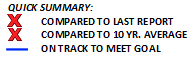
In 2024, (the most recent available data) the sale of transportation fuels increased by 4.9 percent from the previous year and was 3.9 percent greater than the previous ten-year average. The sale of gasoline/gasohol increased by approximately 5.9 percent, while the sale of special/diesel fuel decreased by approximately 0.7 percent from the previous year.100 The annual sale and use of transportation fuels is a proxy for greenhouse gas emissions attributed to the transportation sector each year and is irrespective of vehicle miles traveled or vehicles’ fuel efficiency.101
Ridership
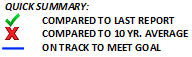
In fiscal year (FY) 2025, the passenger trips per capita for fixed route, commuter, and Americans with Disabilities Act (ADA) transit services*was 9.06, which was approximately one (1) percent more than FY 2024 (8.96), but 9.6 percent less than the previous ten-year average (10.01).102 In FY 2025, total ridership (33.4 million passenger trips) increased from FY 2024 ridership (32.9 million passenger trips).
Some reasons for the general decline in ridership in FY 2020 through FY 2022, compared to previous years include the impact of COVID 19, alternate work arrangements (teleworking), and the success in ride sharing efforts. The decrease in ridership between FY 2023 and FY 2024 might be due, in part, to the end of the fare free program that was in effect from April 1, 2022 through March 31, 2023.103 It is estimated that only about four (4) percent of people used public transportation to get to work, while more than 70 percent drove alone in 2024.104
Technical Note: *Does not include Dial-A-Ride and microtransit, which is a technology-enabled service that uses multi-passenger vehicles to provide on-demand transportation services.
—————
94 DEEP, Bureau of Air Management; personal communication from W. Barozi, February 20, 2026; USDOT, Federal Highway Administration. Highway Statistics Series: State Statistical Abstracts–Connecticut 2023, accessed February 23, 2026; explore.dot.gov/views/StateStatisticalAbstracts_16699101653250/DashboardALT?%3Aembed=y&%3Aiid=1&%3AisGuestRedirectFromVizportal=y
95EnergizeCT, EV Rebates and Incentives; www.energizect.com/explore-solutions/electric-vehicles/rebates-incentives.
96 DEEP, 2020 Electric Vehicle Roadmap for Connecticut, April 21, 2020; portal.ct.gov/DEEP/Climate-Change/EV-Roadmap.
97 Connecticut Department of Administrative Services (DAS), personal communication from S. McGirr, January 20, 2026, and Connecticut Department of Transportation (CTDOT), personal communication from S. Boisclair, January 30, 2026.
98ISO-New England, Final 2025 Electric Vehicle Forecast, May 1, 2025; www.iso-ne.com/static-assets/documents/100023/trans_fx_2025_final.pdf.
99 ISO-New England, 2025-2034 Forecast Report of Capacity, Energy, Loads, and Transmission, Sheet 1.7 Electrification Forecast; www.iso-ne.com/static-assets/documents/100023/2025_celt.xlsx.
100 United States Department of Transportation (US DOT), Federal Highway Administration, Office of Highway Policy Information, Motor Fuel Distribution/Consumption Trends; data.transportation.gov/stories/s/nrec-wf7k#gasoline-volumes-distributed; Filter – “Connecticut"
101 United State Energy Information Administration (EIA), State Energy Data System (SEDS): State Energy Data System (SEDS): 2024 Updates by energy source, Aviation Gasoline and Jet Fuel consumption estimates, 2024; www.eia.gov/state/seds/seds-data-fuel.php?sid=CT#Petroleum.
102 CTDOT, Bureau of Public Transportation, Office of Transit & Ridesharing; personal communication from T. Roth; February 27, 2026.
103 CTDOT, CTTransit, Reduced Fares; www.cttransit.com/fares/seniordisabled-reduced-fares/reduced-fares, and CTTransit FAQs- Fares, accessed 2-27-2026; www.cttransit.com/faqs-fares.
104 United States Department of Transportation, Bureau of Transportation Statistics, State Transportation By The Numbers – Connecticut; www.bts.gov/browse-statistical-products-and-data/state-transportation-statistics/state-transportation-numbers.