

Land Stewardship
Forests Farmland Wetlands
Preserved Land
Goal #1: State Owned Land – ten percent
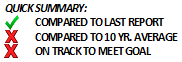
In 2025, the Department of Energy and Environmental Protection (DEEP) acquired 682 acres of land* under the Recreation and Natural Heritage Trust Program (Trust Program), the primary vehicle for adding land to the state’s system of parks, forests, wildlife areas, water access areas, and other open spaces. The state invested more than $1 million and leveraged approximately $3.4 million to acquire the 682 acres of land.10 Over the previous ten years, the state preserved an annual average of 950 acres.
The total area of land preserved by DEEP as open space, held in fee, is estimated to be approximately 265,991 acres. While DEEP has made progress to increase the amount of land preserved, DEEP’s preservation efforts were 54,585 acres short of reaching the ten percent preservation goal of 320,576 acres by 2023. At the average acquisition rate of 950 acres per year (based on the previous ten years), it would take DEEP approximately 57 years to achieve the ten percent goal. In addition to the Trust Program, DEEP can issue a draft recommendation to the Secretary of the Office of Policy and Management (OPM) as to whether all or a portion of land or land interest, identified for transfer or sale by another state agency, should be preserved by transferring the land or land interest or granting a conservation easement to DEEP. There were no transfers of land to DEEP from another state agency in 2025.
Open space provides Connecticut's residents with economic, recreational, and environmental benefits including, but not limited to, options for outdoor activities, preservation of scenic beauty, habitat protection, increased biodiversity, protection of unique bedrock and surficial geologic features, water protection, and flood control. Preserved land, such as forests, farmland, and wetlands, act to capture and store carbon and should be given high priority for preservation.
Technical Note: *The annual and total acreage identified in the chart is primarily owned in fee by the State. A notable exception is a 111-acre easement acquired in 2020, which is included in the State acquisition total.
—————————
Goal #2: Other Conservation Lands – 11 percent
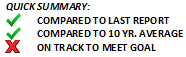
In 2025, state grants helped municipalities and land trusts acquire and/or protect 1,793 acres through the Open Space and Watershed Land Acquisition Grant Program (Grant Program), whereby DEEP provided almost $8.7 million in financial assistance to municipalities and nonprofit land conservation organizations (conservation partners) to acquire land for open space.11
For 2025, the Council estimated that more than 305,215 acres were held in fee as open space land by DEEP’s conservation partners. This would be approximately 87 percent of the state’s eleven percent goal of 352,634 acres. Unfortunately, the exact amount of land held by DEEP’s conservation partners is very difficult to determine because land trusts are continuously acquiring properties for conservation and outdoor recreation; the inventory of municipal land is incomplete; it is very difficult to track easements; and there is no centralized accounting of privately preserved lands.
As noted above, it is estimated that DEEP has preserved approximately 265,991 acres (Goal 1) and its conservation partners “hold” at least 305,215 acres (Goal 2) as open space for a total of approximately 571,206 acres or approximately 85 percent of the total statewide goal of twenty-one percent (673,210 acres).
In 2025, two municipalities and four non-profit organizations were awarded a total of $725,353 in Urban Green and Community Garden Grant Program (UGCG) funding. The UGCG Program provides funding assistance to develop or enhance urban green spaces for public enjoyment and/or environmental education and is available to environmental justice communities, targeted investment communities, and registered non-profit organizations.
NEW! Public Act 25-125, Section 16 now allows grants made under the Grant Program to be used for urban agricultural use.
—————
10 DEEP, Monthly Open Space Reports to the Finance, Revenue and Bonding Committee and the State Bond Commission, 2025 Open Space Reports; portal.ct.gov/DEEP/Open-Space/DEEP-Monthly-Open-Space-Reports.
11 DEEP, Monthly Open Space Reports to the Finance, Revenue and Bonding Committee and the State Bond Commission, 2025 Open Space Reports and personal communication from A. Clark, February 5, 2026; portal.ct.gov/DEEP/Open-Space/DEEP-Monthly-Open-Space-Reports.
12 DEEP, personal communication from A. Clark, February 5, 2026, and Urban Green and Community Gardens Grant Program; portal.ct.gov/DEEP/Open-Space/Urban-Green-and-Community-Garden-Grant-Program.