

Materials, Energy and Transportation
Electricity Zero-Carbon Energy Solar PV Transportation
Waste Diversion
Diversion Rate
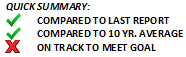
In 2024, (most recent data available) approximately 44.4 percent of the state’s solid waste (MSW) was estimated to be diverted* from disposal, a relative increase of 3.3 percent since 2023. The tons of solid waste disposed in 2024 is estimated to have been about 5.6 percent less than in 2023, and about 8.5 percent less than the previous ten-year average, which resulted in a greater diversion rate in 2024.
Approximately 1.3 million tons of the state’s solid waste were disposed of at one of the resource recovery facilities (RRF) in the state, while approximately 800,000 tons were transported out of state for disposal.75
Goal: The diversion goal of 60 percent by 2024 was established with the adoption of Public Act 14-94 and is identified in Connecticut’s 2016 Comprehensive Materials Management Strategy.
MSW Diverted
In 2024, approximately 311,000 tons of designated recyclables, 339,000 tons of Other MSW Recycling, 261,000 tons of organics, and 109,000 tons recovered through the beverage container redemption program were sent to end markets, reuse facilities or composted/digested. The total tons of MSW diverted in 2024 for the four categories identified in the chart above were about 15 percent less than 2023 and about 21 percent less than the previous ten-year average. The decrease in MSW diverted in 2024 for the four categories identified in the chart was in contrast to the increase in the diversion rate. This contrast might be due, in part, to source reduction of MSW and/or incomplete reporting of recyclables and organic material 76
In 2025, the Connecticut Department of Energy and Environmental Protection (DEEP) announced the award of $15 million in grant funds, through the Materials Management Infrastructure (MMI) Grant Program, to support Connecticut municipalities, councils of government, and regional waste authorities to reduce municipal solid waste by investing in waste separation and sorting infrastructure; composting and anaerobic digestion facilities; food scraps/food waste collection and processing equipment; and infrastructure for managing hard-to-recycle materials.77
NEW! Public Act 25-34 requires certain battery and battery-product producers to participate in a battery stewardship organization/program and contains provisions for batteries or battery-containing products.
Beverage Container Redemption
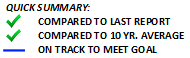
The rolling 4-quarter redemption rate in 2025 was 91.5 percent, which was a relative increase of 27 percent from 2024 (64.5 percent) and a relative increase of 42.1 percent from the previous ten-year average (49.4 percent).78
The increase in the redemption rate for 2025 might have been due, in part, to the increase in the redemption value from five (5) cents to ten (10) cents for beverage containers purchased in the state, and the redemption of beverage containers in Connecticut that are purchased out of state. In the Council’s 2020 special report, Low Deposit, Low Return, the Council recommended ways to increase the redemption rate and divert more beverage containers from disposal. Public Act 21-58 revised the beverage container redemption program with several provisions, including 1) an increase in the handling fee paid to retailers and operators of redemption centers; 2) an expansion of the types of beverages covered to include several new item categories, such as sports drinks, energy drinks, and juices, which began on January 1, 2023; and 3) an increase in the deposit amount from $0.05 to $0.10, which began on January 1, 2024.
NEW! Public Act 25-168, Sections 404 and 405 established a "bottle bill escheats enforcement and assistance account", for providing funds to the Division of State Police to enforce violations regarding “persons tendering beverage containers” and established other requirements regarding the operations at redemption centers and the redemption of beverage containers.
Technical Note: *Diversion includes the reduction of materials before entering the waste stream for disposal (i.e., source reduction). Estimated "Diversion" is based on the 2005 baseline of 3.8 million tons, which is a planning value taken from the Solid Waste Management Plan; it is not actual solid waste generation.
—————
75 DEEP, Bureau of Materials Management and Compliance Assurance; personal communication from B. Gianetti, February 25, 2026.
76 DEEP, Bureau of Materials Management and Compliance Assurance; personal communication from B. Giannetti, February 25, 2026.
77DEEP, News Release, DEEP Announces $15 Million in Grant Awards for Materials Management Infrastructure Grant Program, March 27, 2025; portal.ct.gov/deep/news-releases/news-releases---2025/deep-announces-15-million-in-grant-awards-for-materials-management-infrastructure-grant-program.
78 DEEP, Bureau of Materials Management and Compliance Assurance; CT Bottle Bill Redemption Data, accessed September 29, 2025; portal.ct.gov/-/media/deep/reduce_reuse_recycle/bottles/bottle-bill-data---sept-25---thru-q2-2025---table.pdf.