

Materials, Energy and Transportation
Waste Diversion Electricity Solar PV Transportation
Zero Carbon Energy

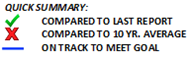
In 2025, 42,687 thousand megawatt-hours (MWh) of electricity was generated in the state by carbon-based fuel/technology (24,894 thousand MWH), and zero-carbon* technologies (17,794 thousand MWh).
Zero-carbon technologies in the state generated 41.7 percent of the total amount of electricity, which was a relative increase of 1.3 percent from 2024 (40.4 percent), but a relative decrease of 1.9 percent from the previous ten-year average (43.6 percent).86
Including out-of-state generation resources, it is estimated that in 2024 (most recent data available), approximately 68.5 percent of the electricity supplied to electric customers in the state was from zero carbon resources.87
Zero Carbon Goal - Consumption
If previous procurements of zero carbon resources are developed, it would eventually increase the amount of zero carbon energy available for the state’s residents and businesses; however, it might still leave the state short of its zero percent GHG emission target by 2040. The shortfall is more likely if existing generation resources/units are retired and/or the projected increases in electric consumption for transportation (~2,044 gigawatt-hours (GWh) by 2034) and thermal (1,077 GWh by 2034)88 are accurate. The use of intermittent renewable technologies will also require a significant amount of energy storage and/or upgrades to the electric transmission system.
Goal: Connecticut General Statutes, Section 16-245a requires that a minimum percentage of electricity, which is sold to Connecticut customers, must be generated from renewable energy sources.
NEW! Public Act 25-73 Section 37 reduces the percentage of electricity from renewable energy sources starting in 2026, including a reduction from 40 percent to 29 percent by 2030.
Technical Note: *Includes utility scale renewables that generate no carbon and nuclear generation, and it is not the same as Class I or Class II renewable sources. Zero carbon generation does not include biomass (wood, municipal solid waste), fuel cells operating on natural gas, biogas, and landfill gas.
—————
86 EIA, Electricity Data Browser, Net Generation for Electric Power, Annual (CT - All Fuels); accessed February 24, 2026; www.eia.gov/electricity/data/browser/#/topic/0?agg=2,0,1&fuel=vtvv&geo=008&sec=008&linechart=ELEC.GEN.ALL-CT-98.A&columnchart=ELEC.GEN.ALL-CT-98.A&map=ELEC.GEN.ALL-CT-98.A&freq=A&ctype=linechart<ype=pin&rtype=s&maptype=0&rse=0&pin=.
87 DEEP, Bureau of Energy and Technology Policy; personal communication from M. Malmrose, February 4, 2026.
88 ISO-New England, 2025 CELT Report, 2025-2034 Forecast Report of Capacity, Energy, Loads, and Transmission, Sheet 1.7 Electrification Forecast, Issued May 1, 2025; www.iso-ne.com/static-assets/documents/100023/2025_celt.xlsx.