

Water
Rivers, Lakes, and Estuaries Warming and Rising Waters Swimming Clamming and Oystering Drinking Water
The Water of Long Island Sound
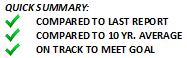
The maximum area of Long Island Sound with hypoxia, which is water with a dissolved oxygen (DO) concentration less than 3.0 milligrams per liter (mg/l), decreased from 127 square miles in 2023 to approximately 43.4 square miles in 2024. The duration of the hypoxic conditions also decreased from 42 days in 2023 to 38 days in 2024.35 Most, if not all, of the hypoxic conditions are found in the western basin of the Sound, which is also affected by contributions from New York State. Several factors, such as the state’s Nitrogen Control Program, improvements to wastewater treatment facilities, and better controls for stormwater runoff have reduced the area of hypoxic conditions in the Sound since pre-2000 levels
Goal: The goal line on the top chart approximates the maximum area (~150 miles2) of the hypoxia target to "measurably reduce the area of hypoxia in Long Island Sound … by 2035”. 36
Nitrogen Discharges:
In 2024, the total average for nitrogen discharges (tons per year) for the 77 water pollution control facilities in the state increased by 8.4 percent from the previous year, but was five percent less than the previous ten-year average.36The increase in 2024 compared to the previous year was likely due to the effect of cold heavy rain events which started in December of 2023 and continued through about May of 2024. Connecticut has reduced nitrogen discharges over the last decade by investing in nitrogen-removal technology at sewage treatment plants and implementing a Nitrogen Control Program; however, reducing nitrogen discharges from non-point sources remains a challenge.
Goal: Substantial reduction of nitrogen discharges is a goal that is shared by Connecticut and New York (2001). Connecticut established a goal of a maximum of 3,830 tons per year of nitrogen by 2014.38 Nitrogen discharges “upstream” of Connecticut also contribute to the nitrogen loading.
—————
35 DEEP; Long Island Sound Water Quality and Hypoxia Monitoring Program, personal communication from K. O’Brien-Clayton, November 25, 2024; portal.ct.gov/DEEP/Water/LIS-Monitoring/LIS-Water-Quality-Monitoring-Maps.
36 Long Island Sound Study Comprehensive Conservation and Management Plan, 2015; longislandsoundstudy.net/2015/09/2015-comprehensive-conservation-and-management-plan/
37 DEEP, Nitrogen Control Program for Long Island Sound; personal communications from I. Raffa, April 1, 2025.
38 DEEP, Nitrogen Control Program for Long Island Sound; The Long Island Sound TMDL Frequently Asked Questions; portal.ct.gov/-/media/DEEP/water/lis_water_quality/nitrogen_control_program/tmdlfaqpdf.pdf.