

Heat Pump Water Heaters
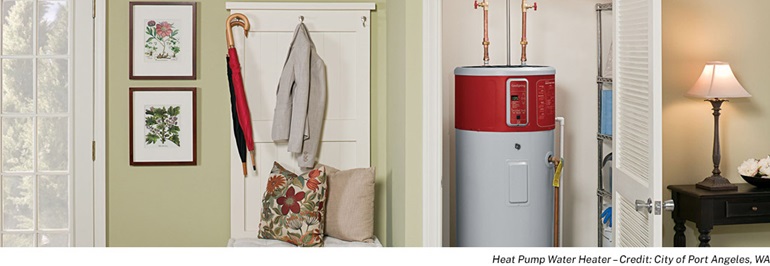
- Heat pump water heaters (HPWHs) are highly efficient water-heating systems that capture ambient heat from the environment to heat water.
- HPWHs have a wide range of applications, from residential and multi-family buildings to commercial and institutional buildings. They are typically installed in basements, garages, or utility rooms.
- HPWHs are commonly called “hybrid” water heaters, as many have backup electric resistance elements which can be activated to ensure consistent hot water supply in periods of high demand or if the ambient temperature falls below the optimal range for operation.
- HPWHs are much more energy efficient than traditional water heaters. According to Energy Star, heat pump water heaters are typically 3-4 times more efficient than traditional electric or gas water heaters. Additionally, they use up to 70% less energy than traditional gas water heaters.
How Do Heat Pump Water Heaters Work?
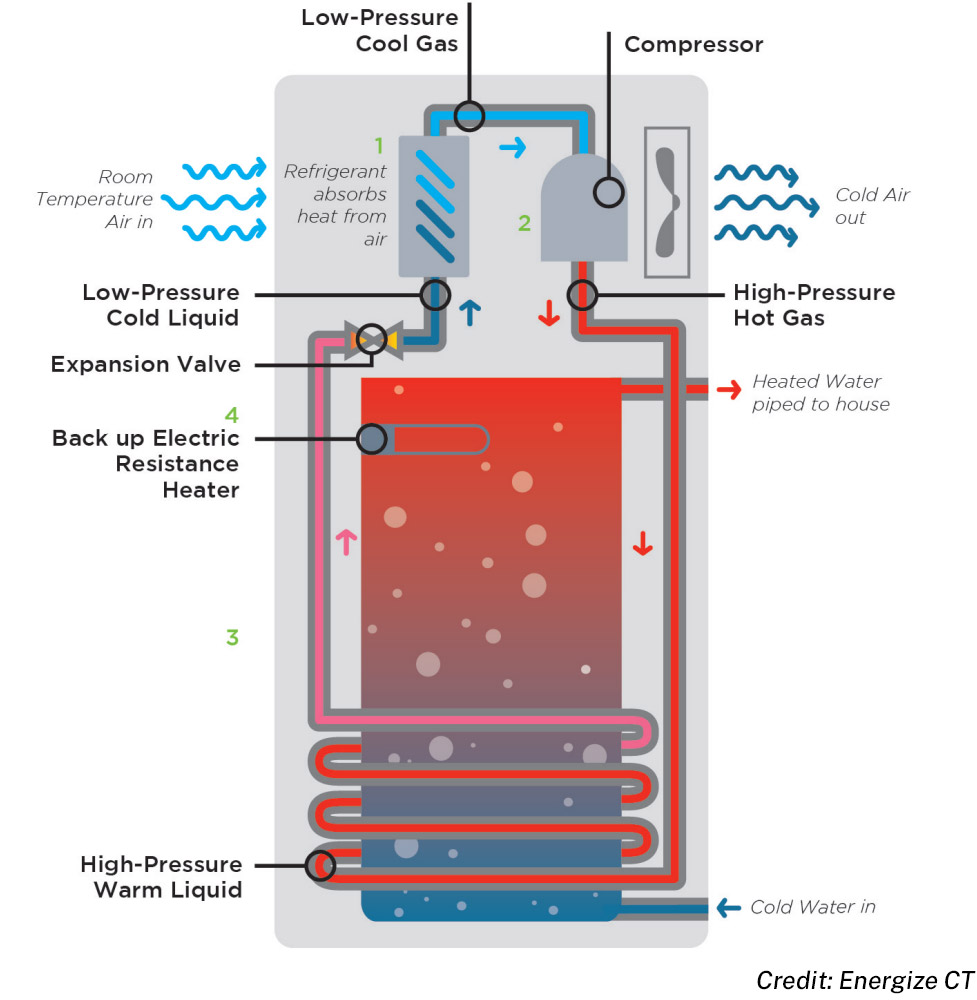
 Heat pump water heaters have two main components: the heat pump which absorbs heat from the environment (often the surrounding air), and an insulated storage tank that stores heated water for later use.
 - In some cases when the heat pump is unable to meet the water-heating needs, some systems have back-up electric resistance elements which can help to heat the water more quickly.
- Most heat pump hot water heaters pull heat from the surrounding air. However, when the space containing a water heater is too small for the necessary air exchange, or if there is another reason for wanting to direct air inputs or outputs, ductwork can be installed.
Special Features:
Many heat pump water heaters have control panels that allow selection between different operating modes. Examples generally include:
- Efficiency/Economy: Often means using the heat pump only to heat water to maximize energy efficiency and savings.
- Auto/Hybrid: Often the default setting – ideal for daily use, providing sustained heat for energy-efficient water heating.
- Electric/Heater: Often means using only the electric resistance element to heat water – this setting can heat water the fastest but is the least energy-efficient setting.
- Vacation & Timer: Some models allow the unit to be placed in “sleep” mode when away from the building.
Special Considerations:
- According to Energize CT PDF guide, some heat pump water heaters, like 80-gallon models, are slightly taller than some traditional storage water heaters in order to accommodate the fan and heat pump unit. HPWHs also need enough open space for sufficient air exchange. It’s important to check installation requirements.
- Heat pump water heaters produce condensation and will need a connection to a suitable drain – condensate pumps may be needed.
- Heat pump water heaters often operate most efficiently in spaces where the air temperature remains at or above 40°F — however, they are still able to make hot water even if the temperature falls below 40°F.
Benefits of Heat Pump Water Heaters
Energy Efficiency & Cost Savings:
- According to Energize CT, the operating costs of HPWHs can be up to 50% lower than operating costs of propane, oil, or electric resistance water heaters, and can reduce annual water heating costs by about $200 to $400 per year depending on how much hot water is used.
- Heat pump water heaters can provide limited dehumidification. The more a system is used, the more heat and humidity it can pull from its surroundings. Heat pump water heaters, though they do not replace dehumidifiers, can help save energy by reducing the running time for dehumidifiers.
- Heat pump water heaters use up to 70% less energy than standard electric resistance water heaters and can heat water twice as efficiently.
- Some heat pump water heaters offer load control options that can help to shift electricity consumption to off-peak hours, reducing strain on the grid.
Health & Comfort:
- When there is sudden high demand for hot water, most heat pump water heaters can switch to standard electric resistance heating automatically, maintaining the availability of hot water while minimizing electric costs.
Environmental Benefits:
- Heat pump water heaters do not create heat – they collect heat and transfer it to water. Because they don’t rely on combustion of fossil fuels, heat pump water heaters produce less local greenhouse gas emissions compared to traditional water heaters, which contributes to a smaller carbon footprint.
Affordability:
- Heat pump water heaters can be quite affordable to install in existing buildings or new construction.
- Future savings from efficient water heating can offset initial installation costs.
- State and federal incentives can reduce upfront costs. Energize CT provides state incentives for residential and commercial heat pump water heaters. There may also be federal tax credits that can further reduce the cost.
- Operating costs of HPWHs are typically quite low compared to electric resistance, oil, or propane water heaters, enabling many homeowners and businesses to reduce their monthly expenses.
Other factors that enhance affordability:
- Zero- or low-interest financing available through Energize CT (webpage) and Connecticut Green Bank make it possible to spread installation costs across longer periods.
- With good maintenance, heat pump water heaters can last a long time. According to Energy Star, traditional storage water heaters last around 10-12 years, while heat pump water heaters can last around 13-15 years.
Other Resources:
- The Clean Heating & Cooling Calculator can help residents compare annual costs and emissions savings by upgrading their heating and cooling systems.
Trends in Connecticut
- The Energize CT Municipal Energy Dashboard Heat Pump Data section tracks rebates and subsequent installations of heat pumps and heat pump water heaters in Eversource and United Illuminating territories.
Case Studies
Connecticut Residential:
- Energize CT – Waterbury – Susan Weretelnik
Northeast Residential:
- Efficiency Maine – Houlton, ME – Houlton Multi-Family Building
National Residential:
- U.S. Department of Energy – Davis, CA – UC Davis West Village Student Apartments
- Better Bricks – Seattle, WA – Bayview Towers
- Better Bricks – Seattle, WA – Elizabeth James House
National Commercial & Institutional:
- City of Palo Alto Utilities – Palo Alto, CA – Palo Alto City Hall
Energize CT Consumer Guidance
- Energize CT Consumer Guidance Heat Pump Water Heaters (webpage)
- Your Guide to Heat Pump Water Heaters (booklet)
- Find a Participating Installer (webpage)
- Guidelines for Integrated, Heat Pump Water Heaters in Multifamily Buildings (guide)
Other Resources: Northeast
- Efficiency Maine, Heat Pump Water Heater Real Life Stories (video)
- U.S. Department of Energy, Field Performance of Heat Pump Water Heaters in the Northeast (case study)
Other Resources: National
- Energy Star, Save More with ENERGY STAR Certified Heat Pump Water Heaters (webpage)
- Energy Star, Busting Myths About Heat Pump Water Heaters (webpage)
- U.S. Department of Energy, U.S. Department of EnergyHeat Pump Water Heaters (webpage)
- U.S. Department of Energy, Heat Pump Water Heater Installation Tool (tool)
- Energy Star, Energy StarHeat Pump Water Heaters (webpage)
Contact
Content last updated April 2025