

Land Stewardship
Preserved Land Forests Wetlands
Farmland

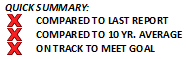
In 2024, Connecticut preserved 693 acres of agricultural land, which was approximately 43 percent less than the previous ten-year average of 1,211 acres. The number of farmland properties preserved in 2024 was 11, the average acreage per farmland property was 63, and the average cost per acre was $5,514, which was 7.5 percent less than the average cost per acre for the previous three-year period (2021-2023).26
The cumulative acreage preserved by the Connecticut Department of Agriculture (DoA), which began preserving agricultural land by purchasing development rights in 1978, has increased slowly and now totals approximately 50,250 acres.
Council projections prepared in 2024 indicate that it would take approximately 66 years to achieve the state’s farmland preservation goal of 130,000 acres, based on the average annual acquisition rate for the last ten years (1,197), including acreage for 2024. During that time, additional farmland can be expected to be lost to development. The total land area in farms in Connecticut for 2024 (most recent data available) was estimated at 370,000 acres, which was a decline of approximately 2,000 acres from 2022 data.27 In 1982, the total land area in farms in Connecticut was reported to be approximately 444,200 acres, a loss of approximately 74,000 acres or 17 percent since 1982.28 The rate of farmland loss may change as demand for locally produced food and agricultural products increases or as development pressure increases, such as for electricity generation.
In addition to the production of food and agricultural products, Connecticut’s farms have a role in mitigation of, adaptation to, and resiliency from the negative impacts of climate change. Well managed farms store carbon from the atmosphere in soils and plants, capture and store water from extreme precipitation events, and provide for biomass derived renewable energy. Soil is one of the sinks for atmospheric carbon, and one that can be managed to mitigate the effects of climate change.29
Public Act 24-100 Sections 1 and 2 eliminated a requirement that the Commissioner of DoA consult with the Department of Energy and Environmental Protection Commissioner before approving a request to remove a development rights restriction from agricultural land.
Goal: The Connecticut Farmland Preservation Program aims to protect 130,000 acres of Connecticut’s most productive farmland.
—————
26 Connecticut Department of Agriculture (DoAg), Farmland Preservation Program Report, List of Calendar Year 2024 PDR Farmland Closings, January 1, 2024 ‐ Dec. 31, 2024; personal communication from C. Weimar, February 13, 2025.
27 United States Department of Agriculture (USDA), 2023 State Agriculture Overview; www.nass.usda.gov/Quick_Stats/Ag_Overview/stateOverview.php?state=CONNECTICUT, and 2022 Census of Agriculture; www.nass.usda.gov/Publications/AgCensus/2022/Full_Report/Volume_1,_Chapter_1_State_Level/Connecticut/ctv1.pdf.
28 USDA, Census of Agriculture Historical Archive, Connecticut 1982; agcensus.library.cornell.edu/wp-content/uploads/1982-Connecticut-CHAPTER_1_State_Data-121-Table-01.pdf.
29 DEEP, GC3 Final Report: Working & Natural Lands Working Group - Agriculture/Soils Working Subgroup; portal.ct.gov/-/media/DEEP/climatechange/GC3/GC3-working-group-reports/GC3_WNL_Ag_Soils_Final_Report_111320.pdf#page=5.