

Southern Pine Beetle
The southern pine beetle (Dendroctonus frontalis) is the most economically destructive insect in the southeastern United States. Until recently, it was restricted largely to those states. In 2009, it was found in the New Jersey Pine Barrens and, in late 2014, in extensive pine stands on Long Island. In 2015, it was found in Connecticut.
The southern pine beetle (SPB) is one of many common beetles that bore into the bark of pine trees and feed on the inner bark of a tree. What sets SPB apart is its tendency to periodically enter outbreak mode, during which the population rapidly increases. In these numbers, SPB can attack and kill even healthy trees, creating large stands of dead trees. It has the potential to be economically devastating, as many of the trees it attacks are of high commercial value.
Trees at risk
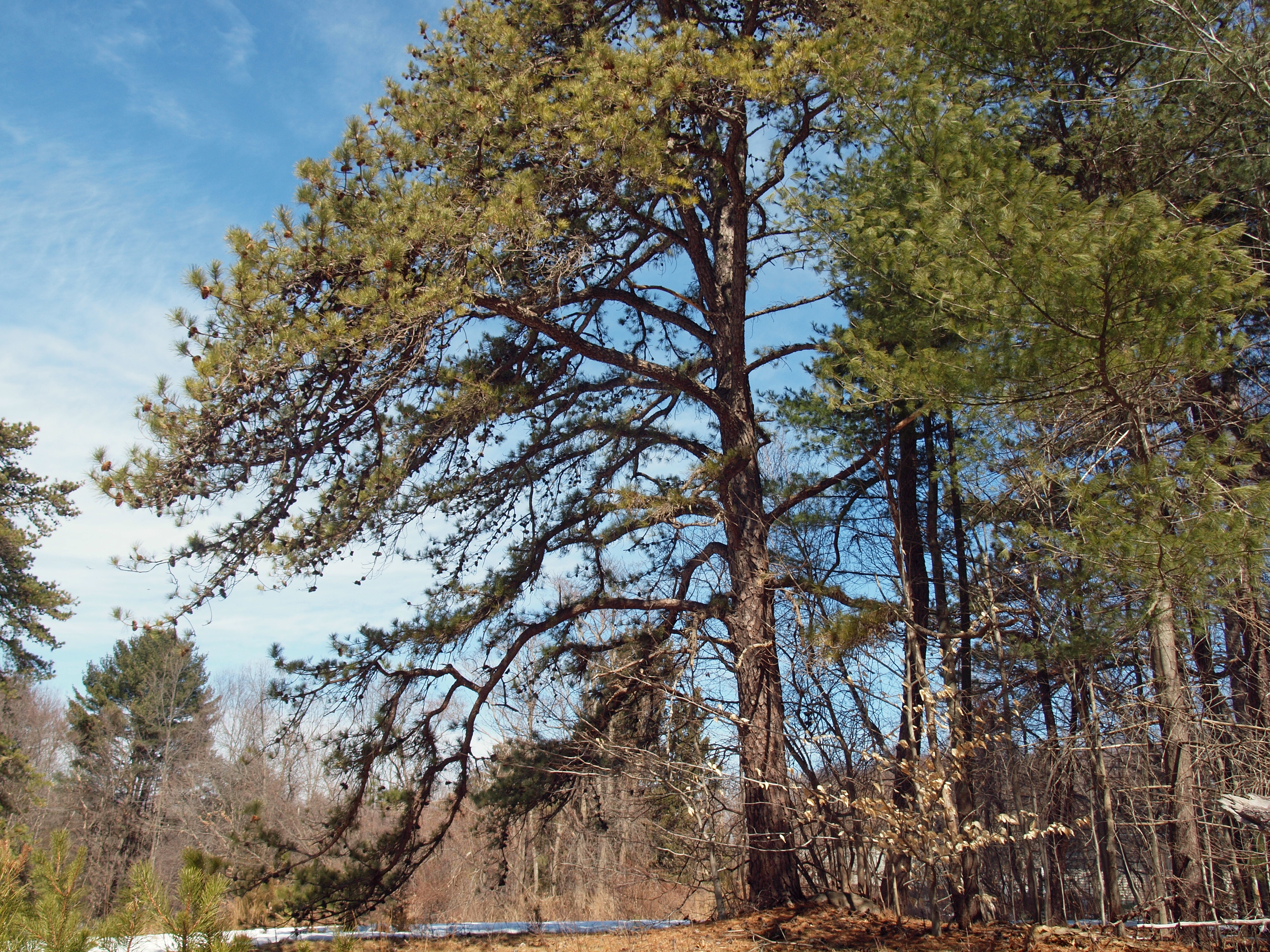
Pitch pine tree.
So far, SPB has been found in Connecticut on Scotch, red, and pitch pines, with the vast majority of finds being Scotch and red pines. It has not yet been found on eastern white pine, although it has been found in this species in outbreaks in other parts of the country, including on Long Island. SPB also infests spruce and hemlock trees, especially during outbreaks.
Although SPB is primarily a pest in the Southeastern U.S., it is of concern in Connecticut because it attacks pitch pine. The presence of pitch pine is characteristic of a forest habitat known as pitch pine/scrub oak woodland. This habitat developed on sandy outwash soils left by glaciation and is one of Connecticut’s 13 most imperiled ecosystems. As these same soils make great building sites, it is estimated that over 95% of the state's pitch pine/scrub oak woodlands have been lost. SPB may threaten the rare pitch pine stands that remain.
A small part of the red pine's host range is in northwestern Connecticut, although even there, it is uncommon. Red pine was widely planted throughout the state as a potential timber tree. Almost all of these plantation red pines have been removed over the past 40 years due to severe pest problems.
Identification
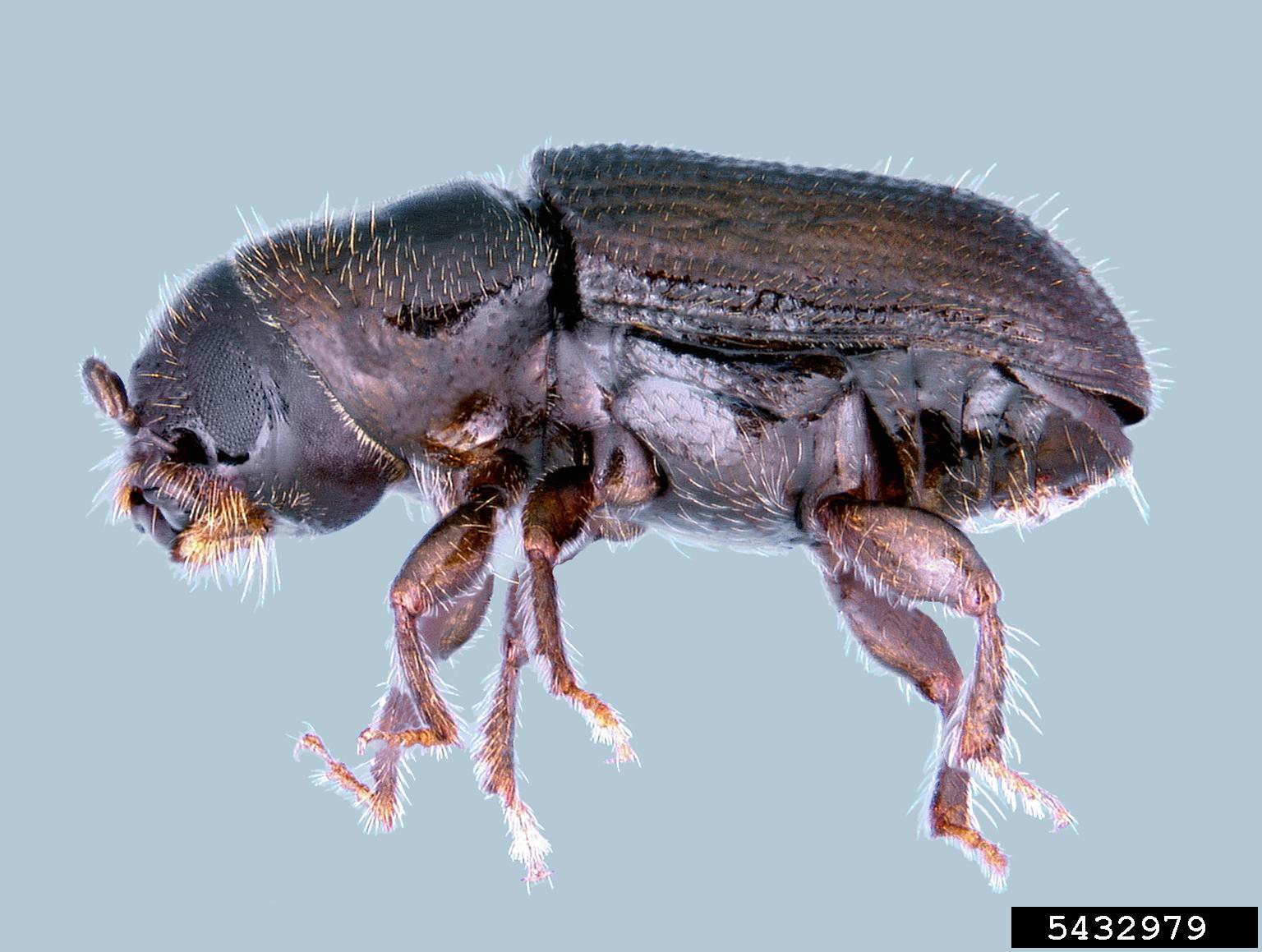
Southern pine beetle.
The southern pine beetle is a small insect, about 1/8 inch long. Although the adult beetle may not be readily visible when observing the tree, evidence will be visible on infected trees.
Popcorn-sized clumps of white resin, or pine sap, will be visible on the bark in locations where the beetle bores into the tree. Fine, reddish-brown dust on the bark and at the base of the tree indicates beetles boring through the bark. Small holes from beetles exiting the tree or woodpeckers looking for the beetles as a food source may also be present.
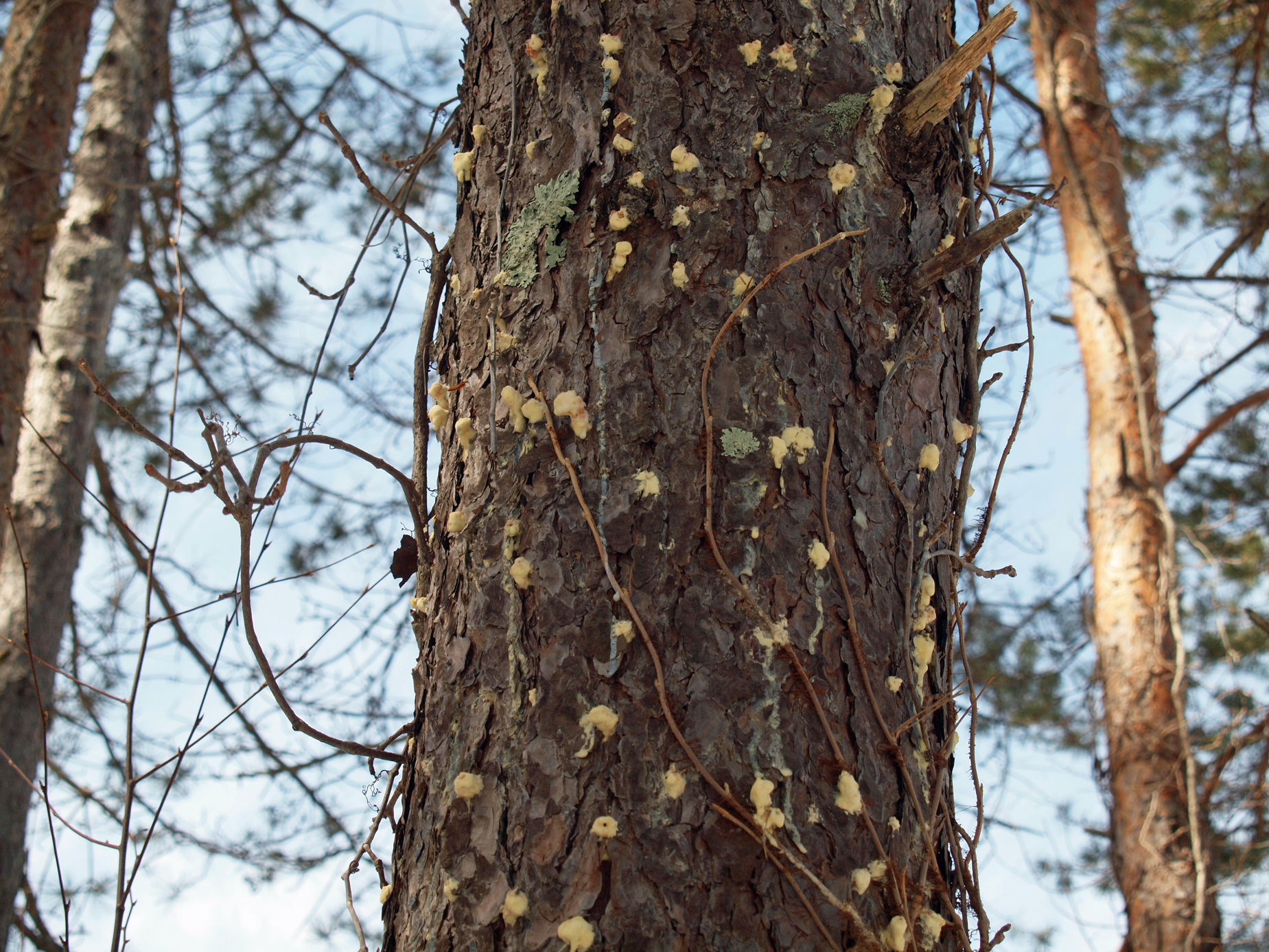
Trunk showing pitch tubes.
Infected trees will have S-shaped galleries, or tunnels, underneath the tree’s bark, where females lay eggs. White crescent-shaped larvae with red-brown heads may be seen in the galleries. It is important to note that many beetle species create galleries, and identification of SPB relies on multiple signs. Infected trees will display needle discoloration and drop.
Pines that are affected by SPB will develop a blue color to their wood that looks like blue stain. This is from a pathogenic fungus that is transferred to the tree as the adult SPB bores tunnels in the wood under the bark.
Life cycle and behavior
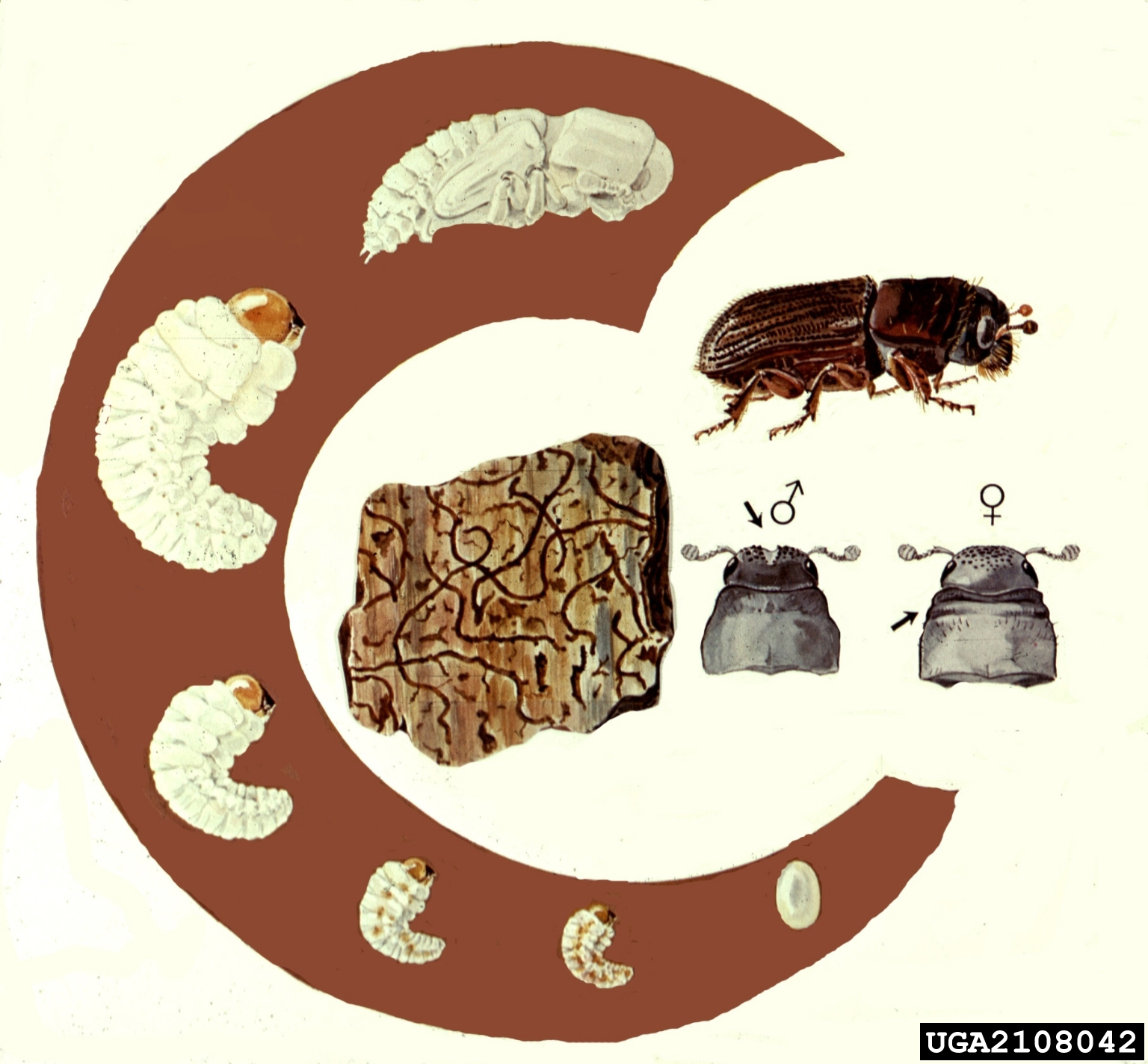
Southern pine beetle life cycle.
The southern pine beetle is a scolytid beetle. Also closely related is the mountain pine beetle (D. ponderosae), a devastating pest of the western U.S. and Canadian lumber industries.
SPB undergoes a complete metamorphosis during its lifetime. Its life stages progress from egg, larva, pupa, to adult. The larval stage is the feeding stage, during which the insect does most of its damage. The adult stage is where dispersal and reproduction occur. It is also in the adult stage that the beetle carries a blue-stain fungus, a key factor in the insect's destructive capability.
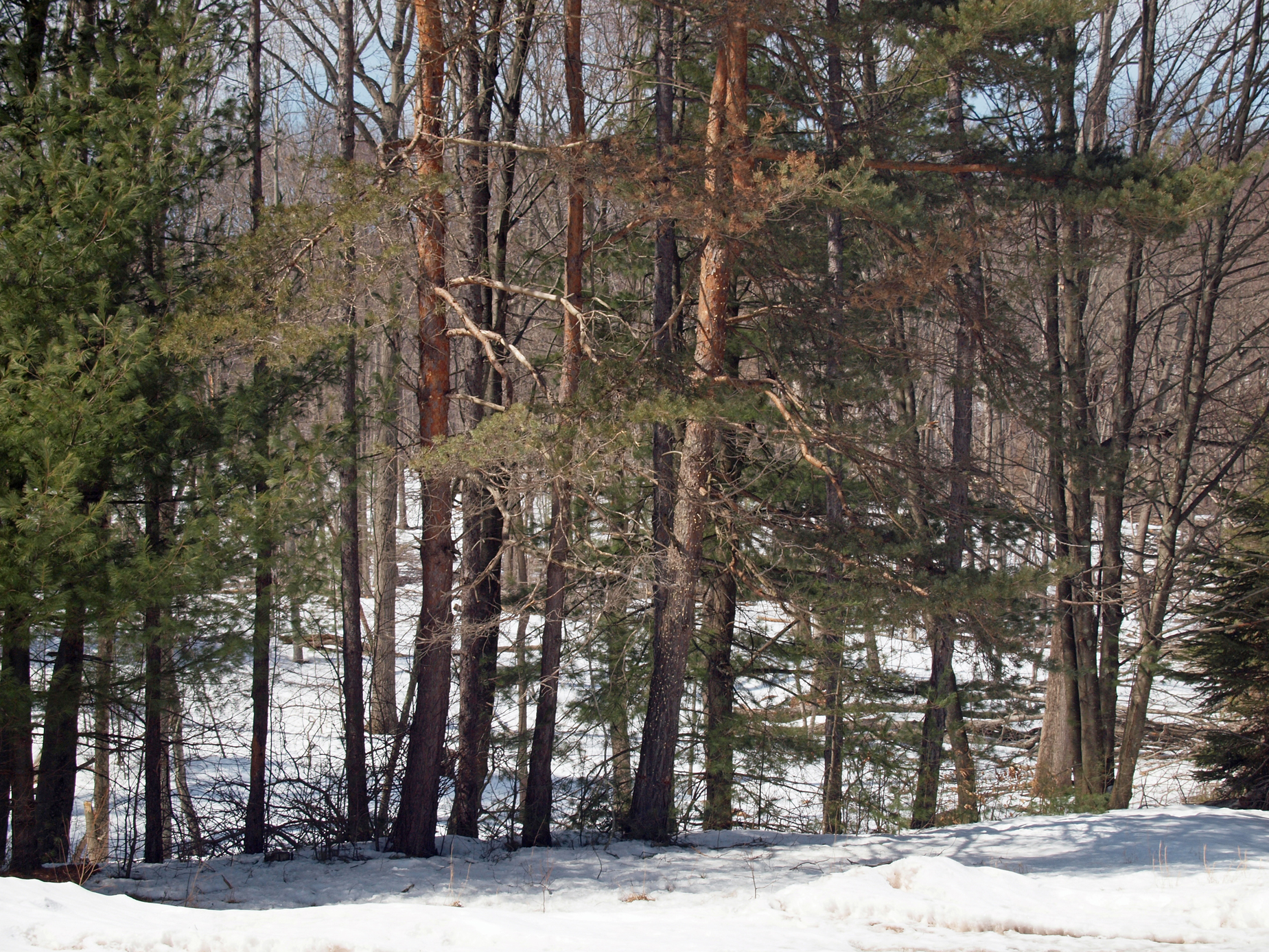
Infested Scotch pine tree.
SPB infestations are initiated by individual females. Once she finds a suitable tree, she releases an aggregation pheromone that attracts both female and male beetles. As the insects gather, the females bore into the bark. This triggers the tree to produce resin to "pitch out" the invading insect, essentially drowning it. With this technique, healthy trees are often able to resist an attack. However, if the tree is weakened or the beetles are in sufficient numbers, the SPB can overwhelm the tree. In the end, a successful infestation will kill a tree, although not immediately.
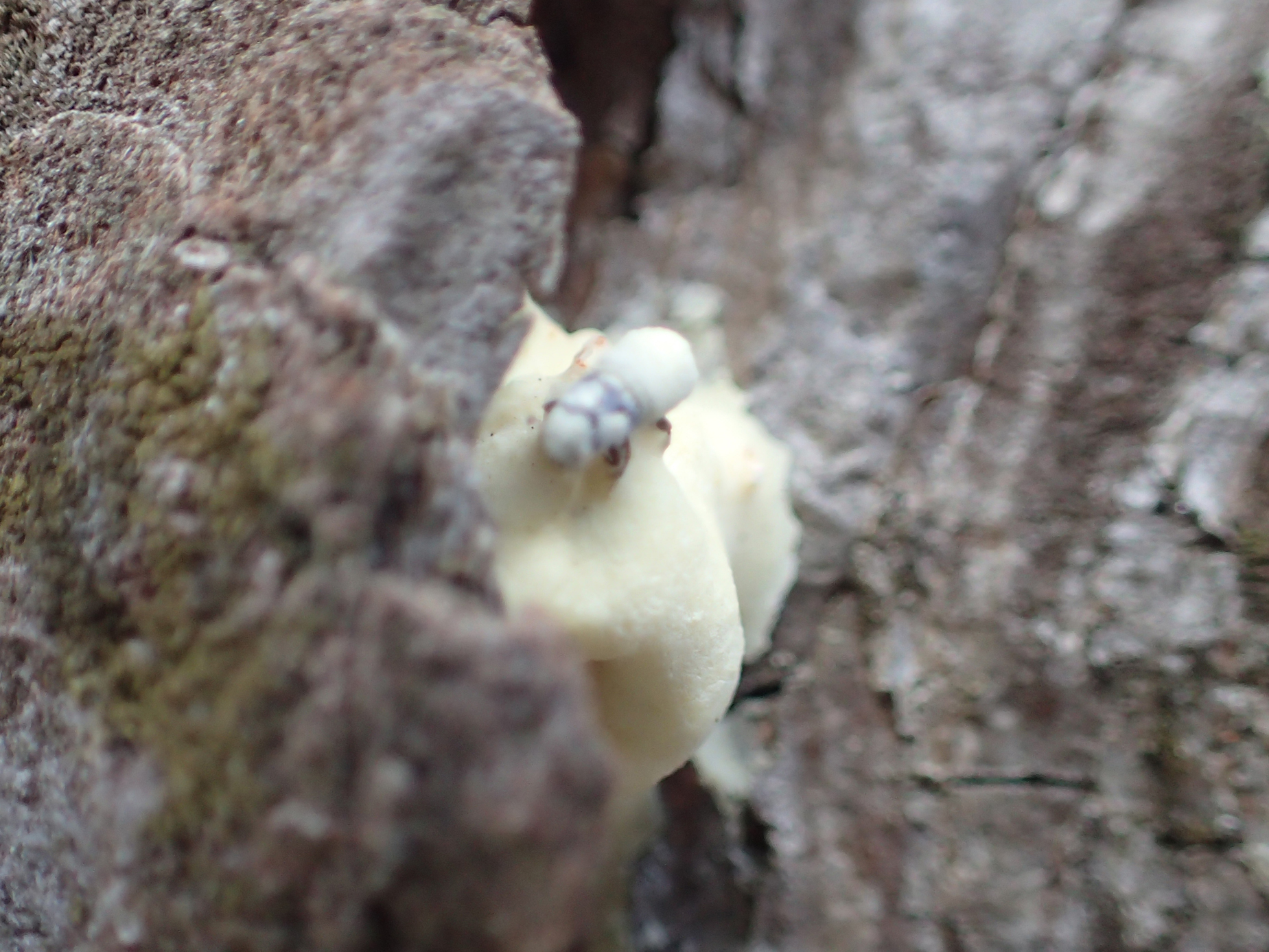
Pitch tube with an unsuccessful beetle.
Once beneath the bark of the tree, the female mates and constructs characteristic S-shaped galleries, with eggs laid along the sides of the galleries. As she moves through the tree, she inoculates it with a blue-stain fungus. This fungus, which then grows in the sapwood, provides food for the developing larvae. The fungus also contributes greatly to the tree's death by blocking the circulatory system within the tree.
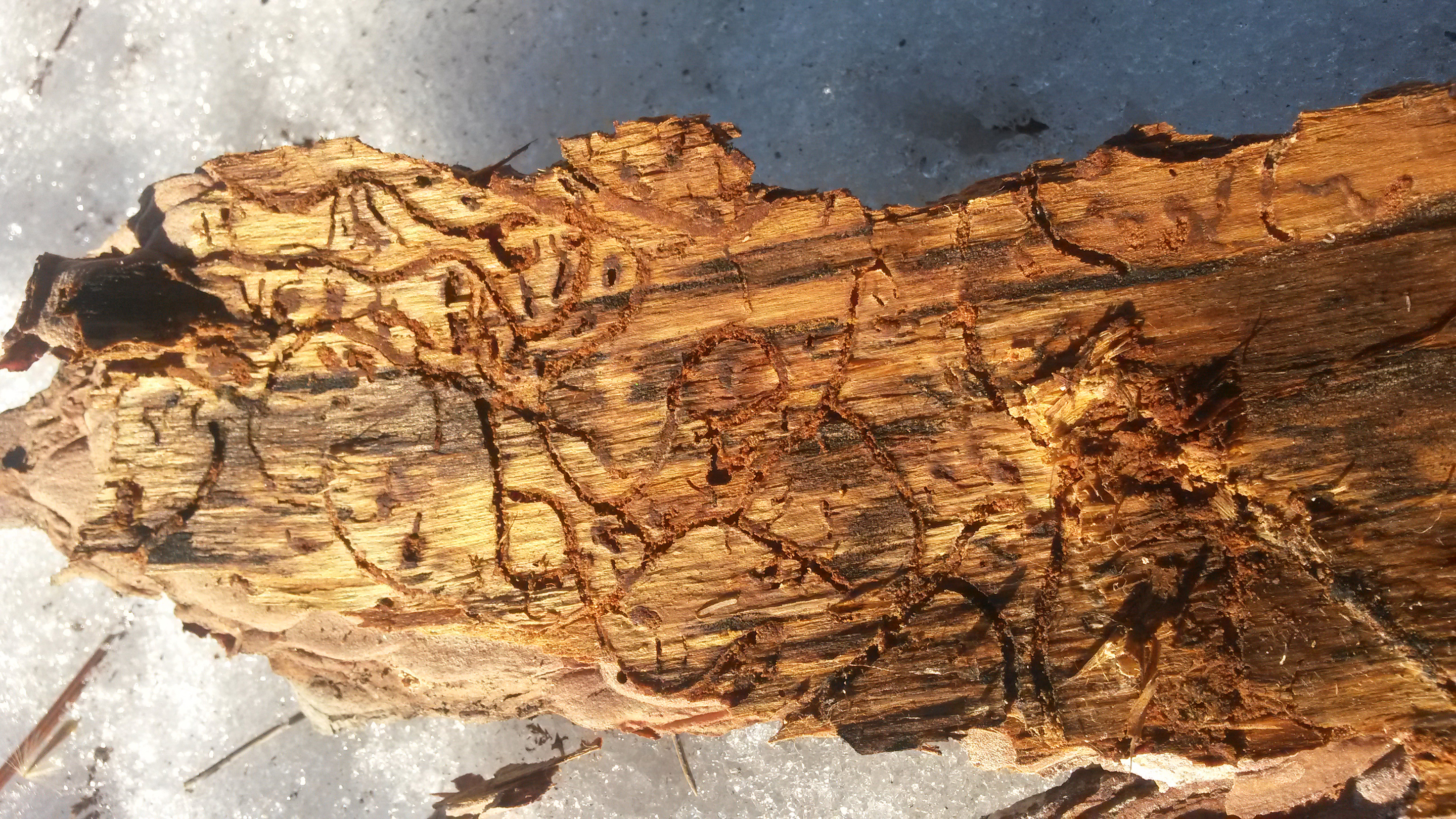
Southern pine beetle tunnels in bark.
In warmer parts of the United States, SPB may have six or more generations per year and can overwinter in all life stages. At its northern fringes, it is not yet known how many generations may occur in the course of a single growing season. It is also not yet known what life stages are able to survive the winter in places such as Connecticut, although the late instar larvae appear to be the life stage that is most cold-hardy.
Response
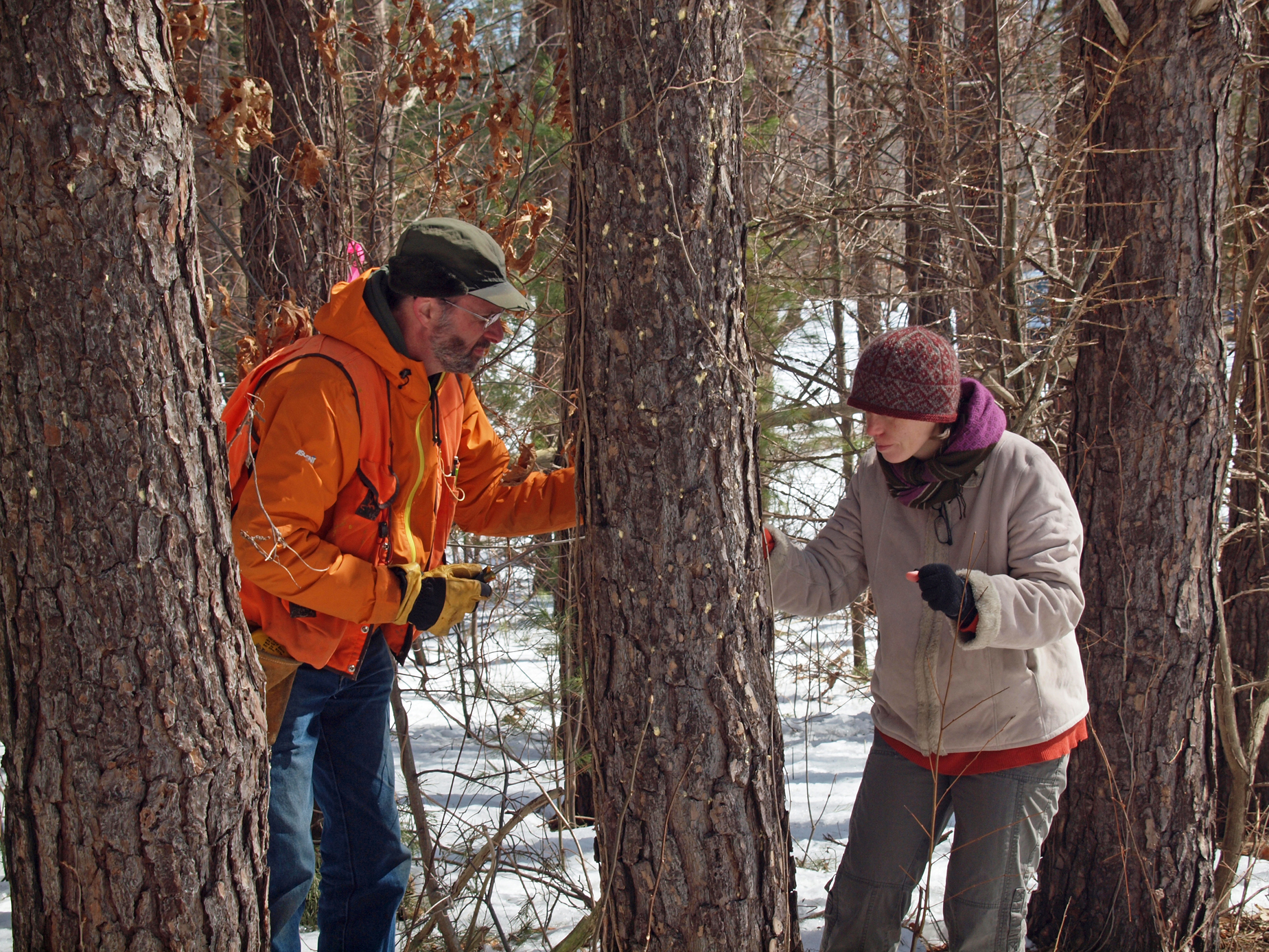
Jerry Milne (Forester, DEEP) and Dr. Claire Rutledge (Entomologist, Connecticut Agricultural Experiment Station) look for beetles on a Scotch pine.
The first confirmed find of SPB in Connecticut occurred on March 17, 2015, from red pine trees planted at Wharton Brook State Park in Wallingford. Since then, it has been found at several locations throughout the state on red pines, Scotch pines, and Norway spruce. At least one find on pitch pine has occurred, from a stand of pitch pine in North Haven.
SPB is not a species of federal regulatory concern. In this way, it differs from the emerald ash borer and Asian longhorned beetle. There are extensive regulatory restrictions associated with each of those insects that do not apply to SPB.
Both the DEEP Forestry Division and the Connecticut Agricultural Experiment Station (CAES) are very interested in limiting the spread and discouraging population increase of this insect. CAES is assessing how widespread this insect is in the state. This is being done through public reporting, trapping, and field surveys. Sensitive habitats, such as pitch pine stands, are a high priority for monitoring.
The experience of foresters in the southeastern United States will be of great value in providing guidance relative to forest management in the presence of SPB. Generally speaking, managing a stand to protect individual trees appears to be the best way to keep SPB in check. In stands of pitch pine, thinning to release pitch pine crowns from competition might be the best way to protect pitch pine from outbreak attacks of SPB.
For landscape trees, arboricultural recommendations include using bark drenches to prevent the successful attack of the tree when the beetle is in outbreak mode. For trees that have already been attacked and the blue-stain fungus introduced into the sapwood, they cannot be saved, as there is no treatment for the fungus.
Arborists, tree care workers, Christmas tree growers, and others are encouraged to use proper sanitation when working with blue-stained wood. Equipment such as hand saws should be cleaned. The fungus may be carried to healthy trees by infested tools.
Wood from SPB-infested or killed trees can be used in solid-sawn form, provided the tree has been debarked to remove any remaining beetles. The blue-stain fungus is not a decay fungus and does not weaken the wood. It may, however, decrease the appearance value of that wood.
The best recommendation is to chip any infested trees on site and remove the chips produced off-site, at some distance from any potential host trees. It is considered unlikely that many beetles would survive the chipping process. Double-chipping and composting would help further diminish the likelihood that the beetles would survive.
How to help
- Monitor your pine trees for evidence of the southern pine beetle.
- If you think you may have found the SPB, do not attempt to move the insect, wood, or other potentially infested material from the site. Take photos, make a note of the location, and report the sighting to the CAES State Entomologist: CAES.StateEntomologist@ct.gov
- For forests, the best defense against pests like the southern pine beetle is forest management that supports diverse species, age classes, and forest composition. For more information about the overall health of your forested land, contact your Service Forester or consult a private Connecticut Certified Forester.
- If you own or manage urban or landscape trees affected by the southern pine beetle, contact a Licensed Arborist who can answer your questions.
Resources
Content last reviewed May 2026.