

Press Releases
07/15/2026
DEEP Forecasts Elevated Levels of Fine Particulate For Wednesday, July 15, 2026, through Thursday, July 16, 2026
Levels May Be Unhealthy for Sensitive Groups to Unhealthy During This Time
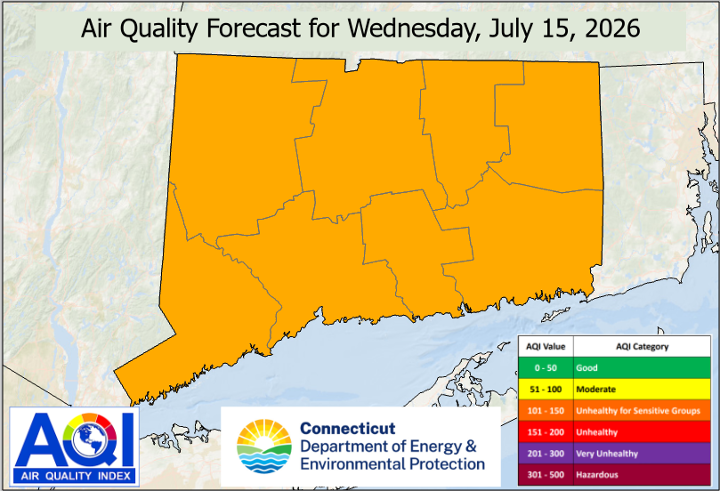
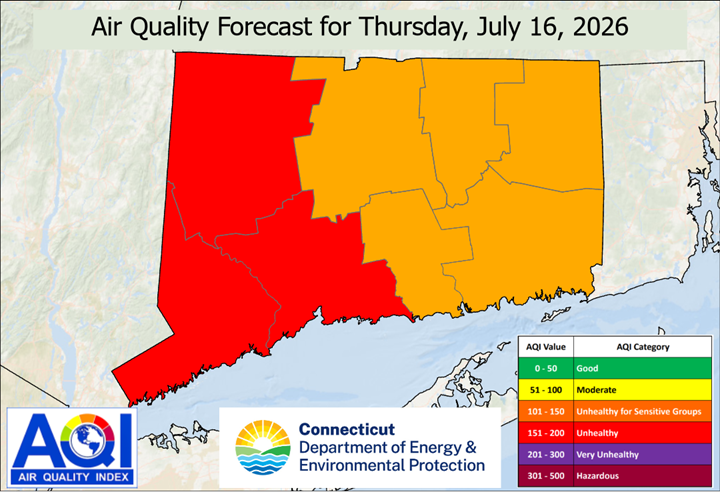
(HARTFORD)— The Connecticut Department of Energy and Environmental Protection (DEEP) forecasts that air quality across the state will reach or exceed levels that are high Unhealthy for Sensitive Groups (USG) on Wednesday, July 15th. In addition, Fairfield, New Haven, and Litchfield counties will reach or exceed levels that are high Unhealthy for Sensitive Groups (USG) to Unhealthy on Thursday, July 16th due to Canadian wildfire smoke in the outdoor air we breathe.
What You Should Do
If you are in a sensitive group, which includes young children, the elderly or anyone who has pre-existing health concerns such as asthma, heart or lung problems, then you should:
- Make outdoor activities shorter and less intense and take more breaks.
- Watch for symptoms such as coughing and shortness of breath and follow your health care provider’s action plan.
For everyone else:
- Limit time outdoors, especially in the afternoon and evening
- Move workouts and activities indoors or reschedule
- Take frequent breaks if you must be outside
If You Feel Symptoms
Stop activity and go indoors right away if you experience:
- Coughing
- Shortness of breath
- Chest tightness
- Eye or throat irritation
Seek medical care if symptoms are severe or do not improve.
Reduce Your Exposure
- Keep windows and doors closed
- Run air conditioning on recirculate
- Use a HEPA air purifier if available
- Avoid adding indoor pollution (e.g., burning candles, smoking, vacuuming without HEPA filters)
Ozone is formed when air pollution from fossil fuel combusted by both local and upwind sources, including vehicles, power plants and other industrial sources, combines in the presence of summer-like temperatures.
How do Forest Fires in Ontario Impact Connecticut?
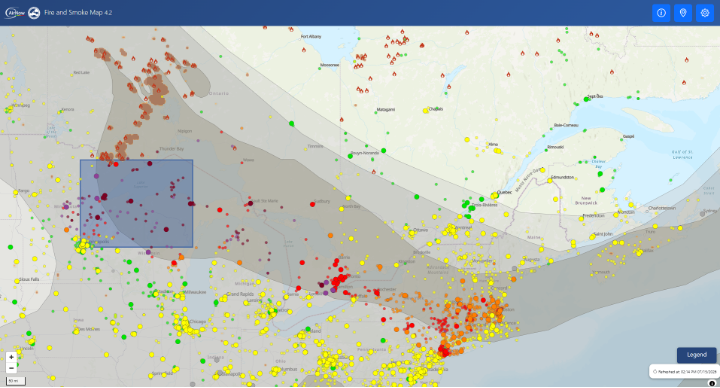
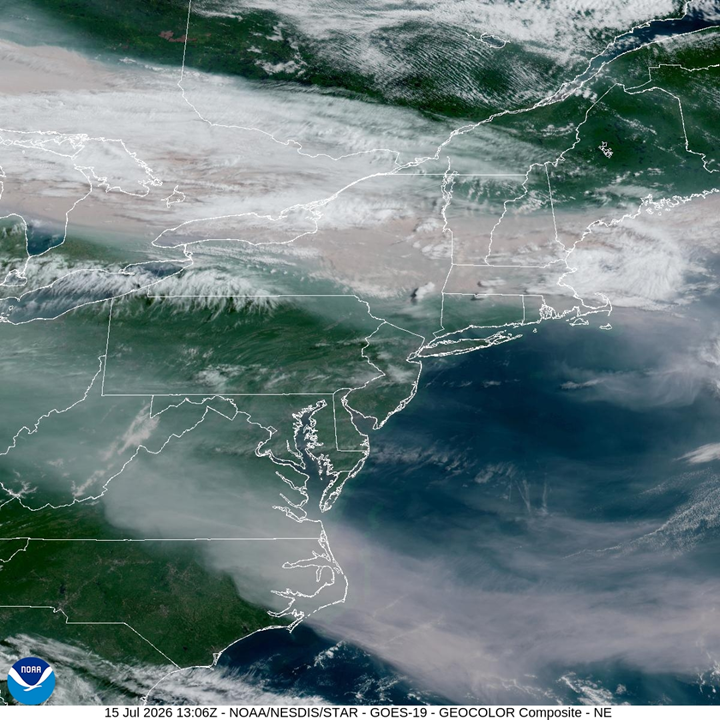
According to the Canadian Wildland Fire Information System, more than 830 fires are burning across Canada. The wildfire smoke from southern Ontario is heading towards Connecticut because of a stalled upper-level low-pressure system over eastern Canada and a cold front passage on Wednesday afternoon. With this weather pattern, winds at all levels of the atmosphere are from the northwest for inland areas and these winds will persist through Wednesday. The following image shows the fire location with the smoke plume from the EPA Fire and Smoke Map at 9:30 AM. The satellite image from 9:00 AM today shows a thick smoke plume over the Great Lakes region, heading southwest towards New York and the New England states. Currently, the PM2.5 levels at the surface are in the high Moderate range in southeastern Connecticut and USG to unhealthy range across the remainder of the state. Wildfire smoke impacts are expected to increase throughout the afternoon and persist through Thursday with hazy skies and elevated PM2.5 levels.
AirNow Fire and Smoke Map
Satellite Imagery
“The wildfire smoke impacting Connecticut today and tomorrow will produce unhealthy air quality and in combination with higher temperatures is expected to present significant risk to our most vulnerable residents,” said DEEP Acting Commissioner Emma Cimino. “We urge everyone to use caution over the next several days as you plan your outdoor activities.”
"We know Connecticut residents want to enjoy the outdoors in the summer. This week's air quality conditions are a temporary but important reminder to plan around them, especially for sensitive groups," said Department of Public Health Commissioner Manisha Juthani, M.D. "I'm urging residents, especially children, older adults, and anyone with asthma or heart or lung conditions, to take this air quality alert seriously. Simple steps like moving activities indoors and keeping windows closed can make a real difference in protecting your health. If you, a family member, friend or neighbor starts feeling symptoms like chest tightness or eye irritation, don't wait, head indoors and seek care if symptoms worsen."
Weather Summary and Air Quality Alert
On Wednesday, northwest winds inland will funnel thick smoke from Canadian wildfires into Connecticut, bringing hazy skies. By late afternoon, a cold front approaching from the US/Canadian border will sweep across the state before clearing the coast by Wednesday night. Expect highs in the low 90s, with southwest winds along the coast.
On Thursday, the cold front remains offshore as second cold front moves south from the US/Canadian border. In the morning, winds shift from the northwest to the west inland, allowing for continued transport of wildfire smoke into the state. Skies are expected to remain hazy with temperatures reaching the mid to high 80s.
Map of Air Quality Forecast for Wednesday, July 15, 2026
Map of Air Quality Forecast for Thursday, July 16, 2026
What You Can Do to Help
While ozone levels in the northeast have improved significantly over the last 30 years, Connecticut continues to struggle to meet both the 2008 and the 2015 federal health-based standards for ozone, which are necessary to protect families and children from unhealthy air pollution.
Connecticut has made great strides implementing control strategies to reduce air pollution and establish several new programs and initiatives concerning electric vehicle use and reduction of transportation-related greenhouse gas emissions. To meet the federal health-based standard for ozone, which Connecticut exceeded on 22 days last year, DEEP continues to pursue tools and strategies to further reduce air pollution in Connecticut from sources like cars and trucks while working with EPA to ensure that air transported into Connecticut meets the ozone standard as well.
Additionally, there are steps that we can all take to reduce our contribution to local air pollution. DEEP recommends simple, common-sense steps to reduce air pollution that may even help save you some money at the same time!
- Drive Less – consider carpooling, vanpooling, using public transit or tele-working;
- Drive Clean – consider purchasing or leasing an electric vehicle. Learn more by visiting: www.driveelectricus.com and CHEAPR - Home (ct.gov);
- Green your lawn – consider using battery-powered mowers, string trimmers, leaf blowers and other battery powered garden equipment around your home;
- Reduce or Shift Energy Demand – purchase energy efficient products like ENERGY STAR® LED lights and ENERGY STAR® air conditioning, use programmable thermostats set to 78o or higher when no one is home, and use energy intensive appliances like washing machines, dryers and dishwashers later in the day;
- Be Aware of Your Air – Understand the Air Quality Index and sign up to receive alerts so you will know when air quality is predicted to be unhealthy; and
- Small changes add up – When you know there will be an unhealthy air day, make small changes to your routine:
- Refuel your vehicle after dusk and stop refueling when the nozzle clicks off,
- Avoid idling your vehicle unnecessarily and keep tire pressures at their recommended level,
- Delay using gasoline powered mowers and yard equipment,
- Limit your outdoor activity in the heat of the day,
- Refrain from recreational wood burning;
- Twitter: @CTDEEPNews
- Facebook: DEEP on Facebook
Contact
DEEP Communications
DEEP.Communications@ct.gov
860-424-3110