


What's New

What’s New
Two New Fact Sheets Published Online
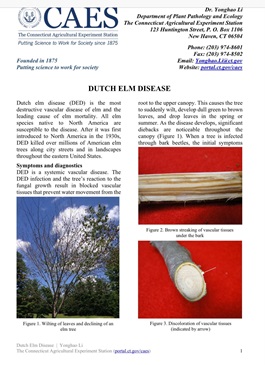
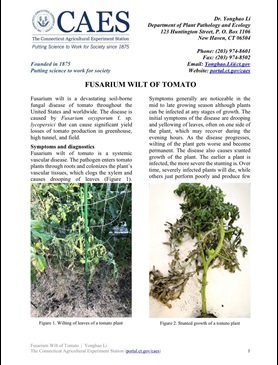
Dutch Elm Disease Fusarium Wilt of Tomato
Septoria Leaf Spot - Browning of Leaves in Late Summer

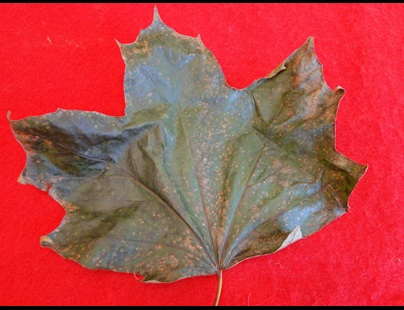
Septoria leaf spot is a minor foliar disease on maples. But, the wet and stormy weather during the growing season has been causing severe browning of leaves and early defoliation since late summer. Although it is cosmetic and has minimal long-term impacts on the trees, a widespread of this disease may affect brilliant fall color this year. For more details, please read linked fact sheet Common Diseases of Maple.
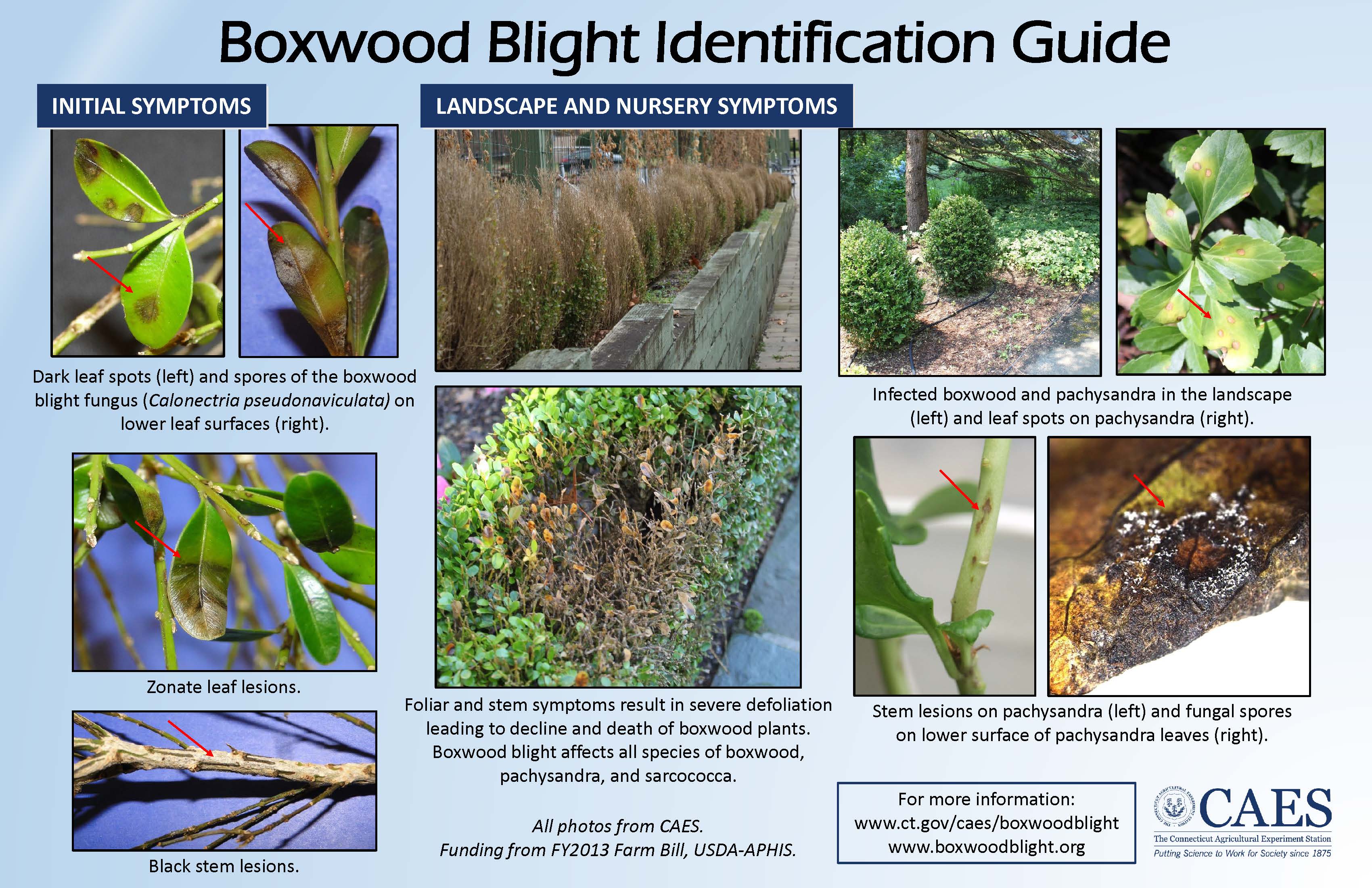
Watch for Boxwood Blight this Summer and Fall

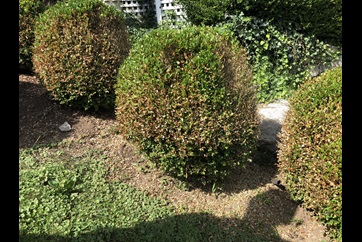
Recent summer weather has been very conducive for boxwood blight, a devastating infectious disease on boxwood. Our office has been receiving numerous inquiries and boxwood blight positive samples since this summer. Please find the linked Boxwood Blight Identification Guide and watch for typical symptoms on established, newly installed, or newly purchased boxwoods. If you find suspected boxwood blight symptoms, please send us samples by following Sample Submission Guidelines for a lab examination and confirmation. More information of boxwood blight can be found in Boxwood Blight - Information and News.
New Fact Sheet - Beech Leaf Disease - Updates 2021
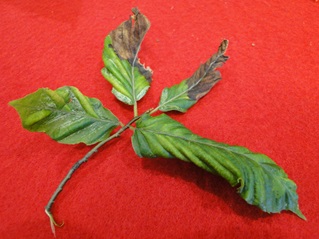
Beech leaf disease (BLD) was first discovered on American beech (Fagus grandifolia) in Lake County, Ohio, in 2012. BLD is now, in 2021, well-established in Ontario, Canada, and throughout much of northern Ohio, northwestern Pennsylvania, western and southern New York, eastern Massachusetts and several counties in Maine. In Connecticut, BLD was first found in 2019, in Fairfield County (Figure 1), and is now found in all counties except Hartford County, with the greatest severity occurring in Fairfield, New Haven, Middlesex, and New London Counties. The disease has been observed mainly in forests and private woodlots, but it has also been reported in landscaped areas. Find more details in the linked fact sheet, Beech Leaf Disease - Updates 2021.
Lesser celandine: An invasive plant with pretty yellow flowers
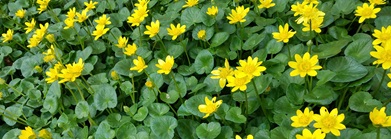
Lesser celandine (Ficaria verna), a native to Europe and parts of northern Africa and Asia, has been distributed throughout the northeastern United States. We have been receiving numerous phone calls and emails with inquires of lesser celandine this spring, which is raising the alarm that the invasive species appears to be spreading. For details of this invasive plant, please read the fact sheet Lesser Celandine (Ficaria verna Huds.) Identification and Management.
Snow Mold - The First Disease of the Year on Turfgrasses


After this long winter with a prolonged period of snow cover, snow mold is being found in many lawns across Connecticut. It is a fungal disease infects grasses in the late winter or early spring. After snow melts, circular whitish-gray patches appear on turfgrasses. Since most damaged grasses can recover when temperatures warm up in the spring, no fungicide treatments are necessary. Linked please find a fact sheet that describes this disease and strategies for its management. Gray Snow Mold of Turfgrass in Home Lawn.