

Bureau of Special Education Update, October 2026
In This Issue
From the Director’s Desk

As we move into the heart of the 2026/27 school year, I am encouraged by the energy, commitment, and collaboration taking place across Connecticut. The Bureau of Special Education remains focused on our shared mission: strengthening systems, building capacity, and improving outcomes and opportunities for students with disabilities.
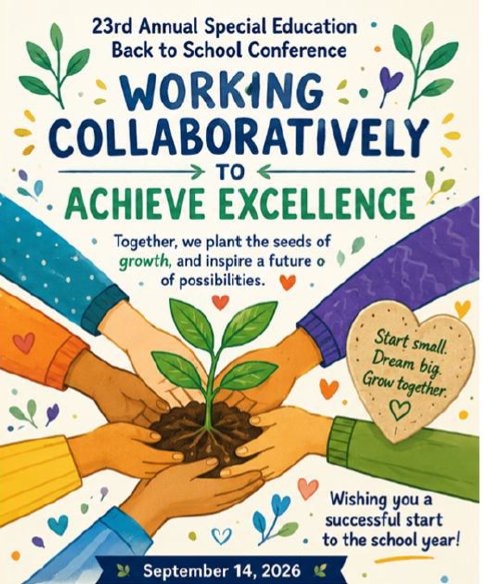
There is much to celebrate this fall. Last month, more than 500 special education leaders from across the state joined us for our annual Back-to-School Conference, Working Collaboratively to Achieve Excellence. We were honored to welcome Governor Lamont, Lieutenant Governor Bysiewicz and Commissioner Russell-Tucker, who shared their support for the important work being done on behalf of students with disabilities, families, and educators. We are also excited to announce a new $4.7 million, five-year federal grant to support teacher apprenticeships, an important investment in our collective efforts to recruit, prepare, and retain highly qualified special education teachers in Connecticut.
As you will see throughout this month’s newsletter, the Bureau is committed to providing the support, partnership, and leadership needed to move our work forward. The work of improving outcomes for students with disabilities is complex and ongoing, but it is also deeply meaningful. Every day presents an opportunity to strengthen a system, support an educator, engage a family, and create a better opportunity for a student. Thank you for the partnership, perseverance, and commitment you bring to this work. Together, we will continue to build on our progress and work toward a future where every student with a disability has the opportunity to learn, grow, and thrive.
In partnership,

Bryan Klimkiewicz
Division Director, Bureau of Special Education
Connecticut State Department of Education

General Supervision
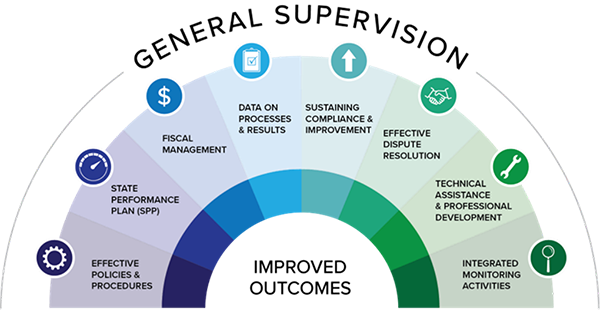
The CSDE envisions a high-quality, integrated system of General Supervision for the provision of special education and related services in Connecticut, resulting in improved outcomes for students with disabilities. Through a robust system of support and shared accountability our goal is to enhance students’ educational outcomes, empower educators and parents, and promote an inclusive educational system that prepares all students to thrive academically, socially, and personally.
Integrated Monitoring 2026-27 Cohort C
As a condition of receiving Individuals with Disabilities Education Act (IDEA) funds, the State Education Agency (SEA) under IDEA Part B Sections 611 and 619 must have a general supervision system. This system includes multiple components including integrated monitoring to (1) improve educational results and functional outcomes for infants and toddlers with disabilities and their families, and children with disabilities; and (2) ensure that local education agencies (LEAs) meet the requirements under IDEA, 20 U.S.C. §§ 1412(a)(11), 1416(a), 1435(a)(10) and 1442; 34 C.F.R. §§ 300.149, 300.600–300.604, 300.608, 303.120, and 303.700–303.708.
One of the eight components of the General Supervision System is Integrated Monitoring. Integrated Monitoring activities are a multifaceted formal process or system designed to examine and evaluate an LEA’s implementation of IDEA with a particular emphasis on educational results, functional outcomes, and compliance with IDEA programmatic requirements. The CSDE engages in Universal Monitoring activities, meaning every district is engaged in the activity each year. One example of a Universal Monitoring activity is the Local Education Agency (LEA) Special Education Determinations that are part of the Annual Performance Report (APR), State Performance Plan (SPP).
The CSDE also engages in Cyclical Monitoring activities. LEAs experience Cyclical Monitoring activities through a cohort-based model (three cohorts: A, B, and C). Each cohort contains approximately 1/3rd of the LEAs across the state. The 2026-2027 school year is a Cohort C year, and the BSE engages in a variety of tiered, integrated monitoring activities with the cohort. LEAs in Cohort A and B may be identified for off-cycle reviews throughout the year if there are identified areas of concern. The following districts are included in Cohort C:
- A–C: Ashford, Branford, Bridgeport, Bristol, Brookfield, Brooklyn, Canaan, Canton, Chaplin, Colchester, Cornwall, Coventry
- D–H: Derby, East Hartford, Easton, Ellington, Farmington, Griswold, Hamden, Hampton, Hartland
- K–N: Kent, Killingly, Ledyard, Manchester, Mansfield, Monroe, New Britain, New London, North Canaan, North Haven, North Stonington
- O–R: Oxford, Plainville, Redding, Regional School District #1, Regional School District #9, Regional School District #11, Regional School District #19
- S: Salem, Salisbury, Scotland, Sharon, Shelton, South Windsor, Sprague, Stratford, Suffield
- T–W: Thompson, Trumbull, Vernon, Waterford, Watertown, Westbrook, Weston, Westport, Willington, Wilton, Winchester, Windsor Locks
- Other districts: CTECS, DMHAS
Tier 1
The CSDE will be engaged with all Cohort C LEAs on the following activities:
- Parent Special Education Survey (Indicator 8) - Parent Involvement.
- Annual Review / Reevaluation Timeline Compliance Checks.
- A review of data cleaning reports in SEDAC.
- A review/verification of Special Education Procedures and Practices.
- Fiscal IDEA Grant Activities
Tier 2
Some LEAs in the cohort will be engaged in additional activities including but not limited to:
- A Desk Audit review of selected components of Individualized Education Program (IEP) and Prior Written Notice (PWN) documents for a sample of students.
- A review of district resources posted on the district’s website.
- A review of LEA participation in Early Childhood Transition meetings.
Tier 3
Some LEAs in the cohort will be engaged in additional activities including but not limited to:
- Onsite monitoring visits
- Service Verification activities
2026-27 General Supervision LEA Advisory Meetings
The CSDE’s Bureau of Special Education (BSE) invites local Directors of Special Education to participate in monthly advisory meetings to share feedback on how the CSDE monitors and supports school districts in the provision of special education. The CSDE values your input as we continue to refine and improve our general supervision system. Additionally, these meetings are an opportunity for the BSE to hear directly from you about successes and challenges you face in your district related to the general supervision of IDEA. Meetings take place virtually on the first Wednesday of each month, October through May, from 3:00–4:00pm: October 7, November 4, December 2, January 6, February 3, April 7, and May 5.
If you would like to receive an invite for the General Supervision LEA Advisory meeting series, please complete the General Supervision LEA Advisory interest form. If you have any questions, please contact Heather Levitt Doucette at Heather.Levitt@ct.gov. We hope to see you at our first meeting of the year!

Fiscal Matters
Connecticut State Department of Education Receives $4.7 Million Federal Grant to Expand Special Education Workforce Pathways
On September 17th the CSDE received information that Connecticut was one of a select number of states to receive funding for our federal grant application! More information will follow in the upcoming months and throughout the grant cycle. This five-year grant will expand registered apprenticeships for special education teachers, build a new early intervention apprenticeship pathway, and introduce more students to careers serving children with disabilities. Our work, which will begin in October of 2026, involves three main goals:
- Goal 1: Scale special-education-focused registered apprenticeship programs statewide
- Goal 2: Build an early intervention / early childhood special education registered apprenticeship program (OEC)
- Goal 3: Expand early awareness of special education and early intervention careers (at the middle/high school level)
FY27 Special Education Expansion and Development (SEED) Grant Application - Due 10/23/26
The Fiscal Year (FY) 2027 Special Education Expansion and Development (SEED) Grant application is now available for completion in the electronic grant management system (eGMS). The SEED Grant application is due on or before Friday, October 23, 2026, at 4:00pm. (This means the grant must be in “LEA Superintendent/Authorized Rep Approved” status by 10/23/26 at 4:00pm.)
In accordance with Connecticut General Statute (CGS) § 10-76ggg, SEED grant funds can only be used for “special education purposes”. SEED grant funds may not be used to supplant special education funding but can be used for the expansion and development of special education programs and initiatives. Below is a summary of allowable and not allowable uses of SEED grant funds (this is not an exhaustive list):
Allowable
- Salaries (and benefits) of staff in new positions created on/after 7/1/25 (i.e., special education teachers, paraeducators, behavioral and reading specialists who are responsible for the direct provision of special education/related services or Tier 2/Tier 3 academic/behavioral interventions)
- Interdistrict collaboration or in-district programs (as long as activities adhere to the allowable use of funds)
- New curriculum supplies, including technology-related software/hardware and new assessment materials; new equipment purchases (e.g., new special education transportation vehicle) and maintenance to such equipment (as long as they will be used in the direct provision of special education/related services or Tier 2/Tier 3 academic/behavioral interventions)
Not Allowable
- Administrative Functions
- Operating Expenses
- Professional Development/Training
- Parent Activities
- Third-party Contractors/Vendors
- General Education Staff/Supplies/Equipment
- Tier 1 Intervention Staff/Supplies/Equipment
FY 27 SEED grant funds are to be expended between July 1, 2026, through June 30, 2027. There is no extended liquidation beyond June 30, 2027.
Reminders
- The SEED grant allocations are calculated similar to the Education Cost Sharing (ECS) formula outlined in CGS § 10-262f.
- SEED grant payments are distributed to school districts as an entitlement grant and will not require fund requests in the eGMS. Payments are distributed as follows: 25 percent of the total allocation in October, 25 percent of the total allocation in January, and the balance of the allocation by April. NOTE: FY26 SEED Expenditure Report must be in “CSDE Fiscal Approved” status in order for the school district to receive its first FY27 SEED grant payment in October.
- Any school board that receives a SEED grant of $10,000 or more will be required to submit an expenditure report in the eGMS. All subgrantees must maintain an accurate record of the actual expenditures and adhere to grant requirements. NOTE: The legislation outlines penalties for improper use of SEED grant funds.
Please address any questions related to the SEED Grant to Alycia M. Trakas by phone at 860-713-6932 or by email at Alycia.Trakas@ct.gov.
IDEA Part B, Section 611/619 Grant Training
Meaningful Consultation Assembly
- Friday, October 30, 2026
- 9 a.m.–12 p.m.
- Goodwin University, 1 Riverside Drive, East Hartford, CT 06118 (Event will be held in the Auditorium)
- In-person, free, 3 hours
This session will provide a review of Parentally Placed Private School Children, elements of Proportionate Share, Individualized Services Plans (ISPs) and Parentally Placed Private School Students (PPPSS) within the Connecticut Special Education Data System (CT-SEDS), and the Timely and Meaningful Consultation meeting to address equitable services. Special Education Directors, Administrators, IDEA Grant Managers, Business Managers, as well as representatives from Nonprofit, Nonpublic/Private Schools are encouraged to attend this session.
Register for the Meaningful Consultation Assembly
Policy and Guidance Reminders
Restraint and Seclusion New Reporting Requirements
Connecticut law requires school districts to notify parents or guardians each time a student is placed in physical restraint or seclusion. A new change in state law, effective July 1, 2026, requires same day notification whenever a child is restrained or secluded in school. School districts must continue to follow these legally required parent-notification procedures. All notifications are documented within CT-SEDS during the incident-reporting process. Please Note: There is no change to the requirement (2 business days) related to the submission of the incident (written) report to the parent and the CSDE (through CT-SEDS).
Student Discipline
Effective July 1, 2026, Public Act 26-1 restricts the use of out-of-school suspension for students in preschool through second grade to situations where the student’s conduct on school grounds caused “serious physical harm”—a heightened standard from the prior threshold of mere “physical harm.” The Act also requires school districts to offer an alternative education opportunity for students between the ages of 16 and 18 who are expelled for the first or second time, provided the student complies with conditions established by the board of education; previously, this requirement only extended to students expelled for the first time. In addition, school districts must now notify parents of a student placed in physical restraint or seclusion on the same day it occurs. For details, see the Reminder Regarding State Statutory Requirements for School Discipline.

Early Childhood Education
Early Childhood Outcomes (ECO) Office Hours
Join us each month for discussions, Q&A, and collaborative problem solving as we work together to implement CT DOTS II and meet ECO data collection requirements. Sessions will be supported by Renee Kleinman, CSDE Early Childhood Special Education Consultant, along with members of the RESC Alliance. Office hours will be held via Zoom. Early childhood programs required to complete ECO data collection are encouraged to have at least one staff member attend. Registration is required for the series; however, you may attend the sessions that your schedule permits. Register through the Early Childhood Outcomes (ECO) Office Hours Registration.
Update on CT DOTS II Materials
Districts are now able to place orders through the OEC website for CT DOTS II materials. Orders will be fulfilled once the designated RESC location has received its inventory. We appreciate your patience as CSDE and the OEC work together to ensure that each site is fully stocked and prepared to process and distribute orders efficiently. To order materials, visit Order CT ELDS and CT DOTS materials - Connecticut Office of Early Childhood. As a reminder, the 2026 Connecticut’s Documentation and Observation for Teaching System II (CT DOTS II) is also available for download as a PDF on the OEC website:
- CT DOTS II User’s Manual
- CT DOTS II Observation Progression Book
- CT DOTS II Infant/Toddler Flip Chart
- CT DOTS II Preschool Flip Chart
Professional Development Training for Early Childhood Outcomes (ECO) for Early Childhood Special Education (ECSE) Teachers and Related Service Providers
There are several training opportunities this fall for Strengthening the Early Childhood Outcomes Process through Curriculum Based Assessment (virtual and in-person). We encourage ECSE teams to have at least two staff attend one of these training sessions. Upcoming dates are October 13, October 28, and November 3, 2026. Find details and register on the RESC Alliance Early Childhood Special Education training registration page.
Early Childhood Transition Series
Smooth and Effective Transitions from Part C to Part B: Two Systems, One Family
Join the CT State Department of Education (CSDE), CT Birth to Three (B23), and the CT Parent Advocacy Center (CPAC) for a concise, interactive in-person session supporting smooth and effective transitions from Part C to Part B. For dates, times, locations, and registration on Protraxx, visit the Early Childhood Transition Series page.

Office of Dyslexia and Reading Disabilities Updates
Light It Up Red: Building Dyslexia Awareness Across Connecticut
Join Connecticut’s Statewide Dyslexia Awareness Campaign
This October, the Connecticut Dyslexia Awareness Collaborative invites schools, families, libraries, colleges and universities, community organizations, businesses, municipalities, and individuals across Connecticut to participate in the Light It Up Red Campaign in recognition of Dyslexia Awareness Month. The purpose of Light It Up Red is to increase the visibility of dyslexia, promote a shared and accurate understanding, and encourage conversations in communities across the state. By participating, schools, organizations, and community members can help raise awareness, address common misconceptions, and expand access to reliable information and resources.
Choose a Way to Participate: Light it. Wear it. Display it. Share it.
Participation can be simple. A red light in a window, a ribbon on a mailbox, a schoolwide wear red day, a library display, or a shared awareness message can all help broaden awareness of dyslexia across Connecticut.
- Light It: Light a building, entrance, sign, classroom, window, or porch RED.
- Wear It: Wear red and invite students, staff, colleagues, friends, or family members to participate.
- Display It: Display red ribbons on doors, trees, mailboxes, fences, or community spaces. Create a red bulletin board, school display, or library book display.
- Share It: Share accurate facts or resources about dyslexia in a newsletter, on a website, or on social media. Invite students to lead an awareness activity.
Show Us How You Light It Up Red!
Send photos of your school, organization, family, or community participating in the campaign to SDE.Dyslexia@ct.gov. Selected photos may be featured on the Light It Up Red campaign page, consistent with applicable photo permission requirements.
Collections for Personal and Professional Learning Webpage
The Office of Dyslexia and Reading Disabilities is pleased to share a new Collections for Personal and Professional Learning webpage that brings together resources to support a shared understanding of dyslexia and related identification topics across Connecticut. This collection brings together guidance, a companion visual, and case study resources for use by educators, families and caregivers, school and district teams, university partners, students, and community members.
The resources are grounded in Connecticut’s Educator Competencies for Structured Literacy and Dyslexia and are designed to help build shared language and understanding across roles. The Understanding Dyslexia collection focuses on Connecticut’s definition of dyslexia, characteristics and common misconceptions, the varied ways dyslexia may present across learners, and the importance of considering the learner’s broader profile rather than any single score, behavior, or characteristic.
This webpage will continue to grow throughout the year as we add collections on topics such as screening and data, early warning signs, Child Find and adequate progress, evaluation, and eligibility. Each collection will bring related resources together in one place and connect the topic back to the relevant educator competencies. We hope these collections provide a useful place to access, share, and revisit resources for individual learning, team discussions, family conversations, and other local learning opportunities. Explore the Collections for Personal and Professional Learning webpage.

CT-SEDS Highlights
IEP Quality & CT-SEDS Training Highlights
The Connecticut State Department of Education’s CT-SEDS and IEP Quality Initiatives continue to offer a coordinated system of professional learning and technical assistance for educators statewide. A complete overview of available trainings is provided in the IEP Quality & CT-SEDS Training Map. School leaders and certified educators may explore statewide IEP Quality and CT-SEDS professional learning opportunities by visiting IEP Quality and CT-SEDS Professional Learning Opportunities. District administrators seeking IEP Quality or CT-SEDS Proficiency Training aligned with local priorities and schedules may submit an In-District Training Request.

Abilities in Action
Accessible Playground Expansion at Flanders Elementary in East Lyme Moves Forward
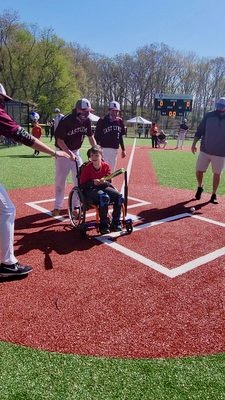
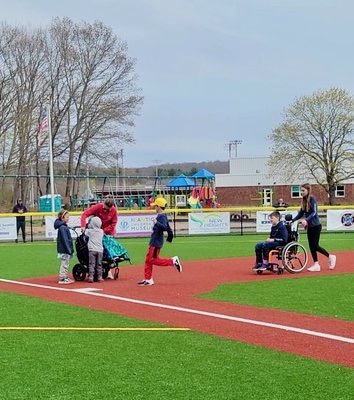
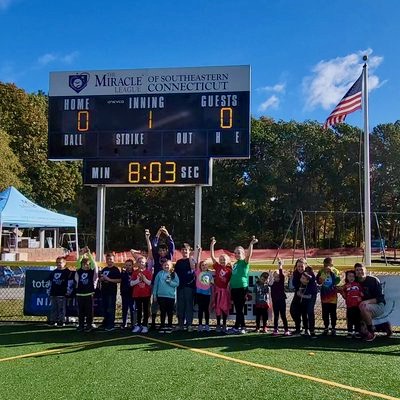
East Lyme Public Schools is excited to share an update on the ongoing partnership with the Miracle League of Southeastern Connecticut to expand inclusive play opportunities on the Flanders campus. Nearly eight years ago, Miracle League Executive Director David Putnam approached the district with a vision for a fully accessible recreational space serving children across the region. With the Board of Education’s support, that collaboration has already produced a universally accessible baseball field that Flanders students use regularly.
The next phase of this long-term project, a fully accessible playground, has now been funded and is moving toward construction. This new play space will further extend the district’s commitment to inclusion by providing another environment where all students, regardless of ability, can play together. Superintendent Jeff Newton noted that the continued partnership is “a win/win for students with disabilities across the region first and foremost, but also for all of the students who attend Flanders School.” The district looks forward to welcoming this new resource to the Flanders campus and continuing its work with the Miracle League to support accessible, community centered spaces for children.
Bureau of Special Education Annual Back to School Conference
The BSE in partnership with SERC hosted the 23rd Annual Special Education Back to School Meeting on September 14, at the Connecticut Convention Center. Over 500 special education leaders gathered to participate in a wonderful session of networking, learning, and sharing of best practices with the goal of enhancing special education supports and service across the state to improve educational outcomes for our students. It was wonderful to be in community with many of you at the event. We hope you enjoyed the session, had opportunities to connect with colleagues, and received pertinent information to support your work. Please visit our Back to School website to access presentation materials and resources that were disseminated during the session: The Bureau of Special Education’s 23rd Annual Back to School Meeting

Your district/program could be featured in the next issue! Inspire others by submitting your success stories or achievements! We look forward to hearing from you!
Fill out the Abilities in Action Submission Form (opens in a new window)
Training and Professional Development Highlights
Secondary Transition Training
Connecticut General Statutes §§ 10-74q and 10-74r require the CSDE to develop training programs for secondary transition coordinators, certified educators, and paraeducators. The CSDE, in collaboration with the RESC Alliance, is excited to share registration information and access for all three:
- Registration for Secondary Transition Coordinators
- Secondary Transition Certified Educator Training
- Secondary Transition Paraeducator Training
Pathways to Success: Practical Skill Training Programs for Paraeducators Working in Public School Settings
The CSDE has partnered with the RESC Alliance to create free, on-demand training modules for Connecticut paraeducators on more than 25 topics. The modules are designed to increase paraeducators’ knowledge and practical skills, while empowering them to help students achieve meaningful outcomes. Some topics included in the training series are Paraeducator 101: Introduction to the Role of the Paraeducator, Paraeducator 101: IDEA Disability Categories, Effectively Responding to Challenging Behavior, The Paraeducator’s Role on the Special Education Team, Supporting Student Independence, and more! For more information, please visit the Pathways Training site directly: Pathways To Success Training Site
Implementing and Sustaining In-District Embedded Training of AT/AEM/UDL
The State Education Resource Center (SERC) will provide four days of professional development to six districts, to seamlessly infuse assistive technology (AT) and accessible educational materials (AEM) and Universal Design for Learning to enhance students’ access, participation and progress in the general education curriculum. These learning opportunities will assist schools in reviewing their infrastructure around AT and AEM in terms of philosophy, policies, structures, and practices. When combined, UDL, AT, and AEM can empower educators to meet the diverse needs of all learners by making teaching more inclusive, efficient, and responsive. Districts are encouraged to select an area of focus and apply technical assistance which will be customized to meet the unique needs of the district and schools.
Examples of potential topics include augmentative and alternative communication, using AT and AEM to align curriculum, instruction, and assessment; providing AT and AEM services, creating and sustaining AT/AEM teams, reviewing student data privacy law and integrating iOS and Chrome apps to ensure students can access to participate and make progress. This session is open to school teams comprising of special education teachers, general education teachers, administrators, and speech language pathologists. Dates, times, and locations are determined by each district. Contact Smita Worah, SERC, at worah@ctserc.org.
2026-2027 Virtual Communities of Practice
The Connecticut State Department of Education and the RESC Alliance host virtual communities of practice where colleagues collaborate, exchange ideas, focus on evidence-based practice, and build collective capacity to support learners of all ages.
| Community of Practice | Schedule and contact |
|---|---|
| School Speech & Language Pathology | The purpose of the School SLP CoP is to enhance our collective capacity to support students statewide and to support each other in our important work. Fridays, 8:30–9:30 am 9/18, 10/2, 10/16, 11/6, 11/13, 12/4, 12/11, 1/15, 1/29, 2/19, 2/26, 3/12, 3/19, 4/2, 4/30, 5/7, 5/14 For school SLPs and SLP-As. To join or update your email, contact Sarah Moon at smoon@learn.k12.ct.us. |
| School Occupational Therapy | Participation in the CT School OT Community of Practice is free and open to all OTPs. If you would like to receive CEUs for attending a meeting, you must complete a separate registration through ConnOTA. Meeting dates 9/9, 9/23, 10/7, 10/21, 11/4, 11/18, 12/2, 12/16, 1/6, 1/20, 2/3, 2/17, 3/3, 3/17, 4/7, 4/21, 5/12, 5/26 To join, email jrioux@crec.org. |
| School Physical Therapist | Since 2018, this Community of Practice (CoP) has united physical therapy practitioners working in schools across Connecticut with all levels of experience in the field to have collaborative conversations, share resources, explore best practices, stay ahead of changes in education, and elevate the role of physical therapy in schools. Thursdays, 4:30–5:30, on Zoom 9/17, 10/1, 10/15, 11/5, 11/19, 12/3, 12/17, 1/7, 1/21, 2/4, 2/25, 3/11, 3/25, 4/8, 4/29, 5/13, 5/27, 6/3 To join and receive the Zoom link, email Jennifer Fox at Jfox@aces.org. |
| School Psychology | The purpose of the school psychologist CoP is to build school psychologists’ collective capacity to support students across the state and to support each other in the important work they do. Thursdays, 10–11am 9/24, 10/8, 10/22, 11/5, 11/19, 12/3, 12/17, 1/7, 1/21, 2/4, 2/18, 3/4, 4/1, 4/29, 5/13, 5/27 For more information, contact peckc@cestrumbull.org. |
| Social Worker | Zoom; times vary by date 9/16 (8–9:30), 10/13 (8:30–10), 11/18 (8–9:30), 12/8 (8:30–10), 1/13 (8–9:30), 2/23 (8:30–10), 3/17 (8–9:30), 4/27 (8:30–10), 5/19 (8–9:30), 6/8 (8:30–9:30) For school social workers. To join or update your email, contact lskinner@learn.k12.ct.us. |
| Board Certified Behavior Analysis | BCBA virtual Communities of Practice is a unique opportunity to join your colleagues to collaborate, exchange ideas, focus on evidence-based practice, and build our collective capacity to support students of all ages in Connecticut schools. The CT BCBA CoP is open to all school-based BCBAs practicing in Connecticut public, private, and alternative school settings. Sessions include a variety of topics including state updates, discussions to support bridging research and practice, ethical dilemmas facing school-based BCBAs, equity in ABA, supporting BCBA growth in CT school districts, BCBAs as school-based leaders, and presentations on topics of interest to CT BCBAs! 1st and 3rd Tuesdays, 9–9:50am 9/15, 10/6, 10/20, 11/3, 11/17, 12/1, 12/15, 1/5, 1/19, 2/2, 3/2, 3/16, 4/6, 4/20, 5/4, 5/18, 6/1 Contact Dr. Ravit Stein, BCBA-D, LBA at rstein@eastconn.org. |
| School Assistive Technology (AT) | The purpose of the AT CoP is to network and collaborate with CT district personnel providing AT services and supports to build capacity and share ideas. 12–1pm 10/7/26, 11/13/26, 12/3/26, 2/23/27, 3/22/27, 5/7/27, 6/4/27 For school staff interested in AT. To join or update your email, contact Nicole Natale at nnatale@crec.org. |
| School Counselor | An opportunity to join school counseling colleagues to strengthen community and capacity. School-based counselors enhance student success across all educational levels by implementing best practices from the Connecticut Comprehensive School Counseling Framework Guide, fostering supportive professional networks through formal and informal communication, and participating in dynamic professional learning that adapts directly to evolving member needs. 1–2pm 10/15, 11/19, 12/17, 3/11, 4/8 Contact Dr. Ashley Mazzoli at amazzoli@crec.org. |
| School Nurse | As a member of this group, you will receive links for upcoming meetings and resources, networking opportunities, and other information intended to support the work you do as a school nurse. Thursdays, 9:00–10:00 am 9/10/26, 10/8/26, 11/12/26, 12/10/26, 1/14/27, 2/11/27, 3/11/27, 4/8/27, 5/13/27, 6/3/27 For school nurses, coordinators, supervisors, and directors of nursing. To join or update your email, contact Christin Kondash at ckondash@learn.k12.ct.us. |
COMING SOON – Community of Practice for Practitioners Working with ML/EL/Special Education Students. Watch for an announcement!
Secondary Transition Community of Practice (CoP): 2026-27 Meeting Schedule Now Available
The Connecticut Secondary Transition Community of Practice (CoP) invites educators, families, agency partners, and community stakeholders to participate in the 2026-27 sessions. This year’s CoP meetings will focus on strengthening interagency collaboration, elevating youth voice, and supporting high-quality transition practices statewide. Sessions will be held both in-person and virtually, with topics aligned to key areas of postsecondary readiness.
2026-27 Meeting Dates:
- November 5, 2026 (In-Person, Goodwin University, 9:00 a.m.–1:00 p.m.) – CT State Agencies and Youth Advisory Board (YAB) Updates
- January 14, 2027 (Virtual, 9:00–11:00 a.m.) – Postsecondary Education/Training
- March 25, 2027 (Virtual, 9:00–11:00 a.m.) – Employment
- May 20, 2027 (Virtual, 9:00–11:00 a.m.) – Independent Living Skills
All participants must register prior to attending. Registration is available on the State Education Resource Center (SERC) Events webpage. Zoom links will be sent following registration for virtual sessions. For registration questions or accommodation requests, contact Lauren Johns, SERC Project Specialist, by phone at 860-632-1485 ext. 256 or by email at johns@ctserc.org.

Resources
Announcing the CSDE Teacher Registered Apprenticeship Program
The CSDE invites school districts to participate in the Teacher Registered Apprenticeship Program (T-RAP). Designed to provide aspiring teachers with an “earn-and-learn” opportunity, T-RAP connects candidates directly with K-12 classrooms. Participating districts can build a diverse teacher pipeline, reduce turnover by training candidates within their school culture, and leverage financial support to offset mentorship costs. Candidates earn a wage, gain daily guidance from certified mentor teachers, and reduce student debt with tuition support. Please visit Registered Teacher Apprenticeship Program for more information. Interested district leaders are encouraged to complete the CSDE T-RAP Interest Form to receive next steps from a representative.
English Language Proficiency (ELP) LAS Links Accommodations
New for the 2026-2027 LAS Links administration several accommodations have been added for eligible students. As with any accessibility support these accommodations should be familiar to the student and determined as a need for instruction and summative assessments. These new accommodations are for eligible students who have a determined and documented need within their Individualized Education Program (IEP) or Section 504 Plan.
- LAS Links Speech-to-Text (STT) for all Domains (Embedded Accommodation)
- This is a Permissive Mode tool that allows 3rd party approved Windows software to be utilized as a voice dictation tool.
- Only Windows Voice Dictation and Windows Read&Write (Talk&Type) are available software applications.
- Mac, iPad, and Chrome devices and application are not currently supported by the test vendor.
- Requires LAS Links IT Coordinator set up of tool prior to testing.
- LAS Links Text-to-Speech (TTS) for the Reading Domain (Directions and Item Prompts Only) and Writing Domain (Stimuli and Item Prompts) (Embedded Accommodation)
- TTS feature that is embedded that reads the directions, items, and short stimuli to the student for the Reading Domain.
- TTS will read all directions, stimuli, and items for the Writing, Listening, and Speaking Domain items and stimuli.
- LAS Links Native Language Reader Directions (TAM Only) for all Domains (Non-Embedded Accommodation)
For additional information, see the LAS Links Reader Options Table, the LAS Links Accommodation Correlation to Smarter Balanced and NGSS Accessibility Supports, and the LAS Links Accessibility Chart.
Required Alternate Assessment Training is Now Available
The 2026-2027 Connecticut Alternate Assessment System Training for Teachers Administering the Alternate is now available for the CTAA/CTAS and CAAELP assessments on the Cambium Assessment Portal. Please see the alternate assessment training announcement for additional information and resources.
Additional Resources to Support Planning and Placement Teams and Section 504 Team

Upcoming Events
Connecticut Paraeducator Conference – Creating Connections, Inspiring Growth
- Tuesday, November 3, 2026 | 9:00 AM–1:00 PM
- Bristol Event Center, 112 Century Drive, Bristol, CT 06010
- Capacity: 200 participants
Our first Connecticut Paraeducator Conference is a free, in-person day of professional learning for paraeducators, hosted with SERC and 321 Insight.
More about the Paraeducator Conference
The CSDE is excited to announce our first Connecticut Paraeducator Conference, which includes a free day of professional learning designed specifically for paraeducators. The CSDE in collaboration with the State Education Resource Center and 321 Insight will host a full day, in person Connecticut Paraeducator Conference recognizing the essential contributions of paraeducators in our schools throughout the state. This conference is designed to elevate the paraeducator profession while offering meaningful opportunities to strengthen skills, enhance practices, and engage with colleagues.
Agenda and breakout sessions
Agenda:
- 8:00am–8:30am – Registration
- 8:30am–9:15am – Plenary/Large Group Session
- 9:30am–11:00am – Breakout Session A (six breakout sessions repeated in Session B)
- 11:15am–12:45pm – Breakout Session B
Breakout Session Options:
- Proactive Behavior Strategies
- Social and Emotional Learning: Teaching a Skill
- Building and Sustaining Strong Partnerships with Teachers
- The Classroom Environment: Supporting Positive Behavior
- Adult Regulation: Staying Regulated in Challenging Times
- High Expectations and High Support: Encouraging Progress
14th Annual Disability Resource Fair
- October 16, 2026 | 9:00 AM–12:00 PM
- In-Person Event
- Oak Hill’s NEAT Building, 33 Coventry St., Hartford, CT
More about the Disability Fair
Who the fair is for:
- Looking for work or a new career, or unemployed or under-employed
- Transitioning from school to work or higher education
- Receiving Social Security Disability benefits and considering work
- Relying on public transportation or looking for transportation information
- Interested in how assistive technology can help
- Learning about your legal rights in the workplace
- Exploring careers in Manufacturing, IT, Healthcare, or Transportation/Distribution
If you need a reasonable accommodation, please contact Jonathan Richmond at 860-602-4031 or Jonathan.Richmond@ct.gov
The Reading Brain: Why Understanding Dyslexia and Its Intervention Matters
- Tuesday, October 21, 2026, 6:00–7:30 p.m.
- See the Reading Brain flyer for details
For Dyslexia Awareness Month, Dr. Maryanne Wolf leads a virtual session on the neuroscience of reading and how multicomponent intervention helps dyslexic readers.
More about The Reading Brain
In honor of Dyslexia Awareness Month, join Dr. Maryanne Wolf for a virtual session exploring the neuroscience of reading and why learning to read unfolds differently for individuals with dyslexia. Participants will examine how the brain learns to read, consider how outdated perceptions of dyslexia can affect learners, and explore how multicomponent intervention can support the varied needs of dyslexic readers. This session is designed to deepen understanding of dyslexia and the role of targeted, differentiated instruction in improving outcomes.
Partnering with Families to Support Student Mental Health
- October 23, 2026
- 9:00–10:30 a.m.
- Virtual
Dr. Barbara Boone and Dr. Hadley Bachman share research on positive childhood experiences and ways educators can engage families in supporting student mental health.
More about Partnering with Families
Families and schools both play a critical role in supporting the mental health of children and adolescents. In this interactive session, Dr. Barbara Boone and Dr. Hadley Bachman from the Ohio Statewide Family Engagement Center will share what research shows us about the importance of positive childhood experiences that shield against the effects of trauma. Then, together participants will explore a range of research-based ideas that educators can use to emphasize positive childhood experiences and to engage families in support of student mental health.
Connecticut Literacy Conference at Central Connecticut State University
- Thursday, October 29, 2026, 8 AM–3 PM
- Central Connecticut State University, 1615 Stanley Street, New Britain, CT 06050
A no-cost, all-day conference on K–5 literacy outcomes, hosted by CSDE’s Center for Literacy Research and Reading Success with CCSU and UConn’s Neag School.
More about the Literacy Conference
Join educators and literacy leaders from across Connecticut for a no-cost, all-day conference focused on advancing literacy outcomes for students in grades K–5. The Conference is hosted by the Connecticut State Department of Education’s Center for Literacy Research and Reading Success in partnership with Central Connecticut State University and the Neag School of Education at the University of Connecticut.
Due to high interest, please limit teams to five individuals or fewer. Please contact Dr. Melissa Wlodarczyk Hickey at Melissa.Hickey@ct.gov with any questions.
Register for the Connecticut Literacy Conference