


Katherine A. Kelley State Public Health Laboratory
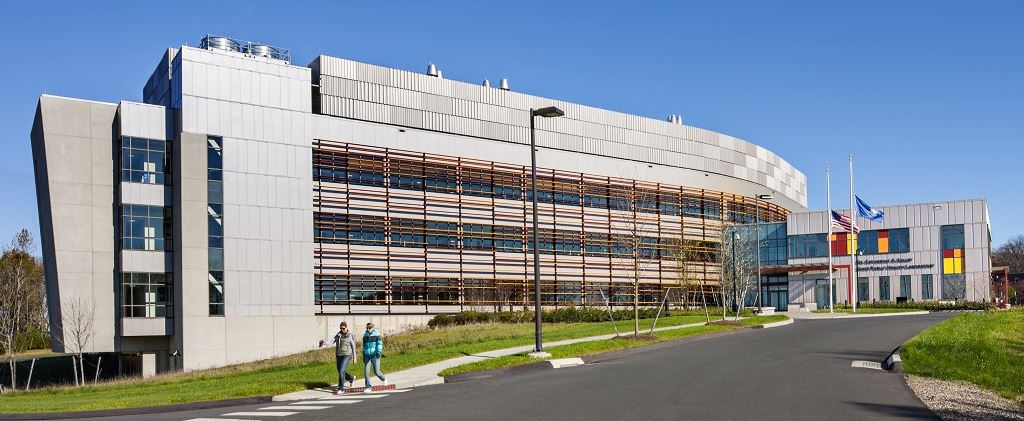
The Connecticut State Public Health Laboratory supports communities across Connecticut by providing essential testing and analytical services for clinical and environmental samples. Federal and state agencies, local health departments, clinical laboratories, health care providers, and water utilities rely on the laboratory for accurate and timely results that protect public health.
Each year, the laboratory processes thousands of specimens to detect emerging infectious diseases—including Ebola virus and Lassa fever—as well as environmental contaminants such as PFAS and heavy metals. The State Laboratory plays an important role in fighting drug-resistant pathogens of public health importance by using comprehensive and advanced Whole Genome Sequencing methodologies.
Connecticut is also home to its own Newborn Screening Program, located within the State Laboratory. This program screens almost every baby born in the state for more than 60 disorders. Early detection helps ensure that infants with serious health conditions receive prompt follow‑up and care.
The data generated by the laboratory guide critical public health actions: identifying harmful agents, supporting outbreak investigations, and verifying that interventions—such as vaccines, antibiotics, and environmental remediation—are effective. As new health threats emerge, the State Laboratory remains at the forefront of expanding diagnostic capacity and coordinating testing with the Centers for Disease Control and Prevention and other state and federal partners.
10/25/2023 Update: For all clients that submit clinical specimens, please refer to this document regarding storage and temperature guidance.
Questions on Clinical Licensing:
Send all inquiries to DPH Facility Licensing and Investigations Section (FLIS) at the following e-mail: DPH.FLISLab@ct.gov
Laboratory Resources:
Test Requisitions and Collection Supplies Information
Directory of Clinical Testing Services
Environmental Sciences Test Directory
Clinical Specimen Requirement of Two Patient Identifiers for the State Public Health Laboratory (12/5/2022)
Laboratory Certifications and Accreditations (CLIA, EPA, AIHA, etc.)
Authorization to Disclose Protected Health Information
The Laboratory is comprised of the following testing sections:
Microbiology and Infectious Diseases
This section tests for infectious agents in humans, animals, food and water, and provides reference testing in support of epidemiological surveillance and outbreak investigations. Services exclusively provided by the Public Health Laboratory include:
- Testing for emerging infectious diseases
- Testing for surveillance and outbreak investigations
- Animal testing for rabies
- DNA fingerprinting of foodborne pathogens
- Mycobacteriology testing services guide
Bioresponse
The State Public Health Laboratory provides testing services for law enforcement agencies in cases of possible biological terrorism.
Biomonitoring
This section provides testing services for Connecticut's uninsured for the presence of lead from exposure to lead-based paint, folk remedies, or other sources.
Newborn Screening Program
The newborn screening section screens all of Connecticut newborns for the presence of genetic, endocrine, and metabolic inherited disorders that cause severe mental and/or physical illness or death. Through early detection and treatment, the adverse effects of these disorders can be mitigated.
Environmental Sciences
This section tests for over 100 toxic chemical agents in public drinking water supplies, private wells, rivers, lakes, streams, wastewater, spills, and soils. Additionally, this section provides testing services for consumer products and other materials where there is a potential for exposure to hazardous materials such as lead based paint. Other services include monitoring of the nuclear power industry, serving on the State’s nuclear response team including maintaining preparedness and capabilities to respond to radiation emergencies. The section is also designated as the state’s Chemical Emergency Preparedness and Response Laboratory in the event of a hazardous chemical exposure.