

Nest Boxes for Bluebirds
 The construction of nest boxes in appropriate habitat is helping the Eastern bluebird make a comeback. Proper construction and placement of nest boxes will encourage bluebirds and not their competitors, like house sparrows and European starlings. Other birds that will use these nest boxes include the house wren, tree swallow, and black-capped chickadee.
Building the nest box
- Plans for a simple, yet effective, nest box are included on this webpage. The box is easily constructed with hand tools and a minimum of materials.
- Use drywall screws to fasten the box parts together.
- Nest boxes can be made out of almost any wood, but cedar, pine, or cypress are preferred. Do not use pressure-treated lumber or exterior plywood. Score or groove the interior surface of the front, below the entry hole, to aid nestlings in climbing out of the box.
- It is best not to stain or paint nest boxes. However, a light-colored stain or latex paint may be applied to the outside of the box. Avoid using dark colors and never stain or paint the inside of the box or entrance hole.
Mounting the nest box
- Nest boxes should be mounted 5 feet above ground level on galvanized pipe or 7-foot to 8-foot metal garden stakes. Flatten the tabs on the stakes to discourage raccoons.
- Boxes can be attached to metal stakes with carriage bolts or to galvanized pipe with screws or pipe brackets.
- Boxes should not be mounted on trees.
- Snakes, raccoons, housecats, and other predators can quickly reduce bluebird numbers. The use of predator guards is essential to successfully raising bluebirds.
Placing the nest box
- Select good habitat. Open space with low or sparse ground cover is best. Pastures, large lawns, golf courses, parks, and cemeteries are all good sites for nest box trails. Excessive human disturbance may present problems in some public places.
- Avoid brushy and heavily wooded areas. These habitats are far more suitable for house wrens, which will dominate nest boxes.
- Avoid areas where house sparrows are abundant. Do not place the boxes close to houses or barns. House sparrows will kill bluebirds and destroy eggs and young.
- Face boxes toward open areas and away from prevailing winds. A tree or suitable perch 40 to 100 feet from the box provides a perfect rest stop for young on their first flight.
- Keep boxes at least 100 yards apart. This allows the bluebirds to establish a territory around the nest box.
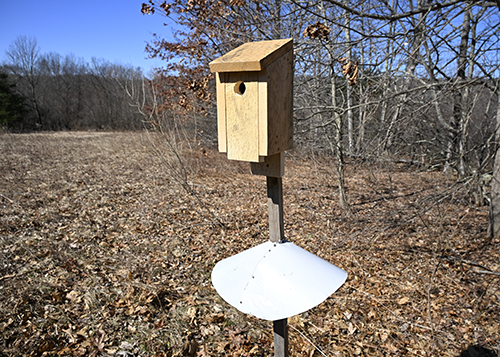
This bluebird nest box is installed on a post with a predator guard in open habitat at a wildlife management area.
Maintaining the nest box
- Monitor nest boxes. Check them once a week during the nesting season to record progress of the nestlings and control house sparrows.
- Always remove house sparrow nests immediately when found.
- Inspect boxes in early fall and late winter; clean and repair if necessary. Bluebirds are less likely to nest in a box that has an old nest in it.
- Share your results. Relatives, friends, and neighbors are often delighted to hear about your results. You also may interest someone else in bluebird conservation!
Connecticut DEEP bluebird nest box plans
Front-opening

Side-opening

The Eastern bluebird fact sheet contains more specific details about nest boxes and the natural history of bluebirds.
Content updated in March 2026.