

Bats Count!
Observe a livestream of a big brown bat colony at White Memorial Conservation Center through the Bats Count! Bat Cam and help us count the bats! Listen to a SciStarter Podcast where bat biologists talk about the Bats Count! Bat Cam.
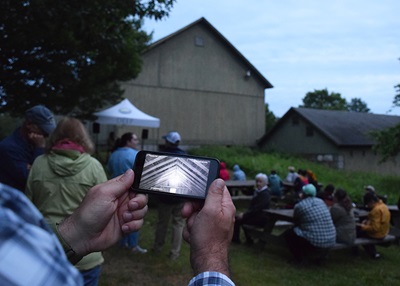
The CT DEEP Wildlife Division and White Memorial Conservation Center in Litchfield have established a live "Bat Cam" in a barn at White Memorial where female big brown bats give birth to and raise their young every year. The four cameras provide a sneak peek into the amazing life of bats without disturbing them. The best part about this project is that you and your family and friends can help us learn more about the bats by watching the livestream to monitor the activity of the bat maternity colony and then report your observations and help us count the bats as they emerge from the barn each night during summer. Information on how you can participate is on the livestream webpage.
The Bat Cams officially launched at a Ribbon Cutting Ceremony in June 2023.
The “Bat Cam” project is partially funded through the Endangered Species, Natural Area Preserves, and Watchable Wildlife Fund (listed as “Endangered Species/Wildlife” on your tax form) to provide a watchable wildlife opportunity. Find out how you can donate and learn more about projects supported by this Fund.
Batty about bats
Connecticut is home to nine different bat species – three of them are considered tree bats and the rest are called “cave” bats because they hibernate during the winter, often in caves or mines. Cave bats have been impacted by white-nose syndrome (WNS), a fungus that has reduced many of our once abundant species to the point where all but one – the big brown bat – have been listed as state endangered and two are also protected under the federal endangered species act. Although the big brown bat remains common in our state, it is still listed as a Species of Greatest Conservation Need in the Connecticut Wildlife Action Plan and remains a focus of monitoring and conservation planning. The Bats Count! Bat Cam is one monitoring tool that will give biologists a window into the life and activities of an active big brown bat maternity colony, while also providing the opportunity for students and others to follow along and learn about this amazing species.
"Hanging" with bats
There is so much to learn about bats and how you can help them. Check out the following resources for interesting natural history information, how to build a bat house, descriptions of Wildlife Division research and monitoring efforts, and so much more.
Learning from our Backyard Bats: a lesson booklet for Connecticut students in upper elementary to high school, developed and published by the White Memorial Conservation Center.
- DEEP's Bat Program
- Bat Fact Sheet (PDF version)
- Build a Bat House (PDF version)
- Big Brown Bat Fact Sheet
- Living with Bats (advice if you have bats living in your house or outbuildings)
- Teaching About Bats (A resource for educators and parents to teach children about bats)
- White-nose Syndrome Response Team
- Bat Week, an annual, international celebration of the role of bats in nature (October 24-31)
- Bat Conservation International, an international nongovernmental organization working to conserve the world's bats and their habitats through conservation, education, and research efforts.
Bat-tastic activities for kids and families
Learn about bat houses and get tips on installing a bat house in your yard from this video posted on the CT Fish and Wildlife Facebook page.
Batty About Bats webpage
Bat Bingo: Families can try to make a "bingo" with this fun activity about bats!
Learn about echolocation while playing the Bat and Moth Game.
Just for Kids Activity and Coloring Page
Creature Crafts: Toilet Paper Tube Bat (YouTube video) -- Rhode Island Division of Fish and Wildlife outreach staff member Gabby DeMeillon shares some info about bat conservation and demonstrates how to make a simple bat craft out of a toilet paper tube!
7 Best Recipes for Appreciating Bats! Bats, especially many found in deserts and the Tropics, are important pollinators. Here are 7 recipes (plus one just for adults) using bat-pollinated plants. The bat-pollinated food is shown in italics.
Content last updated in May 2026.