


The Transitional Age Youth Consolidated Approach
The Transitional Age Youth Consolidated Approach
V.I.T.A.L.: Activating Potential in Young Adults to Build Success, Justice, and Lead Change
Connecticut Department of Children and Families
Table of Contents:
_____________________________
Section 1. The V.I.T.A.L. Overview
- Introduction Values, Essential Practice Principles, and Core Practices
Section 2. V.I.T.A.L. Practice Guide
Practice Stage: Engagement and Assessment
Practice Stage: Youth Driven Transition Preparation
- 2.3 Educational Planning for Transitional Age Youth
- 2.4 Financial Capability in Transitional Age Youth
- 2.5 Employment/Career Development
- 2.6 Health and Wellness Guide for Transitional Age Youth
- 2.7 Establishing Lifelong Relationships with Supportive Adults and Peers
- 2.8 Skill Building in Transitional Age Youth
- 2.9 Planning for New Living Arrangements
- 2.10 Accessing Supports for Substance Misuse and Behavioral Health Needs
- 2.11 Supporting Specialized Cohorts
- 2.11a Engaging, Empowering, and Supporting Young Fathers
- 2.11b Diverting Young Adults from the Criminal Justice System
- 2.11c Supporting Young Adults in Correctional Settings
- 2.11d Serving Young Adults Involved with Domestic Minor Sex Trafficking/Commercial Sex Exploitation of Children
- 2.11e Supporting Youth Identifying as LGBTQI+
- 2.11f Assisting Young Persons Missing from Care-Supplemental Materials
- 2.11g Supporting Pregnant and Parenting Transitional Age Youth
- 2.11h Planning with Young Persons Referred to Adult State Agencies
- 2.11i Supporting Undocumented Young Persons
Practice Stage: Launch
Practice Stage: Re-Entry
- 2.14 Re-Entry
Section 3. Additional V.I.T.A.L. Tools and Resources
- 3.1 Supplemental Tip Sheets and Resource Documents
- 3.1a Positive Youth Development
- 3.1b Establishing Youth-Adult Partnerships
- 3.1c Building Resiliency and Grit in Young Adults
- 3.1d Supporting Healthy Relationships
- 3.1e Building Self-Confidence in Young Adults
- 3.1f Self-Advocacy: Access to Youth Ambassadors and Youth Advisory Boards
- 3.1g Supporting Authentic Youth Engagement
- 3.1h Omega Assessment Instrument
- 3.1i Abbreviated Learning Inventory Skills Training- A Suggested Housing Screener
- 3.1j Youth Launch Inventory
- 3.1k Community Housing Employment Enrichment Resources (CHEER) Definition
- 3.1l Community Housing Assistance (CHAP) Program Definition
- 3.1m Learning Inventory Skills Training (LIST) Program Definition
- 3.1n Services Post Majority (SPM) Administrative Requirements
- 3.1o Credit Reports
- 3.1p Adolescent Parent Program
- 3.1q Appointment of Health Care Representative for Youth
- 3.1r Restorative Justice and Young Adults
- 3.2 V.I.T.A.L. Coaching Opportunities
- 3.3 V.I.T.A.L. Resources for Youth and their Caregivers
- 3.4 V.I.T.A.L. F.A.Q.s
- 3.5 V.I.T.A.L. Logic Model
- 3.6 Data Snapshot-Transitional Age Youth 2021
- 3.7 Goals and Objectives
- 3.8 Table of Anticipated Outcomes
- 3.9 V.I.T.A.L. Development Timeline
- 3.10 V.I.T.A.L. Practice Model Strategy Table
- 3.11 V.I.T.A.L. Proposed Implementation Timeline
Section 4. V.I.T.A.L. Policy
- 4.1 DCF Policy 28-1 Adolescent and Transitional Age Supports
Section 5. V.I.T.A.L. Foundational Briefs
- 5.1 Development Within the Context of Racism
- 5.2 Adolescent Parents
- 5.3 Brain Development and Adolescence
- 5.4 Transitional Age Youth and LGBTQI+ Identity
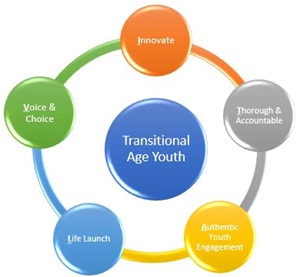
View Larger version of Graphic (below)
