What's New

What’s New
--Updates, Alerts, and News from the PDIO--
Slime Mold - Unsightly, but no harm to landscape
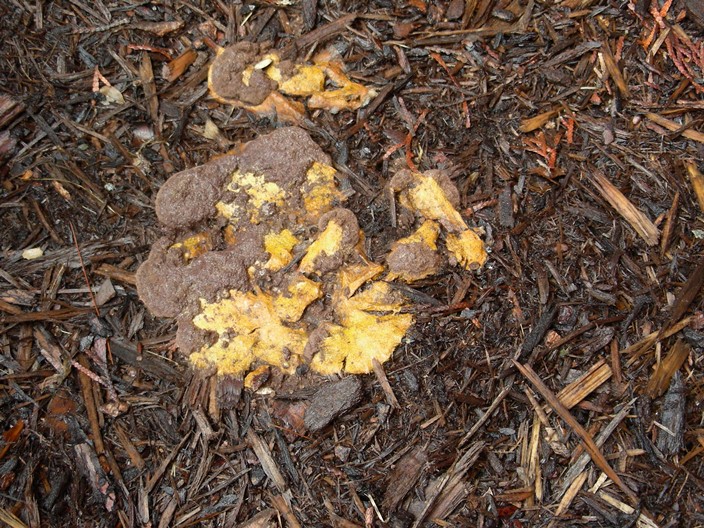
Recently, many people asked questions, "There is something growing in my garden. It looks like a dog vomited." or "White mold is growing in my lawn. How can I get rid of it before it kills my grass?" They are reporting slime molds. Wet weather conditions this year were perfect for development of slime molds in landscapes and lawns. Slime mold is not toxic and do no harm to the landscape although it is unsightly. Linked please find a fact sheet that describes the slime mold.
August 2018
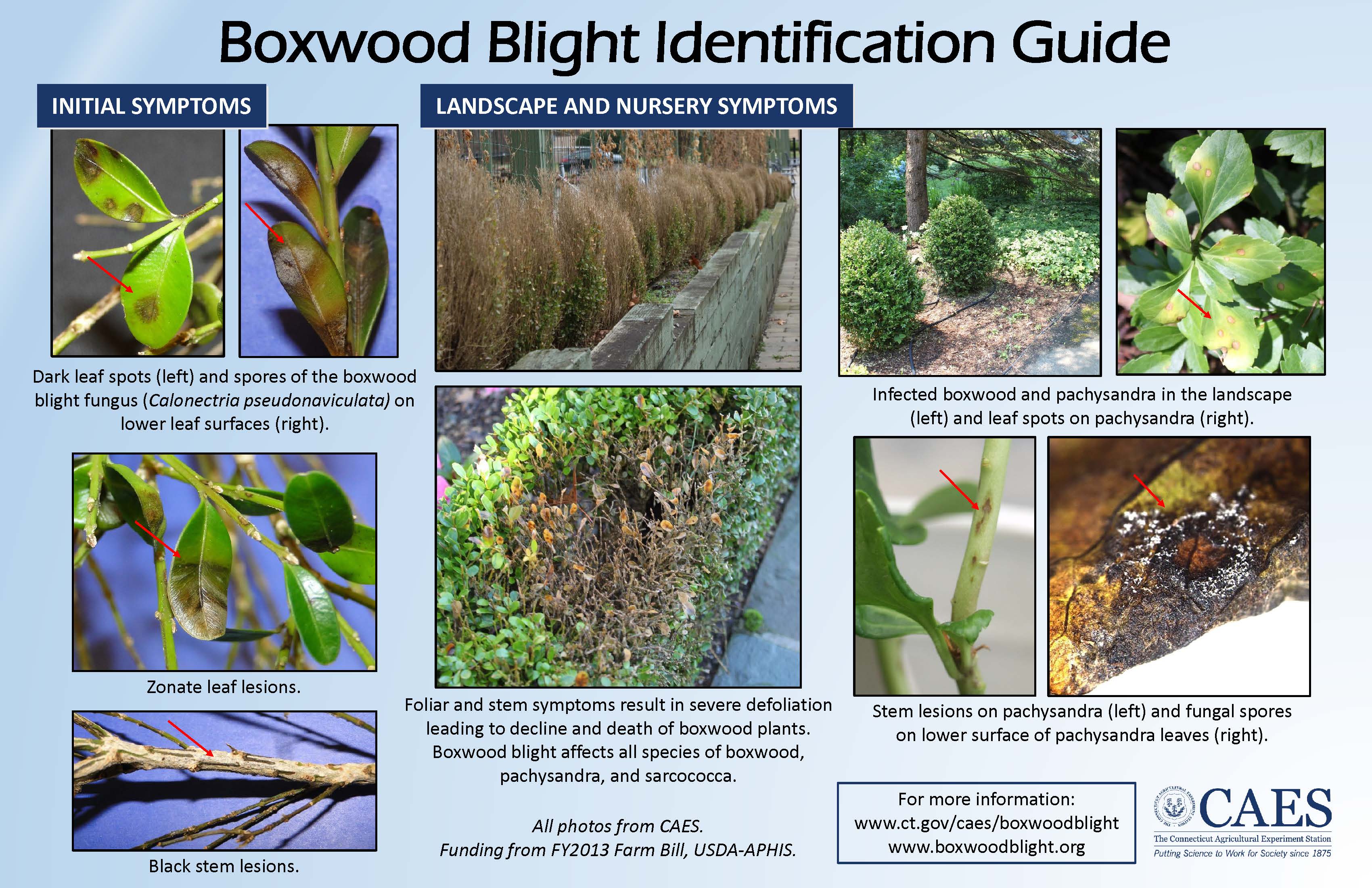
Disease Alert: Epidemics of Boxwood Blight in Landscapes

July 2018
Disease Alert: Dollar Spot of Turfgrass
Dollar spot of turfgrass has been prevalent in the state due to warm and high humidity weather conditions this summer. Dollar spot is a foliar disease that is caused by a fungus,
Sclerotinia homoeocarpa. Affected plants exhibit straw-colored lesions surrounded by a reddish brown border. As lesions coalesce, infected leaves become blighted and form circular, sunken patches in the lawn. In the early morning when dew is present, white cottony fungal growth can be noticed on infected grass blades. Pythium blight also form white fungal mycellium on blighted grasses, but the color of affected leaves is brown. Microscopic examination is needed to correctly distinguish these two diseases. If you see these symptoms in your lawn and have any questions, please feel free to
contact us and
send us samples.
June 2018
Disease Alert: Late Blight of Tomato
Late blight has been confirmed in Susquehanna County, PA and Onondaga County, NY on June 8 and June 15, respectively. The recent weather in Connecticut has been very favorable for the development of this disease. It is important examine plants for symptoms. To send/or bring us samples, please read the
Sample Submission Information. The information on this disease can be found in the fact sheet
Late Blight of Tomato and Potato in Connecticut--2012 .
Disease Alert: Browning of Eastern Red Cedar Trees in Connecticut

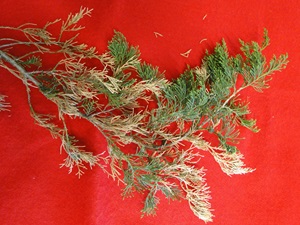
Since early spring, our office has been receiving numerous
inquiries about browning of eastern cedar trees in Connecticut. Symptoms
include distinctive off-color needles and tip diebacks. Upon close inspection
and examination, no primary causing organisms were found on affected trees.
This phenomenon was first observed in the state 2004 (see the linked fact
sheet 2005 Update on the Eastern Red Cedar Problem) and has been recurring
since then. Weather conditions and climate changes are considered possible
contributors to eastern red cedar declines in the state, especially continuous summer
drought stress and mild/and extreme cold winter temperatures. For more information,
please see the fact sheet Browning, Dieback, and Decline of Eastern Red Cedar.
April 2018
Disease Alert: Volutella Blight of Pachysandra
Volutella Blight was the subject of our What's New update in the spring of 2016 and 2017, and it looks like we will be having another spring with conditions favorable for the growth and spread of this pathogen. It is typical for pachysandra to appear yellowish in color following the winter, but if your pachysandra beds are looking sparse you should examine the plants for signs of Volutella Blight. Brown spots on leaves and black shriveled stems are characteristic of this disease. If you notice any of these symptoms in your pachysandra, please feel free to
contact us and
submit samples for confirmation. Cultural control and fungicide applications can help manage this disease.
New Fact Sheets
Volutella blight is a common fungal disease of boxwood. The disease affects leaves and stems, which can cause extensive browning of leaves and diebacks in nurseries and landscapes. The fungus is considered a weak and opportunistic pathogen. So, winter injury, excessive insect feeding, or poor root conditions can make plans more vulnerable to the disease. For more information of the disease, please read the linked fact sheet Volutella Blight of Boxwood
Red thread is a common foliar disease on cool-season turfgrass including fine fescue, tall fescue, perennial ryegrass, and Kentucky bluegrass. The disease more prevalent in the cool and humid spring and fall. The disease can reduce the density of turfgrass and result in an undesirable appearance. More detailed information of the disease can be found in the fact sheet Red Thread of Turfgarss
Two
needle cast diseases caused by
Rhizosphaera kalkhoffii and
Stigmina lautii, respectively, are commonly found on spruce trees in Connecticut. Infection of fungal needle cast diseases can cause early defoliation and significantly reduce the aesthetic values of the trees in landscape plantings and Christmas tree plantations. Linked fact sheet,
Needle Cast Diseases of Spruce briefly describes these diseases and stratifies for their control.