

Washing Your Hands
Washing your hands helps you: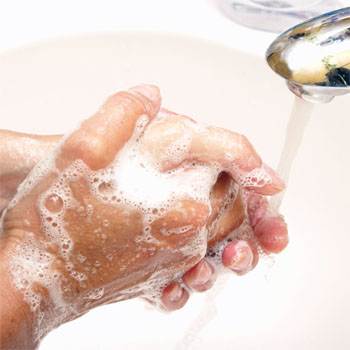
- Stay healthy
- Avoid a cold or the flu
Remember to wash your hands:
- Before, during, and after preparing food
- Before eating food
- Before and after caring for someone who is sick
- Before and after treating a cut or wound
- After using the bathroom, changing diapers, or cleaning up a child who has used the bathroom
- After blowing your nose, coughing, or sneezing
- After touching an animal, animal food or treats, animal cages, or animal feces (poop)
Here is how to wash your hands:
- Wet your hands with clean running water (warm or cold) and apply soap.
- Lather your hands by rubbing them together with the soap.
- Scrub all surfaces of your hands, including the palms, backs, fingers, between your fingers, and under your nails. Keep scrubbing for at least 20 seconds. Need a timer? Hum the "Happy Birthday" song twice.
- Rinse your hands under clean, running water.
- Dry your hands using a clean towel or air dry them.
Remind other people to wash too:
- You can share these tips with your friends!
- The more people who wash their hands, the healthier everyone will be!
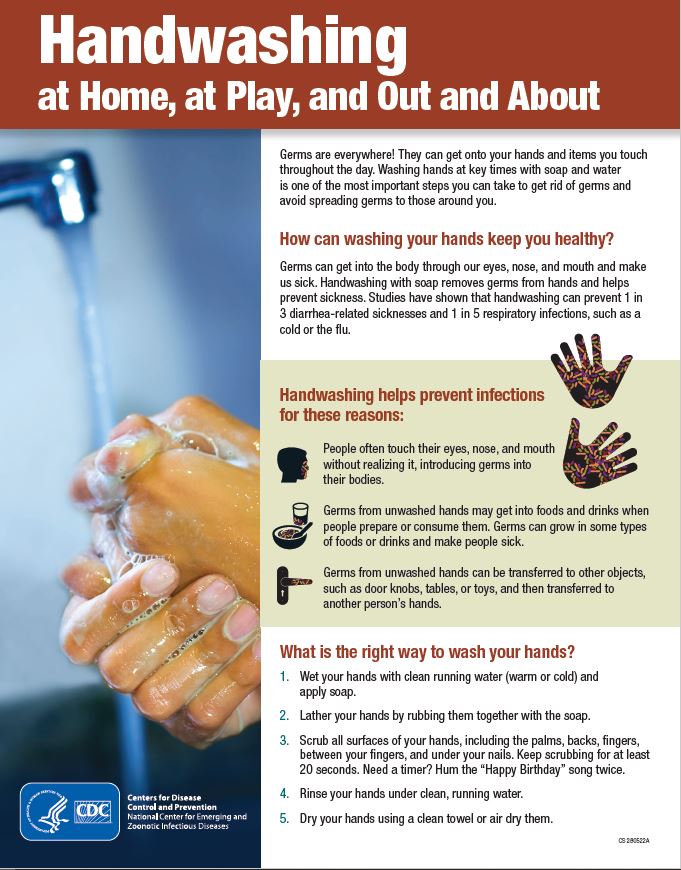
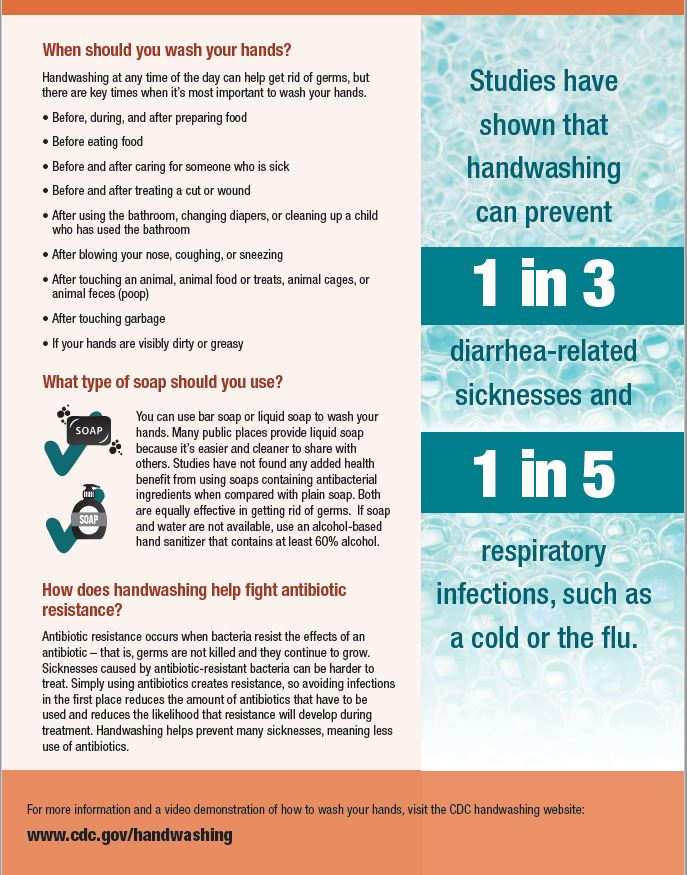 CDC - Handwashing Poster
CDC - Hand Sanitizer Fact Sheet
Wash Your Hands Fact Sheet 508
CDC Resources for Handwashing/Clean Hands Videos: