

Bureau of Special Education Update, May 2026
In This Issue
From the Director’s Desk

As April comes to a close, we find ourselves approaching one of the most exciting and demanding times of the school year. May brings a high volume of planning and placement team (PPT) meetings, end-of-year decision-making, and important transitions for students, families, and educators. During this busy period, we want to reaffirm that the Bureau of Special Education (BSE) is here to support you every step of the way.
While we may not have yet experienced consistent spring weather, our collective work across the state continues to move forward with purpose and momentum. Our commitment to Progress through Partnerships remains central, particularly during this time of year when collaboration, communication, and shared decision-making are most critical. We encourage all teams to prioritize respectful, student-centered dialogue as they engage in PPT processes and end-of-year planning.
This month, several key resources and opportunities are being made available to support your work. We are pleased to share the newly published Special Education Procedures and Practices Model Manual, designed to assist districts in establishing clear expectations, strengthening local procedures, and ensuring alignment with state and federal requirements. In addition, updated guidance on determining special education eligibility under the primary disability category of Developmental Delay as well as Autism will be released to support consistent and appropriate decision-making practices across districts.
We are also providing updated information and reminders regarding Manifestation Determination Reviews (MDRs). As always, ensuring that these processes are conducted with fidelity and in accordance with state and federal requirements.
May also marks an important period for funding and grant opportunities. The IDEA Part B Local Grant application is currently open, and we encourage districts to engage thoughtfully in this process. Additionally, the CSDE will be releasing two competitive grant opportunities this month: a High-Quality Special Education Incentive Grant and a Trauma-Informed IEP Practices Grant. These grants are designed to support innovative practices, strengthen inclusive programming, and better meet the needs of students with disabilities, particularly those who have intensive needs.
At the state level, we will be submitting Connecticut's federal IDEA Part B grant application in May. We extend our sincere appreciation to all interest holders who contributed feedback during the public comment and presentation process. Your input plays a critical role in shaping our statewide priorities and ensuring that our work reflects the needs of the field.
We have also recently concluded the clarification period with the Office of Special Education Programs (OSEP) regarding our State Performance Plan/Annual Performance Report (SPP/APR) submission. OSEP identified only a limited number of areas requiring follow-up, and we are now awaiting our final determination, which is expected later this summer.
In addition to these efforts, we continue to offer a range of professional learning and technical assistance opportunities to support high-quality practice across the state. We encourage you to take advantage of these resources as you navigate the final months of the school year.
In May, we also celebrate Teacher Appreciation Week and extend our deepest gratitude to all educators. Your work is complex and vital, requiring expertise, creativity, collaboration, and unwavering commitment. Thank you for your compassion, your partnerships, and the meaningful difference you make every day. Your dedication truly reflects Progress through Partnerships, and we are sincerely grateful for all you do.
While this time of year is undeniably busy, it is also an opportunity to reflect on the progress made and the impact of your work on students and families across Connecticut. Thank you for your continued partnership and focus on what matters most, improving outcomes for students with disabilities.
In partnership,

Bryan Klimkiewicz
Division Director, Bureau of Special Education
Connecticut State Department of Education

Bureau Updates
Adoption of ParaPathways Assessment
The Connecticut State Board of Education (SBE) recently approved the adoption of ParaPathways as the state's basic skills assessment for paraeducator qualification. Developed by Educational Testing Services (ETS), ParaPathways is a redesigned paraeducator assessment, with updated content and support materials to reflect today's classroom needs. The ParaPathways assessment adoption by SBE and established passing score now meet the requirements for Title I paraeducators who provide instructional assistance. As a reminder Title I paraeducators must have a high school diploma or its recognized equivalent, a General Education Development (GED) diploma, and:
- Two years of college credit; OR
- An associate (or higher) degree; OR
- Pass a State Board of Education adopted paraeducator assessment that assesses content knowledge in mathematics, reading, and writing and an understanding of how to assist in the instruction of these topics.
The newly adopted ParaPathways assessment consists of two subtests: Reading and Writing (5758) – Passing Score: 332 Mathematics (5759) – Passing Score: 334 For your reference, this newest version of the assessment was available to candidates as of September 1, 2025. The previously adopted ParaPro assessment remains available through August 31, 2026, after which it will be discontinued. Connecticut school districts may begin using ParaPathways at any time during this transition period. Although ParaPro will remain available until August 31, 2026, districts may want to consider the opportunities being offered by ETS during the introduction to ParaPathways. A candidate that takes the ParaPro assessment prior to the test's discontinuation will have access to that score for 10 years.
For more information, contact Cory Galano at cgalano@ets.org, Malik Mckinly at mmckinley@ets.org or Bryan Klimkiewicz at Bryan.klimkiewicz@ct.gov.

General Supervision
Newly Published Resource: Special Education Procedures and Practices Model Manual
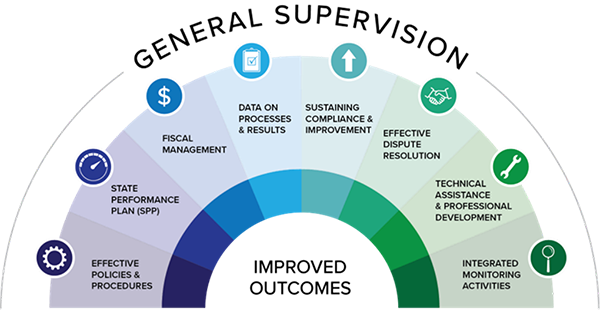
One of the eight components of CSDE's General Supervision System is "Effective Policies and Procedures." To support that work, the BSE published a Model Manual for school districts and programs on the CSDE website: Special Education Procedures and Practices Manual.
This resource is intended to support our school in fostering a shared understanding of special education requirements and improving outcomes for students with disabilities. The Manual's content is designed to inform and guide users in meeting the requirements of applicable state and federal special education statutes and implementing regulations.
School Districts are encouraged to use the manual as a template when developing or refining your own procedures and practices. A downloadable version of the document is now posted on the CSDE website and can be accessed directly here: Download the Procedures and Practices Manual. District staff should use this resource in conjunction with the Procedural Safeguards Notice, the Connecticut IEP Manual, other Bureau of Special Education publications, relevant statutes and regulations, and guidance from state and federal authorities.
IDEA Part B Indicator 14 Post‑School Outcomes
The Connecticut State Department of Education’s Bureau of Special Education (BSE) reports annually on Indicator 14: Post‑School Outcomes, which measures the post‑school outcomes of youth with IEPs. This indicator looks at the percentage of former students who are enrolled in higher education, participating in postsecondary education or training, competitively employed, or engaged in other employment within one year of exiting.
To collect this information, Connecticut conducts the Post-School Outcomes Survey (PSOS) each year. “Exiters” receive a reminder postcard in May–June, followed by a survey link and letter as the PSOS window opens in June. Non‑responding students may receive follow‑up communication, including phone outreach, from August through September, when the survey window closes.
High participation is essential. Strong response rates help ensure that Connecticut’s data accurately represents the experiences of former students and guide improvements in transition programming. Districts can support this effort by maintaining updated student contact information in CT-SEDS and encouraging students and families to participate in the PSOS process. For more information and access to all PSOS materials, please see the Bureau of Special Education Topic Brief: IDEA Part B Indicator 14 (May 2026).
Questions may be directed to Laura Luna, Associate Education Consultant, at Laura.Luna@ct.gov or 860‑713‑6941
IDEA Part B Fiscal Monitoring Update
"Fiscal Management" is another component of CSDE's General Supervision System. The Bureau of Special Education (BSE) provides fiscal support and oversight for each local educational agency (LEA) that applies as a subgrantee and receives special education entitlement grants under Part B, Sections 611 and 619 of the IDEA. Each LEA is examined throughout the year across the spectrum of defined risk factors for use of IDEA Part B funds, to determine an LEA's status and "Level of Engagement" (LOE) category.
The BSE's risk review cycle is January 1st to December 31st. Risk Factors include:
- Running risk from year to year;
- Timeliness;
- Fiscal Self-Assessment (FSA) (which is completed annually with the IDEA Part B application);
- Electronic grant management system (eGMS) subrecipient applications (e.g., completion, thoroughness and accuracy of grant application sections, allowability of funds);
- Sample monitoring (e.g., inappropriate use of funds, liquidation of funds); and
- Annual audit findings.
The BSE recently sent communications to LEAs determined to be in the Moderate or High LOE category for 2025. LEAs that did not receive such communication, were not determined to be in the Moderate or High LOE category for 2025.
Questions can be directed to Alycia M. Trakas (860-713-6932 | Alycia.Trakas@ct.gov).

Fiscal Matters
FY27 IDEA Subrecipient Application (SA) is Open in eGMS – Due Date: May 29, 2026 at 4:00pm
The FY27 IDEA SA opened in the electronic grant management system (eGMS) on April 15, 2026. Please see the chart below for important deadlines. Reminder: Timeliness is an associated Risk Factor in the BSE's IDEA Part B Fiscal Monitoring System.
| Date | Event |
|---|---|
| May 8, 2026 | 4:00pm | The status must be changed to "Application Started". |
| May 29, 2026 | 4:00pm | The status must be in "LEA Superintendent/Authorized Rep Approved". |
IDEA eligible LEAs are responsible for completing all applicable sections of the application in the eGMS in order to receive the IDEA Part B Section 611 and/or 619 grant. The accuracy and completeness of the application submission is an associated Risk Factor in the BSE's IDEA Part B Fiscal Monitoring System.
To assist LEAs in completing the application, the BSE has developed FY27 IDEA Grant Instructions. Please see the memorandum sent on 4/15/26 in eGMS for additional grant application resources.
Please address any fiscal matters regarding the IDEA Part B Grant Section 611 to Alycia M. Trakas by phone at 860-713-6932 or by email at Alycia.Trakas@ct.gov.
Please address any fiscal matters regarding the IDEA Part B Grant Section 619 to Renee Kleinman by phone at 860-713-6468 or by email at Renee.Kleinman@ct.gov.

Input / Feedback
Educating Students who are Deaf, Hard of Hearing, or Deaf-Blind: Guidance Addressing Assessment, Programs, and Practices
The Connecticut State Department of Education (CSDE), in partnership with an established working group, developed a guidance document for Educating Students who are Deaf, Hard of Hearing, or Deaf-Blind: Guidance Addressing Assessment, Programs, and Practices. Pursuant to Public Act No. 19-184 Section 6, the Department of Education shall establish a working group, within the department, on language assessment for students identified as deaf, hard of hearing or both blind or visually impaired and deaf. The working group shall develop guidelines concerning appropriate language assessments, practices and programs and the provision of immediate interventions when a student does not demonstrate progress in age-appropriate expressive and receptive language skills.
The draft of Educating Students who are Deaf, Hard of Hearing, or Deaf-Blind: Guidance Addressing Assessment, Programs, and Practices is posted solely for public review and feedback purposes. The CSDE is gathering input to ensure this document is clear and ready for dissemination. If you are interested in providing feedback, please review the draft and complete the feedback form. The survey will remain open from May 1, 2026, through May 29, 2026. We thank you for your time and look forward to reviewing your feedback.

Policy and Guidance Reminders
Special Education Eligibility Determination for the Primary Disability Category of Developmental Delay
The Connecticut State Department of Education (CSDE) published a guidance document which is designed to support planning and placement teams (PPTs) in accurately identifying and determining eligibility for special education and related services under the Developmental Delay (DD) category for children ages 3 through 8. Download the Developmental Delay guidance document.
Manifestation Determination Topic Brief
What is the purpose of a Manifestation Determination Review (MDR)?
The purpose of an MDR is to ensure that a student with a disability is not discriminated against by the school imposing disciplinary sanctions for behavior that is a manifestation of their disability.
What happens when a student with an IEP is suspended or expelled?
If a student is suspended for 10 days or less, they will be disciplined the same as any other student.
An MDR PPT is required If a student is suspended for more than 10 days. A suspension for more than 10 days is considered an expulsion and is a change of placement under the Individuals with Disabilities Education Act (IDEA).
If a student is suspended for short periods of time for the same or similar behavior, that adds up to more than 10 days in a school year, the school district must make a determination on a case by case basis whether the pattern of removals constitutes a change of placement for disciplinary reasons and hold a Manifestation Determination Review PPT meeting accordingly.
What is a Manifestation Determination Review (MDR) PPT meeting?
The MDR PPT meeting occurs within 10 school days after a student with a disability engages in behavior that violates a code of conduct resulting in the school proposing to remove the student from their regular school placement for more than 10 days (i.e., a change of placement) or a pattern of removals for more than 10 days due to substantially similar behavior.
Who participates in the Manifestation Determination Review (MDR) PPT meeting?
The MDR meeting includes the district, the parent/guardian, and relevant members of the PPT team. The Connecticut General Statutes 10-233d(i) requires the PPT team to make the manifestation determination when an expulsion is being considered.
What happens at a Manifestation Determination Review (MDR) PPT?
The district must convene a PPT meeting to determine if 1) the behavior was caused by or directly/substantially related to the student's disability and/or 2) if it was a result of a failure to implement the IEP.
What will the team consider in making a manifestation determination?
The MDR team will review the IEP and other important student records to analyze the student's behavior across settings and across times to determine if the student's conduct is a direct result of the disability. The team will also determine if any part of the IEP was not implemented.
The team will consider:
- Previous IEPs, FBAs, and BIPs
- Teacher observations
- Parent input
- Most recent evaluations
- Student behavior at school
- Student behavior at home
- Circumstances impacting the student
- Student disciplinary history
- Other relevant information impacting the student
Manifestation Determination Review (MDR) Outcomes:
If a student's behavior is not a direct result of their disability, the student's placement may change as a result of disciplinary procedures. The student remains entitled to receive special education and related services as outlined in the IEP.
If a student's behavior is a result of their disability, the school cannot discipline the student for that behavior in the same way that they would for another student without a disability. The district must conduct a Functional Behavior Analysis (FBA). If a Behavior Intervention Plan (BIP) has already been developed prior to the conduct, it must be reviewed and modified as necessary to address the behavior.
Note: If the offense involves weapons, drugs, or serious injury to another person, the district can place the student in an Interim Alternate Educational Setting for up to 45 school days regardless of the manifestation determination. The student must continue to receive services outlined in the IEP at the Interim Alternate Education Setting.
What options do parents have if they disagree with the Manifestation Determination Review (MDR) Decision?
On the date the decision is made to remove a student that is considered a change in placement, the school must notify the parent of the decision and provide the parent with a copy of the Procedural Safeguards Notice. A parent may file a due process complaint to request an expedited due process hearing for disciplinary matters. The child will remain in the disciplinary placement pending the decision of the hearing officer or until the expiration of the time period imposed for the misconduct, whichever comes first, unless the parent and school district otherwise agree.
WIOA Section 511 LEA Requirements
Federal regulations require LEAs to submit the documentation of the provision of transition services provided under the IDEA, as indicated on the student's individualized education program (IEP), to ADS/BRS for WIOA Section 511 students no later than 30 calendar days after the completion of the required activity or service (exit from high school). An email was sent out on Monday, March 23, 2026, to all Directors of Special Education and Secondary Transition Coordinators containing the LEA requirements and documentation to be completed. Questions can be emailed to Alexa Osterhout and Lynn Frith using this link.
The CSDE and ADS have scheduled a 30-minute information session and Q&A about the WIOA Section 511 LEA Requirements, which will be held via Microsoft Teams on Thursday, May 7, from 9:30 a.m. to 10 a.m. Below you will find the Microsoft Teams meeting information for this session.
Join Microsoft Teams meeting
Meeting ID: 252 977 831 508 59
Passcode: uP9G2Ss6

Early Childhood Special Education
Strengthening the Early Childhood Outcomes (ECO) Process using CT Documentation and Observation for Teaching System (CT DOTS)
Connecticut is transitioning from the Brigance IED III to the CT Documentation and Observation for Teaching System (CT DOTS) as the data collection tool for meeting the Federal reporting requirement for Indicator 7, the Early Childhood Outcomes requirement. This professional learning opportunity is designed for preschool special education educators and related service providers to strengthen accurate, team-based reporting for the OSEP Early Childhood Outcomes (ECO) requirement using CT DOTS. These sessions are being offered throughout the spring in-person at each of the RESCS and virtually. Get additional information and register.

Abilities in Action
Special Education Youth Advisory Council Conference Features Former NFL Player
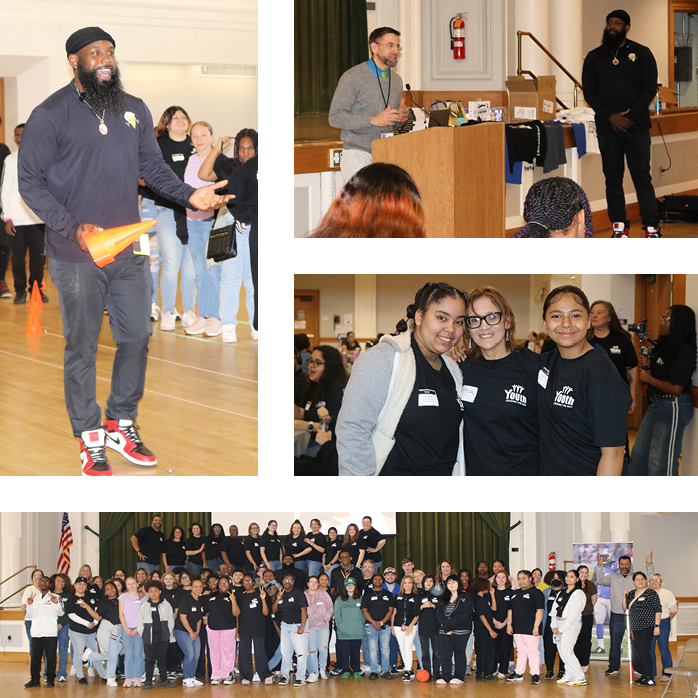
On Thursday, April 30, 2026, middle and high school students from across the state—members of the Special Education Youth Advisory Council—came together for a powerful end-of-year celebration featuring keynote speaker Deon Butler. Author of "The Gift and the Curse" and a former NFL wide receiver, Deon shared his deeply personal journey—from quietly struggling to read to achieving his dreams both on and off the field. Throughout the day, students were inspired by his message of resilience: thriving against the odds, redefining success in the face of learning differences, and discovering a true sense of purpose. For more information about the Special Education Youth Advisory Council, please contact Nicole M. Vitale, SERC Consultant, at 860-613-7464.
Norwalk Community Celebrates Autism Acceptance Month
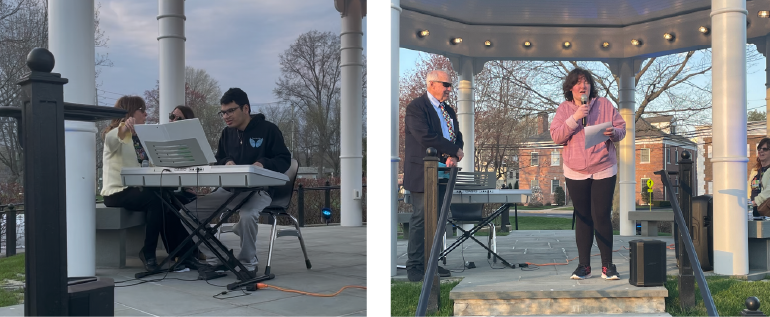
The City of Norwalk recently joined communities across Connecticut in recognizing Autism Acceptance Month with a gathering on Norwalk Green. The event brought together families, educators, first responders, and local leaders to honor the strengths, perspectives, and contributions of individuals on the autism spectrum.
The program included reflections from community members with lived experience, as well as remarks from students in the Norwalk Transition Programs. Attendees also enjoyed a musical performance by a student pianist from the program, adding a meaningful highlight to the celebration. City officials emphasized ongoing efforts to support individuals with autism, including collaborative training initiatives for first responders and expanded opportunities for community engagement.
As part of the celebration, the gazebo on the Green was illuminated in blue, symbolizing Norwalk's commitment to awareness, understanding, and authentic inclusion. The event underscored the positive impact that inclusive practices and strong community partnerships bring to individuals with disabilities throughout Connecticut.
Your district/program could be featured in the next issue! Inspire others by submitting your success stories or achievements! We look forward to hearing from you!
Fill out the Abilities in Action Submission Form
Training and Professional Development Highlights
Secondary Transition Trainings for Coordinators, Certified Educators, and Paraeducators
The CSDE has partnered with the RESC Alliance and other state agencies to develop three Secondary Transition Trainings for Coordinators, Certified Educators, and Paraeducators to meet the requirements of Connecticut General Statutes Section 10-74q.
Secondary Transition Coordinator Training: This training is required for all primary and secondary transition coordinators. This full-day, in-person session provides a comprehensive overview of secondary transition planning through the role of the Secondary Transition Coordinator. Participants will examine professional responsibilities, including legal requirements, best practices, and strategies for supporting students with disabilities. The session highlights essential transition resources, services, and public programs offering transition-only services to enhance planning and family engagement. The timeline for completion of this training, outlined in C.G.S. § 10-74r, is if appointed before May 1, 2025, the training must be completed within three years, or if appointed after May 1, 2025, the training must be completed within one year. Please note that if you have already attended this training, you do not need to attend again.
NEW Secondary Transition Training for Paraeducators: This training is required for all paraeducators who provide special education services to transition-age youth. In this training, participants will understand the purpose and legal requirements of secondary transition, learn about the roles and responsibilities of the paraeducator, identify helpful secondary transition resources, examine the purpose of secondary transition assessments, discuss the data collection process and tools used, and explore relevant sections of a student’s Individualized Education Plan (IEP). This training is a one-hour, self-paced webinar and can be found on the CSDE website.
Secondary Transition Training for Certified Educators: This training is required for any certified educator who provides special education services to transition-age youth as noted on the IEP service grid. Although encouraged as they are equally part of the transition planning process for students, individuals who provide related services to transition-age youth as noted in the IEP service grid are not required to take this training. This training is a half day, self-paced webinar. This training is in the final stages of development and will be posted to the CSDE website when available.
Information on the trainings can be found on the CSDE website under Secondary Transition Trainings. For any questions related to the Secondary Transition Trainings, please contact Alexa Osterhout at alexa.osterhout@ct.gov.
SERC-Spring Training!
Check out upcoming professional learning opportunities from SERC. The full listing of spring offerings is available at www.ctserc.org/events. Register for professional learning opportunities from SERC.
Overview of the Connecticut Alternate Assessment System
This session provides a clear overview of the Connecticut Alternate Assessment System, including who the alternate assessments are designed for, how eligibility is determined, and the federal and state laws guiding participation. The training reviews eligibility criteria, the PPT decision‑making process, the Early Stopping Rule (ESR), Student Response Check (SRC), and CAAELP domain exemptions. It also highlights inclusive education principles and best practices for ensuring appropriate assessment decisions for students with the most significant cognitive disabilities.
Overview of the Alternate Assessment System (Recorded Webinar and Transcript)
CT SEDS ELP Assessments Presentation
This training walks teams through how English Language Proficiency (ELP) assessments—including LAS Links and the CAAELP—are documented within CT‑SEDS. The session covers verifying EL/ML status, selecting the correct assessment, documenting accommodations, understanding rostering timelines, and ensuring accurate plan finalization before testing. Guidance is also provided on determining alternate ELP eligibility, avoiding conflicting accommodations, and coordinating with district EL staff to maintain accurate testing records throughout the assessment window.
English Language Proficiency Assessments and CT-SEDS slidedeck (read transcript)

CT-SEDS Highlights
Gifted and/or Talented Reminders and Resources
The CSDE designed the Gifted and/or Talented module, with input from LEAs for LEAs to report Gifted and Talented eligibility data and for processing individual referrals through a Planning and Placement Process separate from the IEP Module.
- GT reporting of eligibility must continue to be submitted in PSIS for this school year and the following school year.
- The Module process itself can be used to document individual referrals and eligibility in CT-SEDS. If this process is used for individual referral, then the student's eligibility information is automatically entered in the system at that time. If districts have their own process for individual referrals outside of the system, then that eligibility data for those students still needs to be entered in the system using the import process by the end of the school year.
- Each LEA can utilize the batch import in CT-SEDS by the end of the 2025-26 school year to capture current GT eligibility/non-eligibility of all their students.
- Gifted and/or Talented User Guides are posted under the Manuals tab of the Documents Widget inside of CT-SEDS:
- CT Student Gifted and Talented Import Template
Preschool and Summer Birthdays:
For preschool students who have been found eligible for special education AND turn 3 over the summer months (birthday is after the last day of school for 2025-26 SY but before the first day of school in the 2026-27 SY), please remember to review the guidance below:
Please see Revised Preschool Eligibility and Summer Birthdays document posted in the CSDE State tab of the Documents Widget.

Please note: The "Preschool Eligibility and Summer Birthday" guidance (No Services Provided) is only for students who turn 3 during the summer months.
If a student turns 3 during the school year prior to, on/or before the last day of school, the district is responsible for writing an IEP where services start on or before the student's 3rd birthday (FAPE at 3). If a parent chooses to remain in Birth-to-Three for extended Early Intervening Services, after an IEP is finalized (after parent(s) sign Provision of Services), the district should inactivate the record. Once the student enrolls in the fall, the record will reactivate, and the IEP will be active.
Identifying the E.C Placement Setting in the Removal of General Education tile within IEP process:
Please remind Early Childhood Teams to review the following table below when selecting from the Early Childhood Placement Setting drop-down menu pictured above. The Placement/Settings categories for children, ages 3 through 5, are:
- Early Childhood Preschool or Kindergarten Program: A program that includes a population of 50% or more of children without disabilities
- Early Childhood Special Education Program in a Separate Class: A program that includes a population of less than 50% of children without disabilities
- Early Childhood Special Education Program in a Separate School: A program that includes a population of less than 50% of children without disabilities in a separate school
- Early Childhood Special Education Program in a Residential Facility: A program that includes a population of less than 50% of children without disabilities in a residential facility
- Home: Special education and related services are delivered in the home AND the child is not participating in any program with children without disabilities (ex. Districts sends teacher to provide preschool special education at the Student's HOME. This should be rare!)
- Service Provider Location [Itinerant Services]: All special education and related services are delivered at a prescribed location AND the child is not participating in any program with children without disabilities
Updated CT-SEDS Resources Available in Documents Widget

Parent Portal Quick Guide: This guide has been updated to provide a more detailed description and step by step process for parents/guardians to reference when logging into the Parent Portal. Please share this important guide with your students' parents/guardians.
Document Language and Translation Quick Guide: This guide details specific information related to translation features in CT-SEDS. This guide includes how to set the document language, parent language for the parent portal, and translating documents through the module and through Create/View Documents.

Office of Dyslexia and Reading Disabilities Updates
ODRD Newsletter, Podcasts, and Webinars
Visit ODRD's newsletter, The Monthly Decode.
- Episode 1: Are CSDE's new Structured Literacy and Dyslexia Competencies a Game Changer?
- Episode 2: Why Is Representation in School Leadership Essential for Student Success?
- Episode 3: How Can Family Advocacy Transform Literacy Outcomes?
- Episode 4: What Educators and Families Should Know About the EL/ML Framework—and Why It Matters
- Episode 5: "This Is What Changed Everything": A Student on Dyslexia, Access, and Assistive Technology
- Episode 6: This Icy Experience Makes Reading More Meaningful
- Episode 7: Why Community, Identity, and Representation Matter in Literacy - and What Educators and Families Should Know
If you weren't able to attend any of the sessions focused on Using Assessment Data to Develop Present Levels of Performance and IEP Goals and Objectives, you can view the webinar recordings.
Dyslexia Awareness Collaborative (DAC) Event
Join the CSDE's Office of Dyslexia and Reading Disabilities (ODRD) for an evening of celebration and to hear from a nationally recognized motivational speaker, Jordan Toma, who will speak about how his mother's unwavering belief in him helped him to overcome challenges related to Attention-Deficit/Hyperactivity Disorder (ADHD), Dyslexia, and Dysgraphia. Jordan is the author of I'm Just a Kid with an IEP, which has sold over 150,000 copies worldwide. Once a student who struggled to attend school and pass tests, he went on to earn a psychology degree from Centenary University. Today, he speaks nationwide, sharing the message: "My struggle is my strength." This session is open to educators, students, families, and professionals interested in self-advocacy, empowerment, and the impact of supportive adults. It promises to be an inspiring evening for our Connecticut community. We hope you will join us as we celebrate those who inspire us and the strength that grows when someone believes in you.
Date: Thursday, May 21, 2026
Time: 4:15–5:00 p.m. (Refreshments and connections),
5:00–7:00 p.m. (Jordan Toma presentation)
Location: Coginchaug Regional High School Auditorium,
135 Pickett Lane, Durham, CT
For more information visit: Dyslexia Awareness Collaborative: Honoring Those who Inspire Us: An Evening with Jordan Toma, Thursday, May 21, 2026, 5 - 7pm - Events - State Education Resource Center

State Agencies and State Partnership Updates
Connecticut Parent Advocacy Center (CPAC)
The Connecticut Parent Advocacy Center (CPAC) would like to clear up some recent misinformation that was shared about our organization during the most recent legislative session. CPAC is not closing or going away. CPAC is the federal designated Parent and Training Information Center for Connecticut. We remain strong and committed to supporting and informing Connecticut families whose children and youth need special education services. – Jane Hampton Smith, Beth Reel, Co-Executive Directors, CPAC
We encourage families and educators to contact us anytime:
Phone: 860-739-3089
Email: cpac@cpacinc.org
Website: www.cpacinc.org
Thank you for your continued trust and support.
Q&A Session with Dr. Ross Greene on May 13, 2026
CPAC is excited to welcome Dr. Ross Greene back for a Q&A session as a continuation of our Behavior Series on the Collaborative and Proactive Solutions (CPS) model. Submit your question for Dr. Greene when you register for this free session. If you missed any of these webinars, you can watch them all on this YouTube playlist.
Audience: Families, School and Community Professionals