

Bureau of Special Education Update, June 2026
In This Issue
From the Director’s Desk

As another school year comes to a close, the Bureau of Special Education would like to extend our sincere appreciation to special education leaders, educators, families, and community partners across Connecticut for their unwavering commitment to students with disabilities. Graduation ceremonies and year-end celebrations provide an opportunity to celebrate student achievements and the collaboration, dedication, and shared support that make those successes possible.
While we celebrate the progress made this year, we also recognize the significant challenges many districts continue to face. Escalating costs, workforce shortages, and the increasing complexity of student needs require ongoing innovation, partnership, and investment in high-quality programs and services. Supporting students in their local communities whenever appropriate remains a shared priority, and we are committed to providing resources and opportunities that help districts strengthen their capacity to meet diverse learner needs.
This month's newsletter highlights several important resources and opportunities, including new guidance documents, upcoming professional learning opportunities, and a competitive grant designed to support districts in expanding local programming for students with intensive needs. We are also proud to celebrate the completion of our Aspiring Leaders Program, which graduated 20 emerging special education leaders this year. We congratulate all participants and thank them for their commitment to serving students, families, and educators across our state.
As you conclude the school year and begin planning for Extended School Year services and the year ahead, thank you for your continued leadership, collaboration, and dedication to improving outcomes for students with disabilities. We also encourage you to save the date for our annual Back-to-School Meeting in September, where we look forward to reconnecting and continuing our collective work together.
In partnership,

Bryan Klimkiewicz
Division Director, Bureau of Special Education
Connecticut State Department of Education

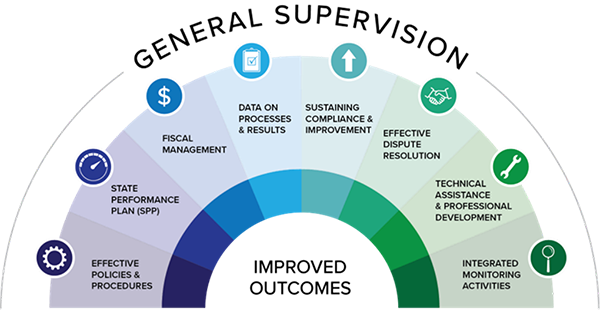
General Supervision
Special Education Model Procedures and Practices Manual
As you are aware, the CSDE recently released the latest version of the Special Education Procedures and Practices Manual.
A downloadable version of the procedures and practices manual is now available on the CSDE website.
On the heels of the completion of Connecticut's most recent legislative session, the CSDE is engaging in a comprehensive review of all newly passed legislation. Any new laws that impact special education will be incorporated into the next release of the Model Manual. The CSDE will release the updated/revised version in September 2026 and send a notice informing directors of the impacted chapters.
Developmental Delay Eligibility Worksheet
Developmental Delay is one of the fifteen special education primary disability categories in Connecticut. The BSE developed guidance and an eligibility worksheet following the 2025 legislative session which resulted in a change to the age parameters from ages 3 through 5 to ages 3 through 8. The previously disseminated Development Delay Eligibility Worksheet is now posted on the CSDE website: Developmental Delay Eligibility Worksheet.

Fiscal Matters
High Quality Special Education Incentive Grant Update
Established under Public Act 25-93 Sec. 19, the Connecticut State Department of Education is announcing the launch of the High-Quality Special Education Incentives Grant. The CSDE is administering this competitive grant program for local and regional boards of education to support in-district or regional special education programming and services for students with disabilities. Grants awarded to local and regional boards of education under the program may be used (1) to enhance and improve existing special education programming and services in the school district or start-up costs related to the creation of in-district or regional special education programming and services for students who are currently enrolled in a program operated by a provider of special education services, as defined in section 10-91g of the general statutes, and (2) for planning and operational expenses related to such in-district or regional special education programming and services.
Submission Instructions:
- Due Date: July 10, 2026
- Format: Year 1 Electronic submission (HQ Special Education Incentives Grant Application)
- Questions: Please contact Bryan Klimkiewicz at bryan.klimkiewicz@ct.gov and Nikki Hendry at hendry@ctserc.org
Additional Resources:
This information can also be found on the Bureau of Special Education website: Special Education Fiscal RFPs and Grants.
Legislative Updates
Requests for Updates to Staffing Changes Notification per Public Act (PA) 25-93 § 22
Effective July 1, 2025, PA 25-93 § 22 mandates that each regional educational service center and private provider of special education services shall send written notification to the parent or legal guardian of a student receiving special education services, the responsible local or regional board of education, and the Connecticut State Department of Education (CSDE) regarding all staffing changes that impact the provision of special education services not later than five business days from the occurrence of the staffing change. Programs have been notifying the CSDE of changes via the Staffing Changes Notification Form. In 60 - 90 days following the notification, the CSDE will follow up with the regional educational service center or private provider to receive an update on the status of the staffing change. Questions related to the notification requirement or the requested updates can be directed to Bryan Klimkiewicz at Bryan.Klimkiewicz@ct.gov.

Policy and Guidance Reminders
Professional Courtesy Topic Brief
Our new topic brief regarding professional courtesy can be found here: Bureau of Special Education (BSE) Topic Brief: Professional Courtesy June 2026.
The concept of "professional courtesy" pertains to those situations in which a student is attending is a public school in the school district in which one of the student's parents is employed pursuant to the provisions of either a collective bargaining agreement or similar employment agreement between the parent's employing district and its employees, and that district is different from the one in which the student resides. These employer-employee contracts are commonly known as "professional courtesy agreements."
Bureau of Special Education (BSE) Topic Brief: Supporting Kindergarten Transitions for Children with IEPs
Earlier this month, the BSE released a new Topic Brief: Bureau of Special Education (BSE) Topic Brief: Supporting Kindergarten Transitions for Children with IEPs.
The transition from preschool to kindergarten is a critical milestone in a child's educational trajectory. For preschoolers with Individualized Education Programs (IEPs), intentional, proactive planning is essential. Strong, meaningful collaboration between families and local education agencies (LEAs) during this period supports positive outcomes and promotes long-term student success.
Special Education Considerations for Kindergarten Transition
A Planning and Placement Team (PPT) meeting should be scheduled for every preschool child with an IEP before the start of kindergarten. The LEA should:
- Convene a PPT meeting prior to kindergarten to review and revise the IEP even if the family is considering opting out (see next section).
- Ensure the IEP addresses present levels of performance, kindergarten aligned goals, LRE determination, special education and related services, and supplementary aids and services.
- Discuss and document any supports needed for a successful transition into kindergarten.
When a Family Choose to Opt-Out of Kindergarten (C.G.S. § 10-184)
A family may opt-out of kindergarten at age 5 or 6 by appearing in person and signing the district's opt-out form. If a family whose child is receiving preschool special education services choose to opt-out, the LEA should:
- Inform the family that once they exercise the opt-out option, the child is no longer a public school student and is not entitled to special education or related services.
- Inform families that they may later enroll their child in public school; upon enrollment, a PPT meeting should be held to review and revise the IEP as needed.
Important Note: Retention is typically a general education decision, not a PPT decision.
Parental Rights & Procedural Safeguards
- Families who disagree with the IEP, placement, or transition recommendations may exercise their procedural safeguards, including requesting mediation or initiating a Due Process Hearing.
- Parentally placed private school children do not have an individual right to receive some or all of the special education and related services that the child would receive if enrolled in a public school (IDEA, 34 C.F.R. § 300.137).
CTECS Admissions Process for Students Receiving Special Education Services
This communication provides guidance on the admissions process for students who receive special education services and apply for admission to a CTECS high school. This letter revises and replaces the memorandum of June 12, 2025, on the same topic. Please contact Josh Robinson (joshua.robinson@cttech.org), Assistant Superintendent of Special Education and Pupil Services, CTECS, Patricia King (patricia.king@cttech.org), Director of Admissions, CTECS, or Bryan Klimkiewicz (bryan.klimkiewicz@ct.gov), Special Education Division Director, CSDE with any questions or assistance with implementation of this guidance.
View the CTECS Admissions Process for Students Receiving Special Education Services memo.
Out-of-District Placement Reminder:
- Section 10-91j of the General Statutes requires LEAs to have a written contract for each student with a disability outplaced to private providers of special education to qualify for excess cost grants. Contracts shall include an explanation of how the tuition or costs for services under the agreement are to be calculated.
- Section 10-76d of the General Statutes requires LEA contracts with private providers of special education services to include a description of the educational program and other treatment the child is to receive, a statement of minimal goals and objectives for the child to achieve, and an estimated time schedule for returning the child to the community or other another appropriate facility. No excess cost grant funds are to be paid unless these provisions are included.
In planning for new student out of district placements for ESY and the 26-27 school year, please remember that you are required to have a contract in place for each student attending an out of district program. Contracts that are not fully executed prior to planned placement, may result in delayed or interrupted services for students.
Homebound and Hospitalized Instruction vs. Instruction in the Home
Homebound and Hospitalized Instruction is the provision of instruction in a non-school setting for a verified medical reason. A board of education shall provide instruction to a child in a public school under the jurisdiction of such board when such child is unable to attend school due to a verified medical reason which may include mental health issues. This is distinct from Instruction in the Home (see definition below).
Instruction in the Home is a placement option available under the IDEA, if determined appropriate by the student's PPT. In accordance with the IDEA, the child's PPT may determine that the child requires instruction in the home in order to receive FAPE, after considering in-district supports and other LRE considerations, evaluation information, and input from any private supports. In this case, the PPT would be making a placement decision pursuant to the IDEA, and not under homebound and hospitalized instruction.
For additional information on the difference between Homebound and Instruction in the Home refer to these sections of the Special Education Procedures and Practices Manual, Revised April 2026 referenced below:
Chapter 6: Least Restrictive Environment (LRE) and Placement
Continuum of Alternative Placements
The District will ensure that a continuum of alternative placements is available to meet the needs of students with disabilities residing within its jurisdiction that receive special education and related services. These placement options include instruction in regular classes, special classes, special schools, instruction in the home, and instruction in hospitals and institutions. These alternative placements will be available to the extent necessary in order to implement a student s IEP.
Chapter 7: Students Unable to Attend School for Medical Reasons
The District will provide homebound or hospital instruction to students receiving special education and related services who are unable to attend school due to verified medical reasons that may include mental health issues.
This should not be confused with instruction in the home, which is a placement along the LRE continuum.
For Homebound and Hospitalized Instruction, the verified medical reason documentation should be uploaded to the student's CT-SEDS Create/View Documents.
Providing Meals to Students Outplaced Pursuant to Individualized Education Programs
This operational memorandum provides guidance to local educational agencies (LEA) regarding the provision of meals to students with disabilities who have been placed in an out-of-district placement setting by the student's Planning and Placement Team (PPT), in accordance with the student's individualized education program (IEP).

Abilities in Action
Celebrating Leadership in Action: Connecticut Aspiring Leaders Academy
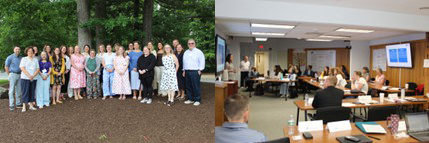
 The Connecticut Aspiring Leaders Academy proudly celebrated a major milestone this week as Cohort 4 presented their final capstone projects to peers, mentors, and district leaders from across the state. Their presentations highlighted months of thoughtful inquiry, collaboration, and real-world problem‑solving, showcasing innovative approaches to strengthening school communities and supporting student success. This accomplishment marks an exciting step forward for these emerging leaders as they prepare to make a meaningful impact across Connecticut's educational landscape.
BRIDGE CT: Building Resilience, Independence, Dignity, Growth & Empowerment in Connecticut
BRIDGE CT (Building Resilience, Independence, Dignity, Growth & Empowerment in Connecticut) is supporting school districts across Connecticut by strengthening the local flow of transition services through regional collaboration. Local Interagency Teams (LITs) are bringing together schools, the Bureau of Rehabilitation Services (BRS), Centers for Independent Living (CILs), and other community partners to better align supports for students with disabilities.
Through this coordinated approach, districts are creating clearer, more connected pathways from school to adulthood—reducing service gaps and building more seamless, student-centered transition systems across the state.
Participating LEAs include: Bristol, Brookfield, East Windsor, Meriden, Naugatuck, New London, Norwalk, Region 4, Stratford, and USD1. Learn more about effective teaming practices that support this work.
Your district/program could be featured in the next issue! Inspire others by submitting your success stories or achievements! We look forward to hearing from you!
Fill out the Abilities in Action Submission Form
CT-SEDS Highlights
CT-SEDS Usability Study
This summer and early fall, PCG will be conducting a CT-SEDS Usability Review that aims to connect PCG, CSDE, and LEAs in order to inform updates to system functionality, regulations, guidance, and training.
Participants will walk through how they currently use CT‑SEDS, demonstrate real interactions with the system, and provide feedback on ways to make tasks more efficient. PCG will be contacting districts directly to arrange participant groups. Information obtained during the usability study will be shared in a future update.
IEP Quality & CT-SEDS Training Highlights
All summer statewide sessions are now live for registration! This includes:
- Special Education Procedural Foundations for School Leaders
- IEP Quality (IEPQ) for DSAP/New Educators
- Prior Written Notice for School Leaders
- CT-SEDS Onboarding for Special Educators
- CT-SEDS Onboarding for Section 504 Coordinators
Be sure to explore the offerings and register for the CT-SEDS summer statewide offerings.
Scheduling Summer Trainings for School Leaders Now!
Statewide Offerings (Due to high demand, new sessions were just added!)
Special Education Procedural Foundations for School Leaders
This 3-part virtual series offers educational leaders who support and participate in the PPT process a practical overview of federal and state special education laws and procedural requirements under IDEA and how procedural compliance protects student and family rights. Participants will explore systems that promote consistent, student-centered PPT practices.
Register for the 3-part Procedural Foundations virtual series.
NEW! Prior Written Notice IEP Quality Extension School Leadership Series
Grounded in federal and state law, this half-day session is designed to strengthen school leadership teams' understanding and application of the Prior Written Notice (PWN) procedural safeguard. Special and general education leaders who participate in and/or facilitate Planning and Placement Team (PPT) meetings are encouraged to attend together to support cohesive implementation.
Register for the Prior Written Notice IEP Quality Extension session.
In-District Options:
- Special Education Procedural Foundations for School Leaders
- IEP Quality for School Leadership Teams
- IEP Quality Review Tool
- Available for 20+ Educators
To submit requests for training, complete the In-District Training Request Form.

Resources
CT CORE Skills Resource Chart
The Connecticut State Department of Education has released the updated CT CORE Transition Skills Resource Chart, a comprehensive tool designed to support students with disabilities as they prepare for life after high school. This resource brings together state and national guidance, transition assessments, instructional materials, and sample IEP goals across 16 essential transition skills areas, including self‑advocacy, employment, postsecondary education, daily living, community involvement, social‑emotional skills, and more.
Each skill area includes three sections:
- Alignment to the Guideposts for Success and Level Up (Pre‑ETS) services
- A curated list of assessments, progress‑monitoring tools, and practical resources for students, families, educators, and VR professionals
- Sample IEP goals, objectives, and transition activities aligned with ELA College & Career Readiness Anchor Standards
Access the CT CORE Transition Skills Resource Chart.

Upcoming Events
Save the Date: Special Education Back to School-Monday, September 14, 2026
The CSDE, in partnership with SERC is planning our Annual Special Education Back to School session. We are excited to return to the Connecticut Convention Center in Hartford. We hope you will join us in kicking off the 2026-2027 school year! Additional information will be shared as we finalize our agenda and registration process.