

Greater Bridgeport Community Mental Health Center (GBCMHC)
Bridgeport Community-Based Services
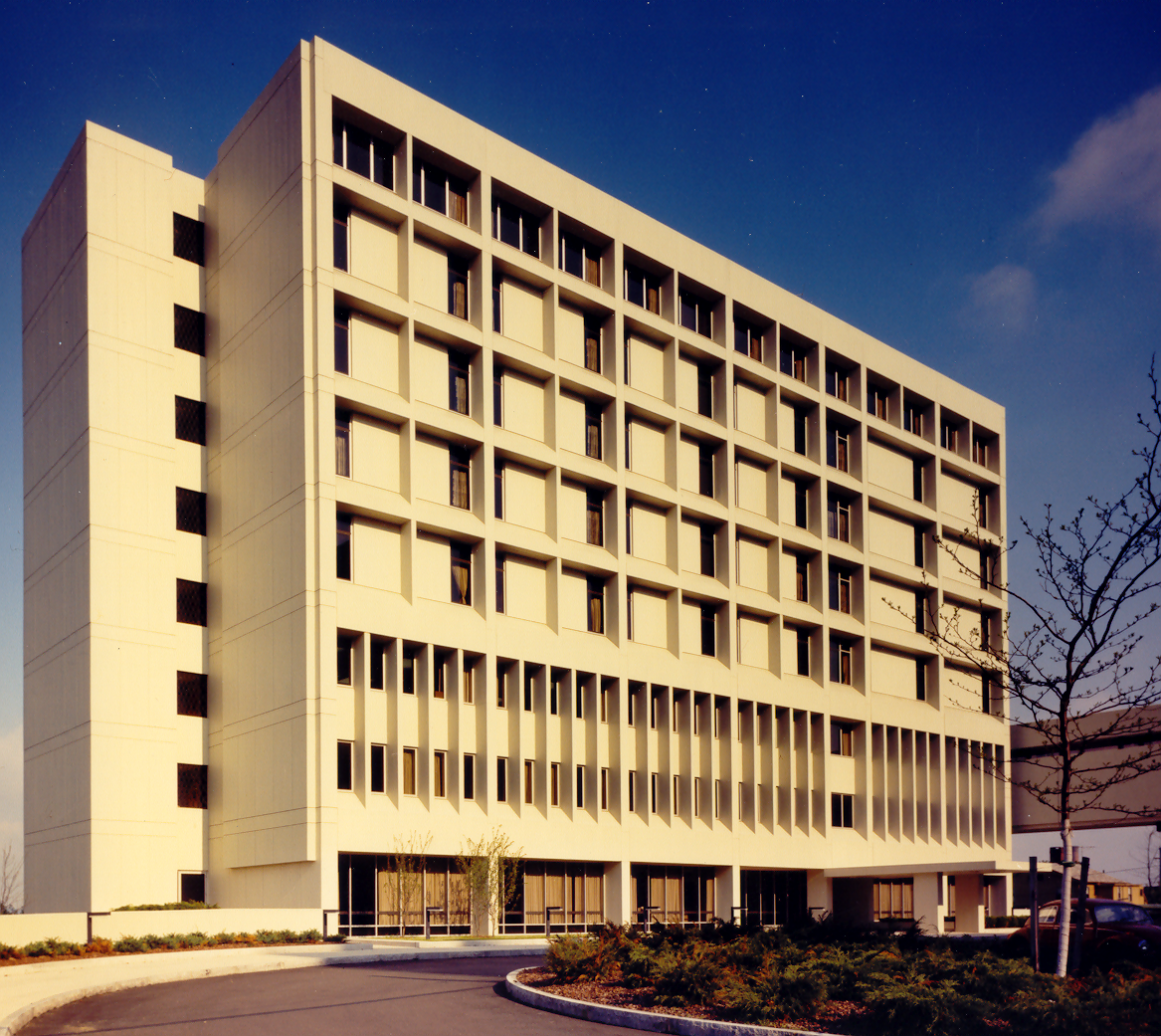
1635 Central Avenue, Bridgeport, CT 06610
PH: 203-551-7400 FAX: 203-551-7404
To Inquire Regarding Services (8am to 4pm) Call: 203-551-7423
Crisis Intervention: 1-800-586-9903 OR 203-358-8500

Community Behavioral Health Clinic
(State Operated):
100 Fairfield Avenue, 2nd Floor, Bridgeport, CT 06604
PH: 203-579-7300 FAX:203-579-6305
(Region 1 Lower Fairfield County)
Serving the towns of Bridgeport, Easton, Fairfield, Monroe, Nichols, Southport, Stepney, Stevenson, Stratford, and Trumbull.
**No one will be denied service for inability to pay. Medicaid and Medicare accepted. Department of Mental Health and Addiction Services (DMHAS) facilities will not discriminate in the provision of health care services to an individual. A discounted/sliding fee schedule Is available based on family size and Income. Click here for the full policy.**
INPATIENT SERVICES
The Hospital Services Division offers an array of services to meet the needs of individuals, 18 years of age and older with prolonged psychiatric and co-occurring illnesses, who require hospitalization due to acute exacerbation of their symptoms and for those requiring continued rehabilitation before returning to the community. Patients are served in the following locations: Psychiatric Intensive Care Unit 1 (PICU I), Psychiatric Intensive Care Unit (PICU ll), and the Co-Occurring Treatment Unit (CTU).
The Hospital Services Division is made up of a total of 62 beds The PICU 1 and PICU 2 each provide 21 beds, and the CTU provides 20 beds, for residents of Connecticut. Admissions to the inpatient units are coordinated through a statewide Utilization Management process coordinated by the Office of the Commissioner Medical Director’s Office. All three locked units are responsible for providing treatment to individuals who are severely, acutely and persistently psychiatrically disabled who require a safe, supportive, highly structured hospital level of care. The treatment goals are developed in which the individual can be stabilized, evaluated, rehabilitated, helped to accept the need for ongoing treatment, and assisted in regaining a level of functioning that will allow the person to be treated in a less restrictive environment or lo return to community-based living. Hospital Services Division treatment staff work closely with community providers to ensure that a smooth transition to the community exists. All Hospital Services Division units provide assessment and stabilization, with the emphasis on community reentry and focus on rehabilitation with an emphasis on intense skills building needed for community reintegration.
COMMUNITY-BASED SERVICES
Diagnostic and Evaluation Center (DEC)
The Diagnostic and Evaluation Center (DEC) is the central admissions unit for all community-based services in Bridgeport. The Unit coordinates streamlined access to the most appropriate and effective services within the Southwest Connecticut Mental Health System (SWCMHS). DEC provides, triage, diagnostic and evaluation services, and referrals to community providers. The DEC is designed to quickly Identify an individual's needs and refer them to the appropriate level of care either within SWCMHS or in the community. The DEC provides a full range of assessments to determine an individual's needs and makes recommendations for appropriate follow-up care. The DEC provides short-term treatment services while a referral Is processed to either a treatment team within the Southwest Connecticut Mental Health System or to a community provider.
DEC also provides triage services including initial screenings, entitlement and financial reviews, and referrals to community-based providers. The goal is to compile knowledge regarding clinical needs, entitlements, medication programs, and community-based services to help promote rapid accessibility to recovery services both within SWCMHS and in the community.
The DEC’s hours are Monday through Friday from 8:00 a.m. to 4:00 p.m. (203-551-7423)
SWCMHS Regional Mobile Crisis Team
The Regional Mobile Crisis Intervention Team Is available to provide intervention and support to adults (18 years and older) who are experiencing a behavioral health crisis in the comfort of their own home or other community location. The settings including:
- Private homes/apartments,
- Residential programs,
- Social service agencies,
- Hospitals, jails,
- Universities,
- Community offices, etc.
The services offered include:
- Crisis Intervention and assistance in managing difficult situations,
- Crisis assessments and evaluations,
- Problem solving and coping strategies,
- Crisis prevention planning,
- Referrals to other local services.
The Mobile Crisis Intervention Team is available for face-to-face outreaches Monday: to Friday: between the hours of 8:00am and 4:00pm.
To access mobile crisis services, call 203-358-8500 Or 800-586-9903. There Is no charge for this service.
Those needing assistance after hours, on weekends or holidays, should contact 211 or 988.
Those experiencing a life-threatening emergency must call 911 or seek Immediate assistance at a local Hospital emergency epartment
Crisis Intervention Clinician (CIC):
The Crisis Intervention Clinician partners with the local police and other community providers to coordinate a joint response to crisis in the community involving individuals with behavioral health disorders. The goal of CIC is to reduce the need for arrest in favor of referrals to appropriate treatment resources. The CIC is a trained clinician that works collaboratively with Crisis Intervention trained officers to provide mental health evaluations and recommendations when responding to crisis calls and also offers training opportunities to police departments within DMHAS Region 1.
Community Services Division (CSD)
Community-based services at SWCMHS are provided by several multi-disciplinary treatment teams. Core clinical services offered by all these teams include psychopharmacology, assessment, case management, individual, group and family psychotherapy, and psychoeducation. Also available to all teams are evidence-based groups such as Cognitive Behavioral Therapy, Dialectical Behavioral Therapy (DBT) and Integrated Dual Disorder Treatment (IDDT). Each team includes an RN who assists consumers with wellness activities and to connect to primary care in the community. SWCMHS Rehabilitation Services are also fully integrated into all community-based clinical programs.
Community Services in Bridgeport are organized around several levels of care:
Assertive Community Treatment Team (ACTT)
The SWCMHS Assertive Community Treatment Team is made up of multi-disciplinary clinical and peer staff who provide comprehensive services to address the needs of individuals with serious behavioral health issues and other co-morbid disorders. ACTT services are most effective for individuals with serious behavioral health issues who have significant functional impairments, continuing high service needs, who often struggle connecting with and navigating a complex treatment system and have difficulty transferring learning across environments.
The ACT Team delivers highly responsive, individualized, recovery-based and rehabilitative services in the client’s natural environment. The services are designed to respond to the clients’ personal goals and needs and are provided with appropriate timing and intensity. Services are offered within a team approach where individuals with different areas of expertise share responsibility for the provision of services, integrating care, and providing a wide range of interventions. The ACTT offers recovery-oriented services, promotes self-determination and respects individuals served as experts in their own recovery. The primary emphasis of the ACTT is to support person-centered recovery goals, assisting individuals in becoming more self-sufficient, more active in their communities, obtaining competitive employment and achieving their personal meaningful goals and life roles.
Community Support Program (CSP)
The SWCMHS CSP is designed for individuals who need the most intense level of community-based care. The program utilizes a team approach to provide intensive, rehabilitative community support, crisis intervention, individual and group skill-building, also known as recovery education. Most of the interventions are community-based, delivered in the individual's home, neighborhood or community, which enables the team to become intimately familiar with the individual's surroundings, strengths and challenges, within the context of their environment. The desired outcome is to assist individuals toward an independent, enriched life based on their own choices and preferences.
Clinical Services (CS)
Bridgeport Clinical Services are designed for individuals who have a range of clinical needs but tend to require less intensive case management and community-based skills building. Consumers served by Clinical Services work with a clinician who assists them to develop and implement a person-centered, coordinated recovery plan. These clinicians may also provide a full range of individual, group and family therapies.
Hispanic Services: Hispanic Clinical Services is a specialty service that is available within the Clinical Services Division of SWCMHS designed for monolingual Spanish-speaking clients. Hispanic Services offer services delivered by a team of Spanish speaking providers. Hispanic Services have active linkages to culturally sensitive agencies ln the Bridgeport area.
Deaf or Hard of Hearing Services: Deaf of Hard of Hearing Service is a specialty service that is available within the Clinical Services Division of SWCMHS and is available at both the Bridgeport and Stamford locations. This service provides culturally and linguistically accessible mental health treatment for Individuals who are Deaf or Hard of Hearing. All psychiatric services, case management, group and Individual therapy are provided within the Clinical Services. Direct staff include a clinician who is deaf and uses American Sign Language along with an Interpreter on site. Both can assist individuals to access sign language Interpreters for treatment related services.
Medication Clinic Service (MCS): The Medication Clinic is available for individuals who have achieved significant stability and are interested primarily in psychopharmacology services. Consumers in MCS require only periodic appointments with their psychiatrist and/or clinician. The MCS primarily provides psychiatric medication, nursing services, supportive counseling provided by a clinician, supported employment, and peer services. Case management services such as assistance with housing, entitlements or money management are available as needed. Individuals in the MCS typically come in for services less frequently and may be provided with assistance and referrals to access community mental health providers.
Young Adult Services (YAS):
The Young Adult Services (YAS) program is designed to provide age-appropriate, clinical and residential support services to young adults with behavioral health disorders between the ages of 18 to 25, providing intensive recovery-oriented services that consider developmental processes, the impact of traumas, and family issues. YAS provides a wide range of services including clinical, employment, educational and rehabilitative support. YAS is designed to prevent young adults from becoming "lifelong members" of the mental health service system. Individuals referred for services come through the Southwest Connecticut Mental Health System’s Diagnostic and Evaluation Center or through the Department of Mental Health and Addiction Services Office of the Commissioner's central referral process. In both instances, these are usually young adults who have been in residential treatment through the Department of Children and Families, in foster care, and/or in the juvenile justice system. YAS services include:
- Intensive Community Supports
- Clinical Services
- Residential Services
- Community Support Program
- Educational Services
- Vocational Services
- Psychiatric/Medication Services
- Social Rehabilitation
Forensic Services
SWCMHS Forensic Services are made up of two components:
Connecticut Offender Reentry Project (CORP) – Assists and provide support and liaison services to incarcerated individuals who are preparing to transition from prison to the community.
Jail Diversion (JD) – JD clinicians are embedded within Region 1 Courthouses and advocate for alternatives to incarceration while also offering community-based services that allow the court the option to refer individuals to Outpatient Restoration of Competence. JD clinicians monitor court arraignment and screen adult defendants who are experiencing difficulties related to their behavioral health conditions and offer community treatment options in lieu of jail while their court cases proceed through court process. The jail diversion clinicians also refer individuals for services, monitors compliance, reports compliance to court and provide community supervision and clinical services to individuals under the CT Psychiatric Security Review Board (PSRB).
Residential Services
Transitional Residence Program (TRP): TRP provides short-term housing for homeless individuals, incorporating rehabilitative programming for up to 12 consumers. TRP Is an open residential program that provides supported living services, including medication monitoring, 24 hours a day until the consumer is ready for community re-entry. TRP also provides skill building groups, outings in the community, visiting hours for family and friends, three meals a day, and laundry facilities. TRP staff work collaboratively with all services within the Community Services Division to support individuals to successfully transition back to community living.
Rehabilitation Services (ALL LOCATIONS)
Rehabilitation Services (RS): Rehabilitation Services are integrated throughout all SWCMHS programs and service locations and are available to any consumer who is interested in the service. The RS division includes Supported Employment, Supported Education, Life Skills Training, and Peer Support services. These services are provided within the context of partnership, coaching, skill training, social network building, health maintenance, and the provision of assistance to attain an enriched living experience toward individual recovery.
Supported Employment (SE): Supported Employment is an Evidence-Based Practice provided to any consumer expressing an interest in finding or maintaining competitive employment. Private sector Employment Specialists are embedded in the outpatient clinical treatment teams who are committed to supporting individuals as they pursue their vocational goals.
Supported Education Services: The Resource Education Center (REC) provides Supported Education (SES) services to any consumer expressing an interest in pursuing their educational goals. SES includes services for G.E.D., high school equivalency, post-secondary, education enrichment.
LIFE Skills Training: The Learn Independence to Feel Empowered (LIFE) Skills Program is designed for individuals who would like to learn skills to help them become more independent and lead enriched, satisfying lives in their communities. Skills taught include money management, grocery shopping, cooking, maintaining a safe living environment, how to participate effectively in the recovery planning process, how to access community resources, and many more.
Peer Support Services: SWCMHS strongly believes that individuals with their own lived experiences (Peers) are a critical resource for people in recovery. Peer services include:
Recovery Coaches: Recovery Coaches establish helping relationship with consumers based on mutuality, strengths, and shared learning. This unique relationship offers a different kind of growth opportunity for both the consumer and the peer. Not only do the Recovery Coaches bring their own life experience, education, and previous work history to the job, they have received training on the peer support discipline and how to provide that service in an integrated team.
Recovery Educators: The Recovery Educators at the SWCMHS are a specially trained staff who are self-identified people with a lived experience (a.k.a. a person in recovery). They facilitate peer-led courses lo people in recovery from mental Illness and addiction disorders In Bridgeport, Stamford and Norwalk on an ongoing basis. The programs: WRAP (Wellness Recovery Action Plan), Pathways to Recovery and the Peer Employment Training (PET) course are all strength-based, empowering, and recovery-oriented. While each program is structured around a specific curriculum, it is the experiences of the students, brought out in dynamic, interactive, teaching formats that generate much of the learning which, oftentimes, has a transforming effect on the participants (consumers).
Stipend Trainee Programs: This program, which has a strong foundation in skill-building methodology, offers a unique opportunity for trainees who are consumers within SWCMHS to learn skills relative to peer support, employment, community living, interpersonal skills, computer skills, and coping skills. Trainees learn how to perform a wide range of tasks to assist consumers in regaining independence in their own lives and in their own recovery. Trainees also help support consumers to get reconnected with the resources available to them in their community. Trainees mutually assist people in understanding recovery, wellness principles, practices and pathways which include Hope, Choice, Empowerment, Recovery Culture and Spirituality. Trainees may work in any of the following capacities:
Greeters: Responsible for welcoming consumers and visitors to the building, sharing and relaying information related to daily programming with consumers and staff.
Peers Reaching Out (PROs): Provide peer support services to consumers, co-lead groups, and assist rehab staff on inpatient units.
Peers Utilizing Skills for Healing (PUSH): Assist with the identification and implementation of community-based outings and special events for consumers.
Warmline Operator: Accept calls from peers, assist and support individuals with non-emergency issues, provide information on community resources, listen to callers in a respectful and non-judgmental manner.
Homeless Outreach Team (HOT)
The Homeless Outreach Team is a program designed to offer services to individuals in Bridgeport and the surrounding towns who are homeless. Every day, staff from HOT go to local shelters, bus stations, train stations, parks, soup kitchens, and other locations to aid and support homeless individuals. Services that HOT provides include workers who assist individuals in accessing entitlements, insurance, accessing the 211 Coordinated Access Network, as well as assisting with gathering documentation for verification of homelessness. HOT workers also assist with completing housing applications and make referrals to shelters, behavioral healthcare services and medical care providers.
Rental Assistance Program (Formerly Shelter Plus Care)
The Southwest Connecticut Mental Health System is responsible for regional administration and/or oversight of over 300 Rental Assistance Housing Vouchers, a federally funded housing subsidy to clients in our service system. This office ensures that all federally mandated processes are followed, that the annual renewal of the certificate program occurs, staff and consumers are made aware of these resources, and full occupancy is maintained.
Managed Service System & Community Resources and Special Projects Unit:
The SWCMHS Managed Service System & Community Resources and Special Projects Unit serves as a liaison between multiple systems of care in DMHAS Region 1 including 32 DMHAS funded affiliate network of programs, SWCMHS inpatient and outpatient services, statewide utilization management, DMHAS Community Services Division, CVH, WFH, DOC, and the judicial system. Additionally, it ensures the quality of services provided by the DMHAS funded contractual network of agencies through the development of collaborative partnerships with the affiliate providers that is based upon a shared commitment to working together with the overarching goals of enhancing program services for the individuals being served.
The unit also leads, participates in and facilitates the utilization management of the current SWCMHS managed service system that includes oversight of the 32 DMHAS funded affiliate network of programs that provide an array of Residential and Substance Use Treatment Services to individuals who require those supports to maintain community living. This includes the provision of Residential Services for individuals transitioning from state inpatient hospital units and other institutions to community living and involves the development of additional residential and other needed service options. The overarching goal of the unit is to facilitate the linkage, increased accessibility, enhancement of quality, and expansion of services for individuals transitioning between systems of care to resources and programs in Region 1’s DMHAS funded affiliate network of programs.