

The Housatonic River and Polychlorinated Biphenyls
The Housatonic River and Polychlorinated Biphenyl (PCBs)
Some areas of the Housatonic River have a Fish Consumption Advisory. Please see the Department of Public Health's Fish Consumption Advisory Page for more information. To view the advisories in various languages navigate to the bottom of the page.
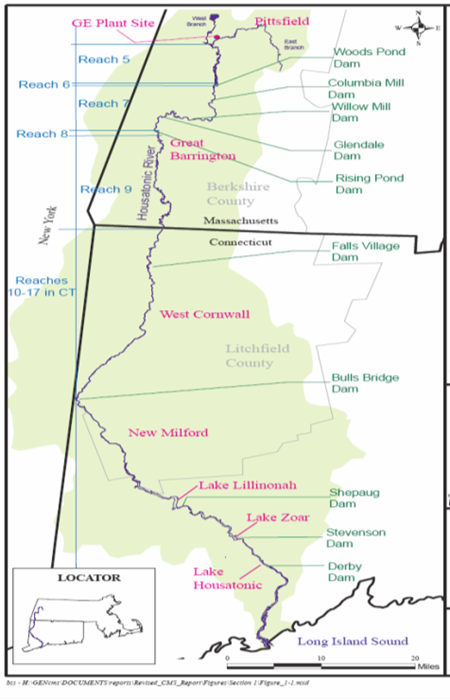
In 1977, the United States banned the manufacturing of the man-made chemicals PCBs (Polychlorinated Biphenyls) because of evidence of the harmful effects it has on the environment. The General Electric Pittsfield Plant, located in Pittsfield, Massachusetts, produced products with PCBs throughout the 20th century. An estimate of between 100,000 and 600,000 pounds of PCBs were released from the facility directly into the Housatonic River. Exposure to PCBs can cause a variety of adverse health effects to people as well as wildlife and aquatic organisms.
In Connecticut, exposure may occur though direct contact with contaminated soil or sediment. Or consumption of contaminated fish or waterfowl. Visit the Department of Public Health's Fish Consumption Advisory Page for more information.
The Housatonic River flows 149 miles downstream from western Massachusetts into western Connecticut until it drains out into the Long Island Sound. The release of PCBs in Pittsfield has contaminated waters in Massachusetts and Connecticut.
Cleanup agreements, involving remediation (the reduction and elimination of PCB contamination from soil, ground water, or surface water) and restoration (the process of compensating the public for natural resource damages by cleaning up valuable resource areas), involving multiple different parties have been approved. However, pollution from PCBs remains a problem for Connecticut.
Within the area bordering the main stem of the river, there are 4 critical ecological habitats, 19 plant and 10 animal species that Connecticut has listed as threatened, endangered, or of special concern, with an additional 4 species identified as species of concern. These include turtles, salamanders, freshwater mussels as well as birds and mammals that eat fish or insects. These critical species are potentially at risk from PCBs.
It is not safe for people to eat certain types of fish from the Housatonic River. Fish Consumption Advisories provide information about how often you can safely eat fish from Connecticut’s waters and from a store or restaurant. Updated signs have been produced to communicate information on these advisories with those who are fishing along the Housatonic River, Furnace Brook and Blackberry River. Copies of these signs are provided below along with more detailed information on safely eating fish in Connecticut.
Fish Advisory Signs for PCBs in the Housatonic River
- Fish Advisory Sign for the Housatonic River above Lake Lillinonah
- Fish Advisory Sign for Lakes on the Housatonic River (Lillinonah, Zoar and Housatonic)
- Fish Advisory Sign for Furnace Brook, Cornwall CT
- Fish Advisory Sign for Furnace Brook, below “Blast Furnace”, North Canaan, CT
If I Catch It Can I Eat It Brochure (English)
Related Links:
Integrated Water Quality Report
Connecticut Water Quality Standards
Content last updated May 30, 2025