

Chestnut Blight in Connecticut
Trees at risk
Identification
Life cycle and behavior
Spread and response
How to help
Resources
Chestnut blight, caused by the fungus Cryphonectria parasitica, devastated American chestnut (Castanea dentata) populations across the Eastern United States in the early 20th century. Introduced from East Asia, the disease was first detected in New York City in 1904. By 1910, it had reached Connecticut, and by 1920, nearly every mature chestnut tree in the state had been infected.
Trees at risk
The American chestnut was once a dominant species in Connecticut's forests, comprising up to half of the standing timber in the early 1900s. Towering up to 100 feet tall, its wood was prized for its rot resistance and its nuts were a staple food source for wildlife. Today, mature American chestnuts are rare, with most surviving trees being root sprouts that rarely reach reproductive maturity. The blight has also affected related species, including the Chinese chestnut (Castanea mollissima) and the hybrid chestnut (Castanea dentata × Castanea mollissima), though these are more resistant to the disease.
Identification
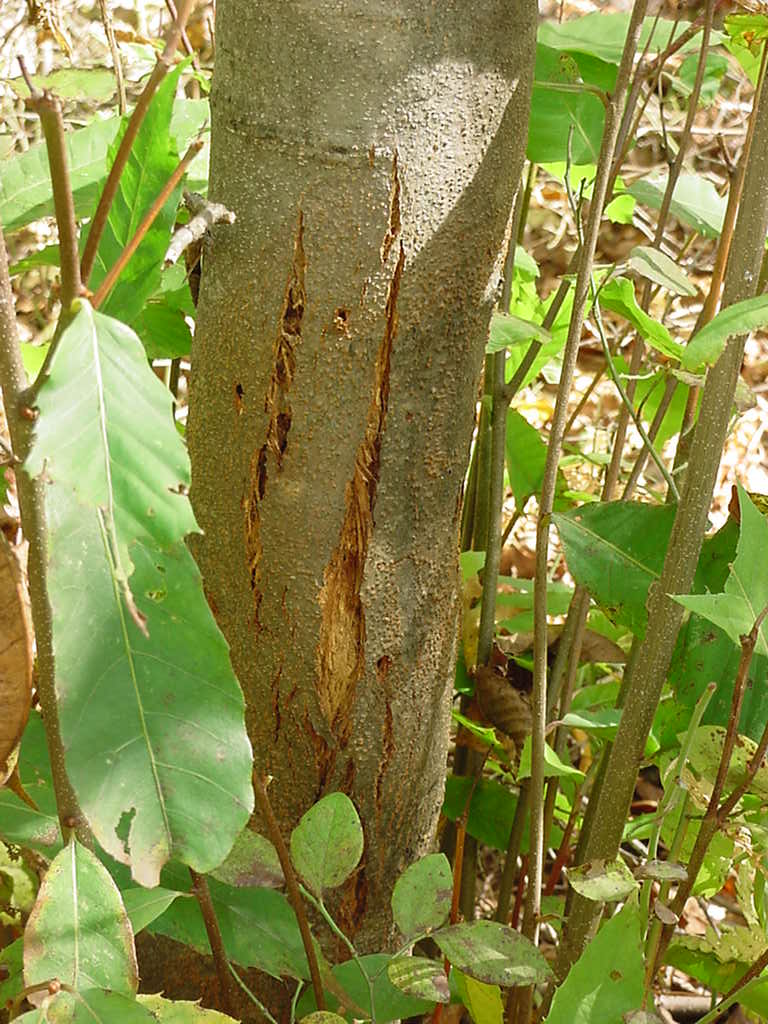
A canker caused by the chestnut blight fungus.
Chestnut blight manifests as sunken, orange-brown cankers on the bark, often surrounded by a yellow halo. These lesions can girdle branches and trunks, leading to dieback. Infected trees may exhibit wilting leaves and premature leaf drop. Infested trees will often send up shoots in response to the fungus, resulting in multiple young shoots growing from the base of the tree. The fungus produces sexual spores that spread via wind, insects, and human activity, facilitating rapid transmission.
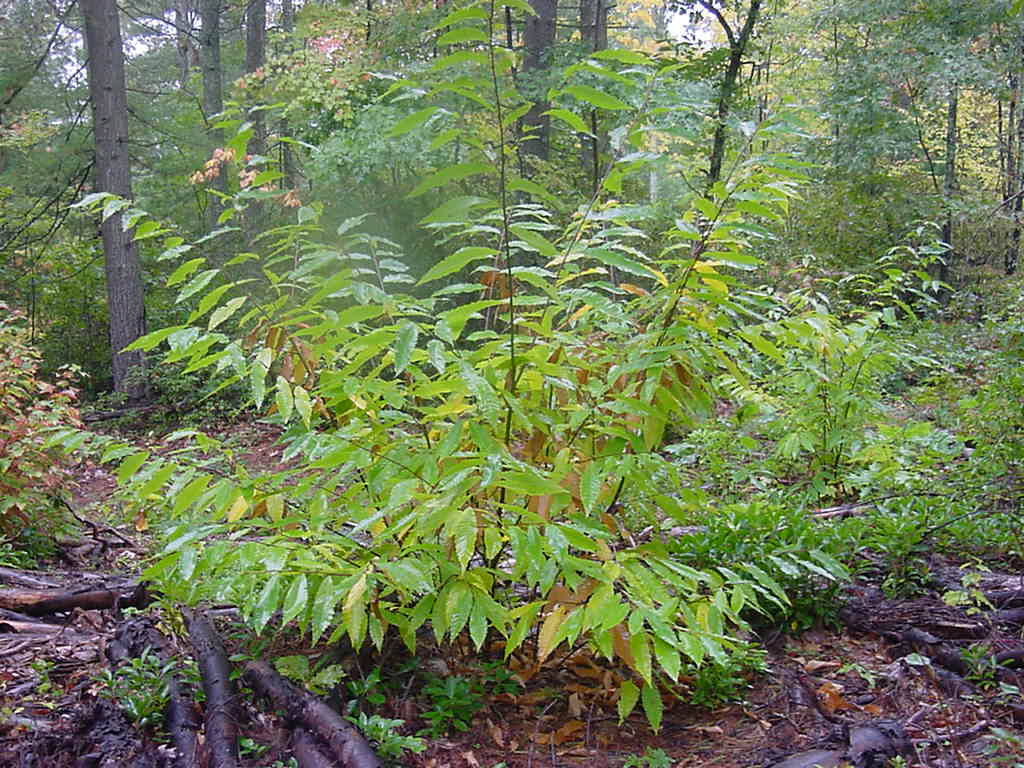
A chestnut tree sends up multiple shoots in response to infection by the chestnut blight.
Life cycle and behavior
Cryphonectria parasitica primarily spreads through sexual reproduction, producing ascospores that are dispersed by wind and rain. Upon landing on susceptible tissue, the spores germinate and infect the tree, forming cankers. These cankers produce conidia, asexual spores that can be spread by insects and animals. The fungus thrives in moist conditions and can persist in the environment for extended periods, making control challenging.
Spread and response
The blight's spread was facilitated by human activities, including the movement of infected nursery stock and timber. Researchers have explored biological control methods, such as introducing strains of the fungus that are less virulent and can reduce the overall pathogenicity of the population.
Initial efforts to combat the blight included chemical treatments and quarantine measures. However, these early programs were largely unsuccessful due to a limited understanding of the pathogen and the complexity of resistance genetics.
In the latter half of the 20th century, researchers began to focus on hybridization as a long-term solution. The goal was to combine the blight resistance of Asian chestnut species (particularly Castanea mollissima, the Chinese chestnut) with the form, growth rate, and ecological role of the American chestnut.
One of the most prominent efforts emerged from the American Chestnut Foundation (TACF), which launched a backcross breeding program in the 1980s. By the early 2000s, TACF had developed advanced-generation hybrids that were approximately 94% American in their genetic makeup and showed promising resistance to the blight.
Connecticut has played a key role in testing and restoring these hybrid chestnuts. Field trials have been conducted to evaluate survival, growth, and resistance under natural forest conditions. These trials have helped refine selection criteria and inform reforestation strategies.
There have been other efforts to combat this disease. Researchers at SUNY ESF in New York are developing a transgenic chestnut species. Transgenic species are engineered by inserting genetic material from other species into a tree’s DNA. The goal of this project is to engineer a chestnut tree that can tolerate Cryphonectria parasitica, the fungus that causes chestnut blight. Transgenic trees developed by researchers at SUNY ESF in collaboration with The American Chestnut Foundation have 99.99% American chestnut genes. However, they have limited use due to regulatory restrictions. Regulatory approval is awaiting the results of a plant pest risk assessment before the trees can be grown in the U.S. Although research continues, no transgenic chestnut species have been adopted by the American Chestnut Foundation.
Biocontrol research has been conducted in Connecticut, including research on the use of a hypovirus to reduce disease severity. A hypovirus is a RNA virus that specifically attacks fungi such as C. parasitica. These hypoviruses promote the healing of cankers in infected American chestnut trees and can slow the progression of the disease. In partnership with the American Chestnut Foundation, the Connecticut Agricultural Experiment Station (CAES) has been conducting field research on hypoviruses since 1978.
How to help
Residents and landowners can assist in combating chestnut blight by:
- Avoid planting susceptible American chestnut trees.
- Support and participate in local chestnut restoration projects.
- Educate others about the importance of chestnut conservation and the threats posed by the blight.
For forests, the best defense against fungal pathogens like the one that causes chestnut blight is the management of resilient forests through the support of diverse species, age classes, and forest composition. For more information about the overall health of your forested land, contact your Service Forester.
Resources
CAES Chestnuts and the Introduction of Chestnut Blight
American Chestnut Foundation Chestnut Orchards in Connecticut
American Chestnut Foundation: Genetic Engineering of Chestnut Tree
Content last updated July 2026.