

Anthracnose Diseases in Connecticut
Anthracnose describes several fungal diseases that attack the leaves, shoots, and sometimes branches of many hardwood trees in Connecticut. Severity varies year-to-year, but wet, cool springs can worsen the effect of the fungus. Anthracnose can cause brown, papery leaf blotches, premature leaf drop, and, in severe cases, twig or branch dieback. Most anthracnose infections are primarily cosmetic and do not kill mature healthy trees, but repeated severe infections can weaken trees and make them more vulnerable to other stresses.
Trees at risk
Many common trees in Connecticut are susceptible to anthracnose. Maple, oak, beech, sycamore, and ash are among the most frequently affected hosts; dogwood and some other ornamentals can also develop damaging forms of anthracnose.
Anthracnose fungi are host specific. For example, beech anthracnose is caused by Apiognomonia erribunda (Discula umbrinella), sycamore anthracnose is caused by Apiognomonia veneta (Discula platani), and oak anthracnose is caused by Apiognomonia quercina (Discula quercina).
Identification
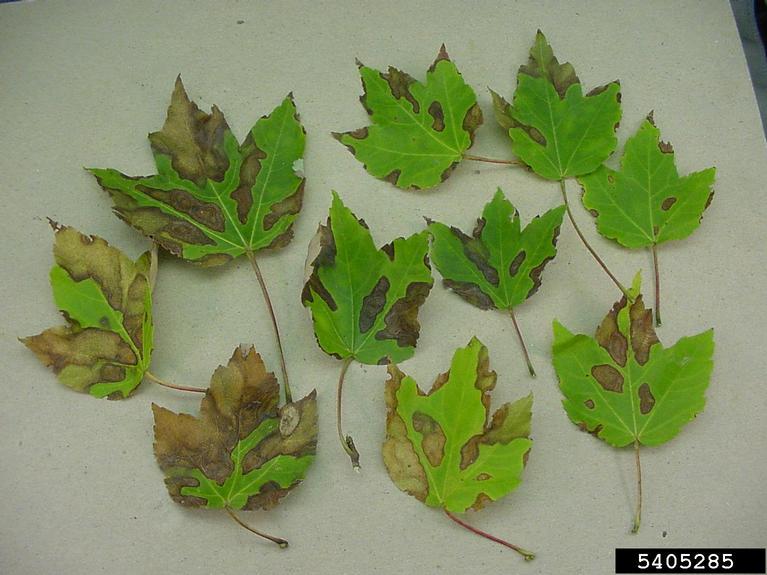
Leaves from a red maple tree affected by the Anthracnose spp.
Anthracnose symptoms typically appear when leaves are young and conditions are wet. Look for irregular tan or brown lesions. On some trees, the spots remain discrete; on others the lesions coalesce and give the leaf a blighted, scorched appearance. In severe infections, you may see premature leaf drop, dead shoot tips, and small cankers on twigs or young branches. Because symptoms can resemble drought, heat stress, or other leaf-spot diseases, diagnosis benefits from comparing host species and timing (spring wet weather is a common trigger).
Life cycle and spread
Anthracnose fungi survive the winter on infected fallen leaves, in twig cankers, and in other plant debris. In spring, when temperatures are cool and moisture is abundant, these fungi produce spores that splash or are carried to new leaves and young shoots, initiating infections as leaves develop. The disease is therefore most severe in springs that are cool and wet; once the season dries and temperatures rise, infections generally slow, and new summer foliage often develops with little or no damage. Repeated wet springs and trees already weakened by environmental stress increase the risk of more extensive injury.
Response and control
For most trees, anthracnose is an aesthetic nuisance rather than a fatal disease. The recommended response starts with acceptance of minor, short-lived symptoms during wet springs, as healthy trees usually refoliate later in the season. When damage is more extensive — for example, when young trees, valued specimen trees, or heavily infected plantings are suffering repeated defoliation or twig dieback — additional steps can be taken.
These include sanitation (removing and destroying fallen infected leaves), pruning and destroying heavily diseased twigs and branches, and improving overall tree vigor through proper watering and site care. For high-value specimens or in landscapes where repeated severe infections occur, timed fungicide applications (applied by qualified professionals at bud break and during periods of new leaf development) can reduce symptom severity. Prune out dead twigs and any cankered branches in late winter or early spring before new growth starts and sterilize tools between cuts when removing heavily infected material. Keep trees vigorous by watering during dry periods, avoiding mechanical damage to roots and trunks, and maintaining appropriate mulches (avoid mulch piled against trunks).
Fungicides and pruning are generally not necessary or practical in forests.
How to help
If anthracnose has been severe for multiple seasons on a high-value tree, consult a certified arborist or plant pathologist about the potential benefit and timing of fungicide sprays; these treatments are preventive and must be applied at the right growth stages to be effective.
For forest trees, the best defense against fungal pathogens like anthracnose is the management of resilient forests through the support of diverse species, age classes, and forest composition. For more information about the overall health of your forested land, contact your Service Forester.
If you need a formal diagnosis, the CAES Plant Disease Information Office accepts samples and can provide definitive identification and management recommendations.
Resources
CAES Anthracnose Diseases of Trees
Content last updated April 2026.