Beseck Lake Sensor Data
Beseck Lake Sediment Temperature and Moisture Data
*Note: When sediment temperature is below freezing, the accuracy of sediment moisture declines*
December 2025 - March 2026
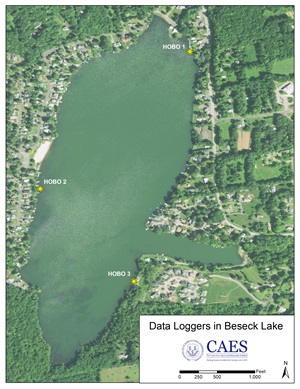
The Connecticut Agricultural Experiment Station Office of Aquatic Invasive Species (CAES OAIS) monitored the lake sediment exposed by a winter drawdown on Beseck Lake from December 12, 2025 to March 8, 2026. The goal of a drawdown from an aquatic plant management perspective is to freeze the soil, killing the roots of invasive or nuisance plants. CAES OAIS placed three HOBO data loggers in Beseck Lake, measuring air temperature, soil temperature, and soil moisture. These loggers recorded measurements every hour from December 12th to March 8th and were streamed live on the CAES OAIS website. Snow depth data was provided by NOAA.
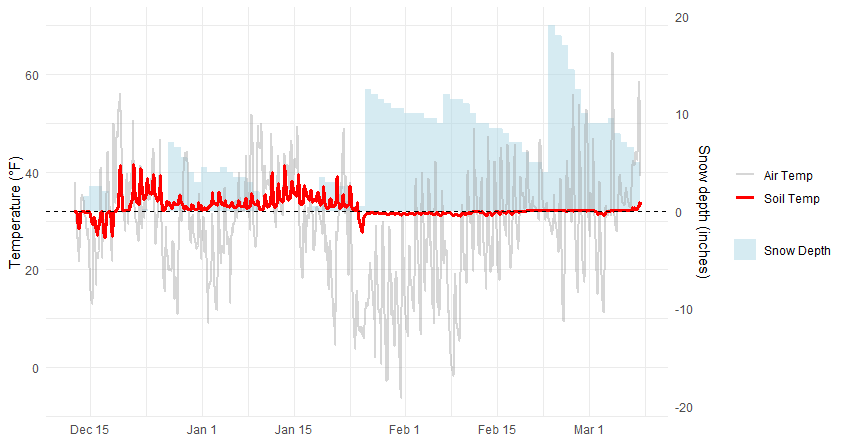
During this time period, there were 78 days when the air temperature reached below freezing temperatures at least once in a 24-hour period. Unfortunately, heavy snow impacted soil freezing, and the soil was only frozen for 36 of those 78 days. The graph below shows the air and soil temperatures (gray and red lines respectively), and the average snow depth in inches for each day (the shaded blue bars). The coldest air temperatures were associated with very high snow depth, limiting soil freezing to just below 32°F. The 36 days of soil freezing were split up into three time periods (see table below). The first was December 12-18, seven days of freezing. The average soil temperature during this period was 30.5°F and the average air temperature was 29.1°F. The second period was January 24 – February 19, 27 days of freezing. There were extremely cold air temperatures during this period, but the deep snowbank kept the soil temperature just below freezing with an average of 31.6°F despite an average air temperature of 21.8°F. The last period was brief, March 2-3, with an average air temperature of 24.1°F and an average soil temperature of 31.6°F because of the snowbank. The soil moisture was near zero for the entire study period, however, presence of snow and below freezing soil temperature can impact the reliability of results.
Overall, soil freezing was impacted by the heavy snowfall this winter, and the soil was frozen for a total of 36 days with three different freezing periods. The vegetation survey performed this summer will indicate the effectiveness of the winter drawdown.
| Start Date | End Date | Number of Days | Average Air Temperature (°F) | Average Soil Temperature (°F) |
| 12-12-2025 | 12-18-2025 | 7 | 29.1 | 30.5 |
| 1-24-2026 | 2-19-2026 | 27 | 21.8 | 31.6 |
| 3-2-2026 | 3-3-2026 | 2 | 24.1 | 31.6 |
Past Data
November 2021 – February 2022
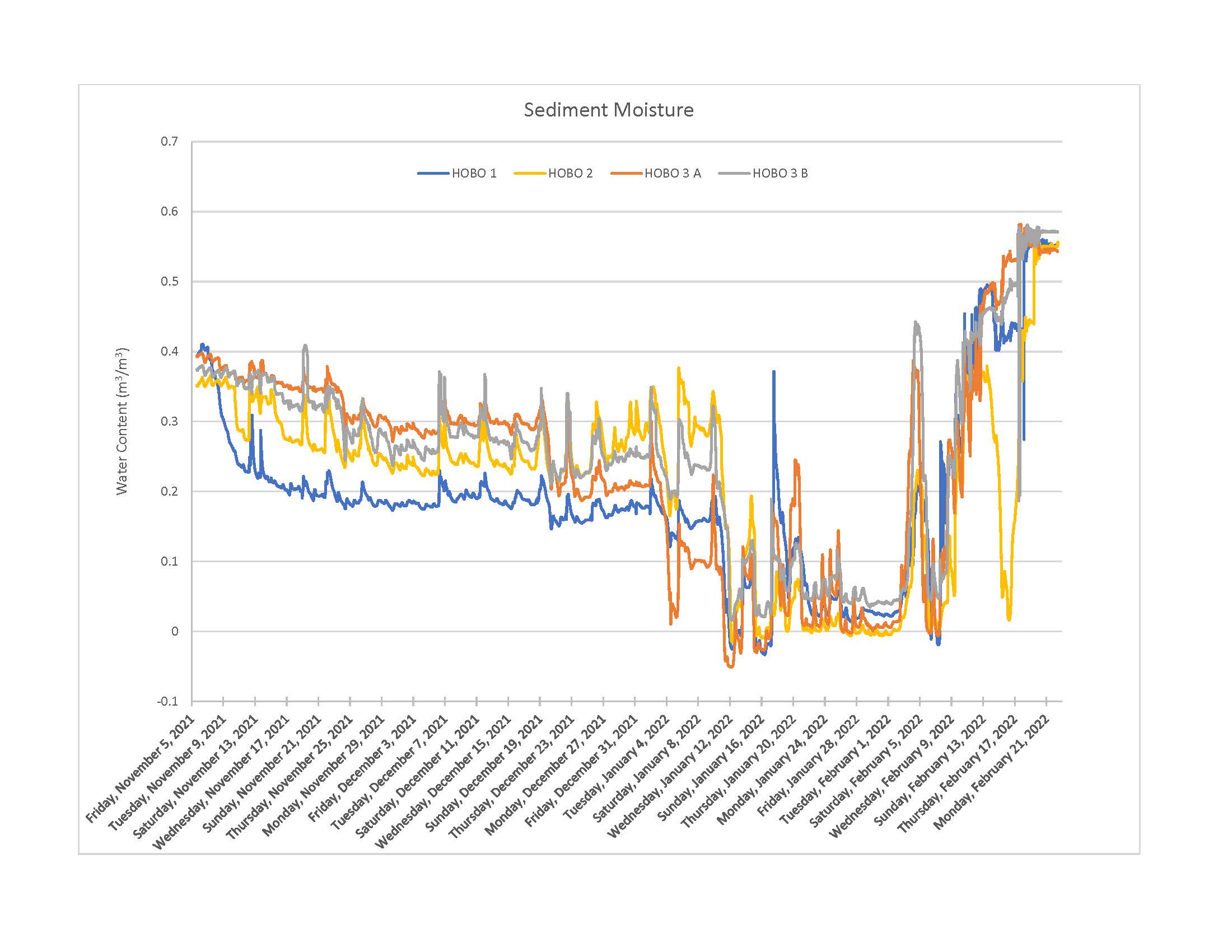
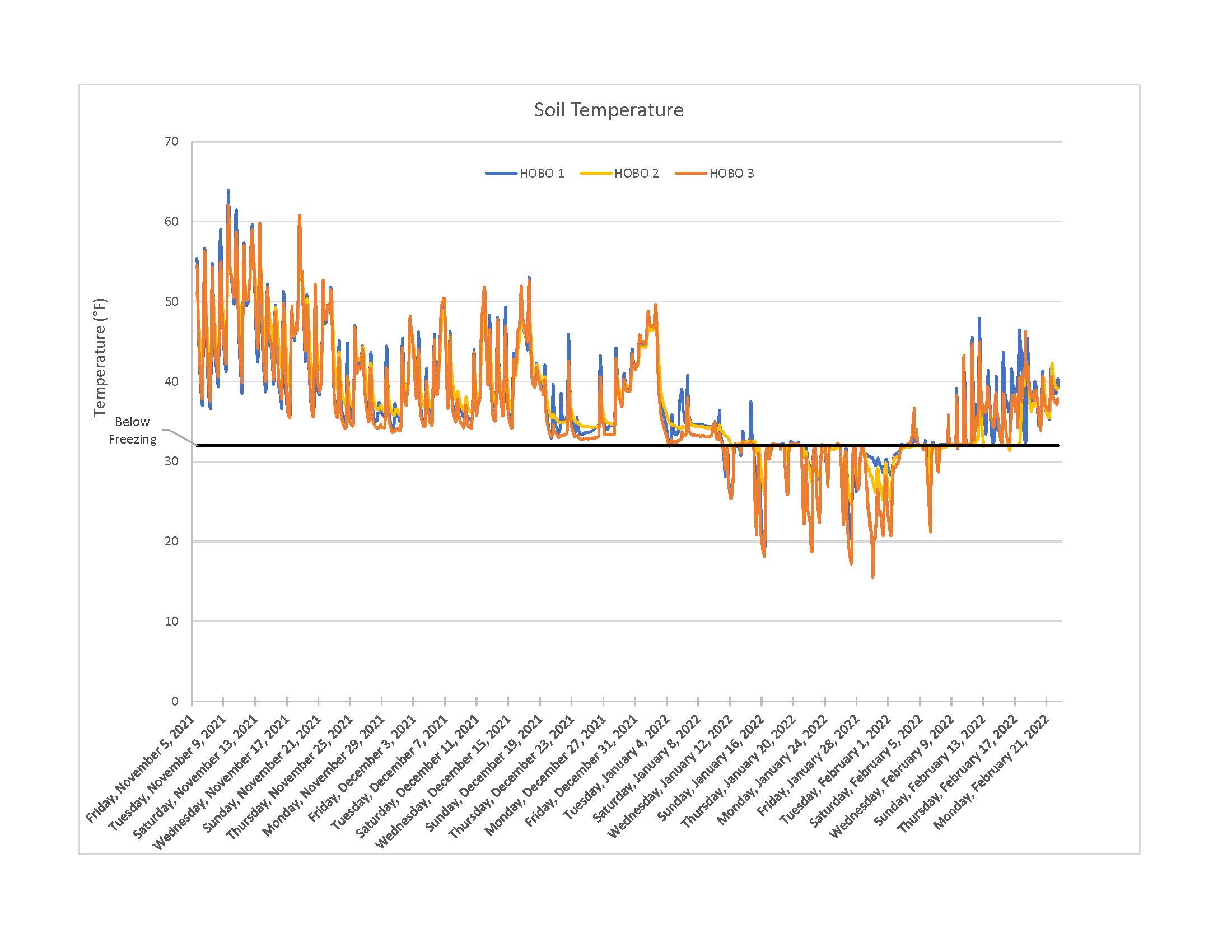
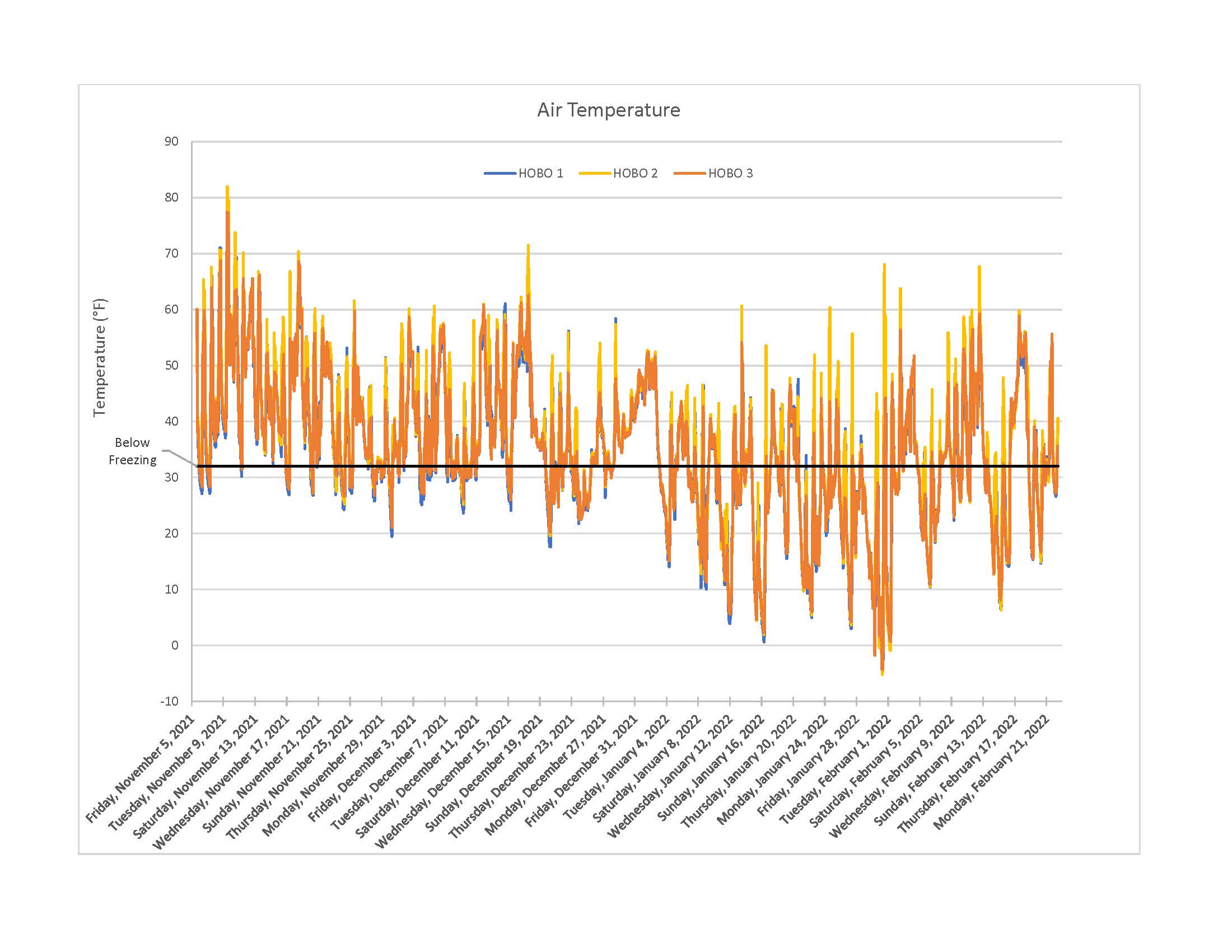
On Friday, November 5, 2021 at 3:30pm, CAES OAIS placed three HOBO data loggers in the exposed lake bottom in various locations of Lake Beseck in Middlefield, CT. These data loggers tracked air temperature, sediment temperature, and sediment moisture during the winter drawdown of the lake. This year HOBO 3 logged at a new location, the beach area for Lakeview Estates. HOBO 3 also has two sediment moisture probes labeled HOBO 3 A and HOBO 3 B. The data loggers were removed on Tuesday, February 22, 2022 at 10:45am. Below are graphs of the data.
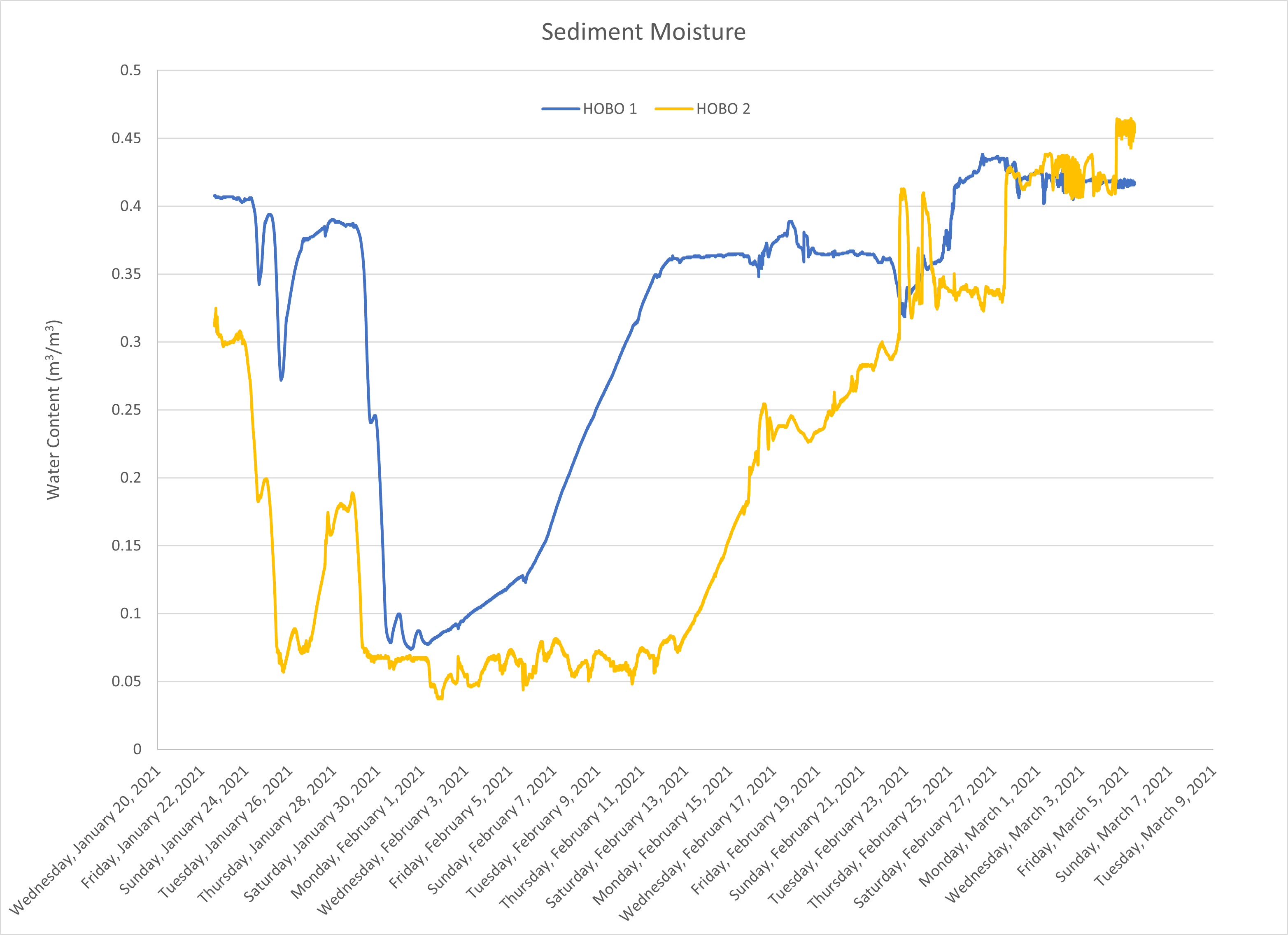
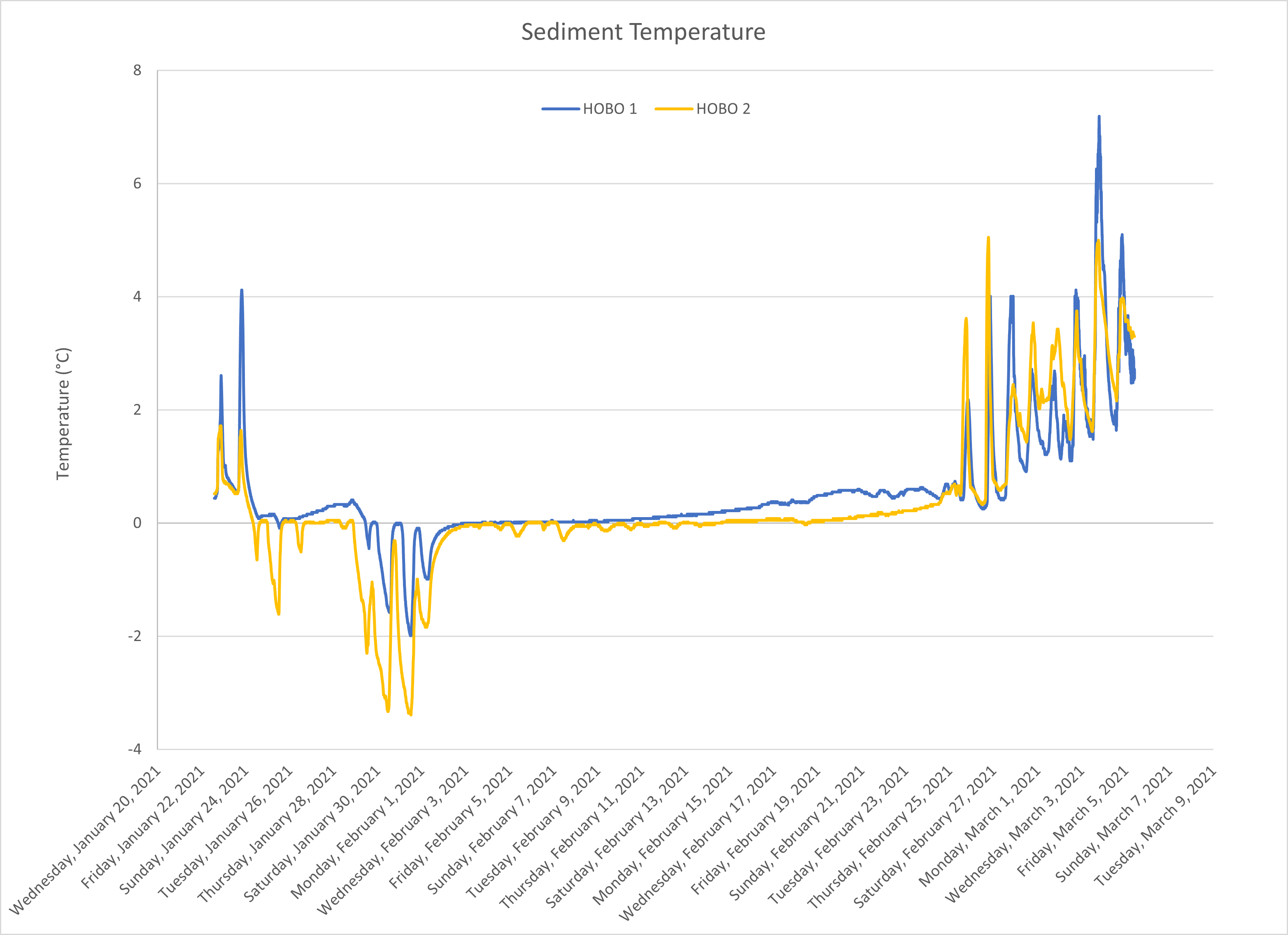
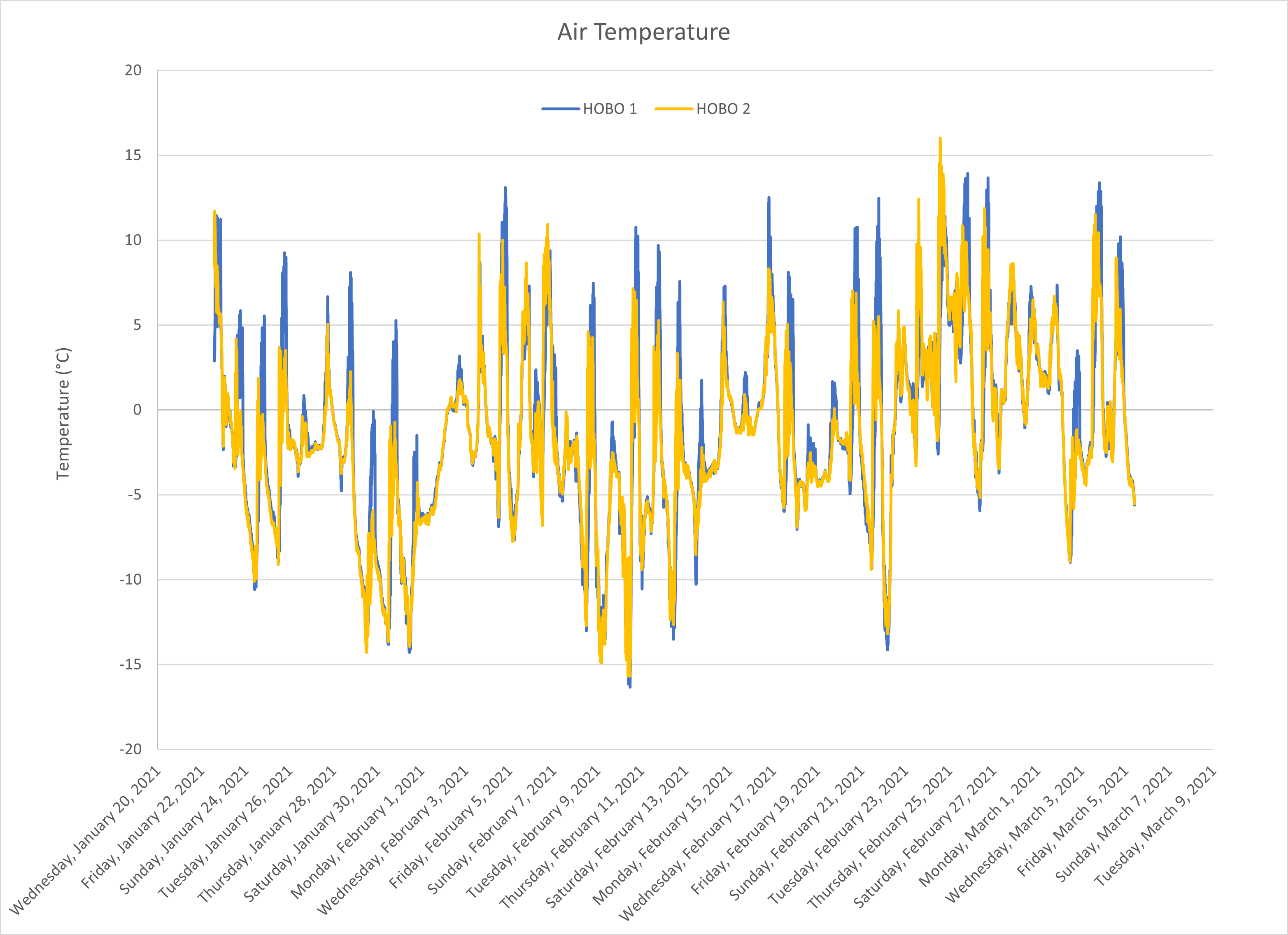
January 2021 – March 2021
On Thursday, January 22, 2021, CAES OAIS placed three HOBO data loggers in Lake Beseck. They were pulled on March 5, 2021, as the water level began to rise. These data loggers tracked air temperature, sediment temperature, and sediment moisture during the winter drawdown of the lake. Below are graphs of the data. HOBO 3 had technical problems and did not record any data. The temperature is listed in degrees Celsius, zero is freezing.
November 2019 – February 2020
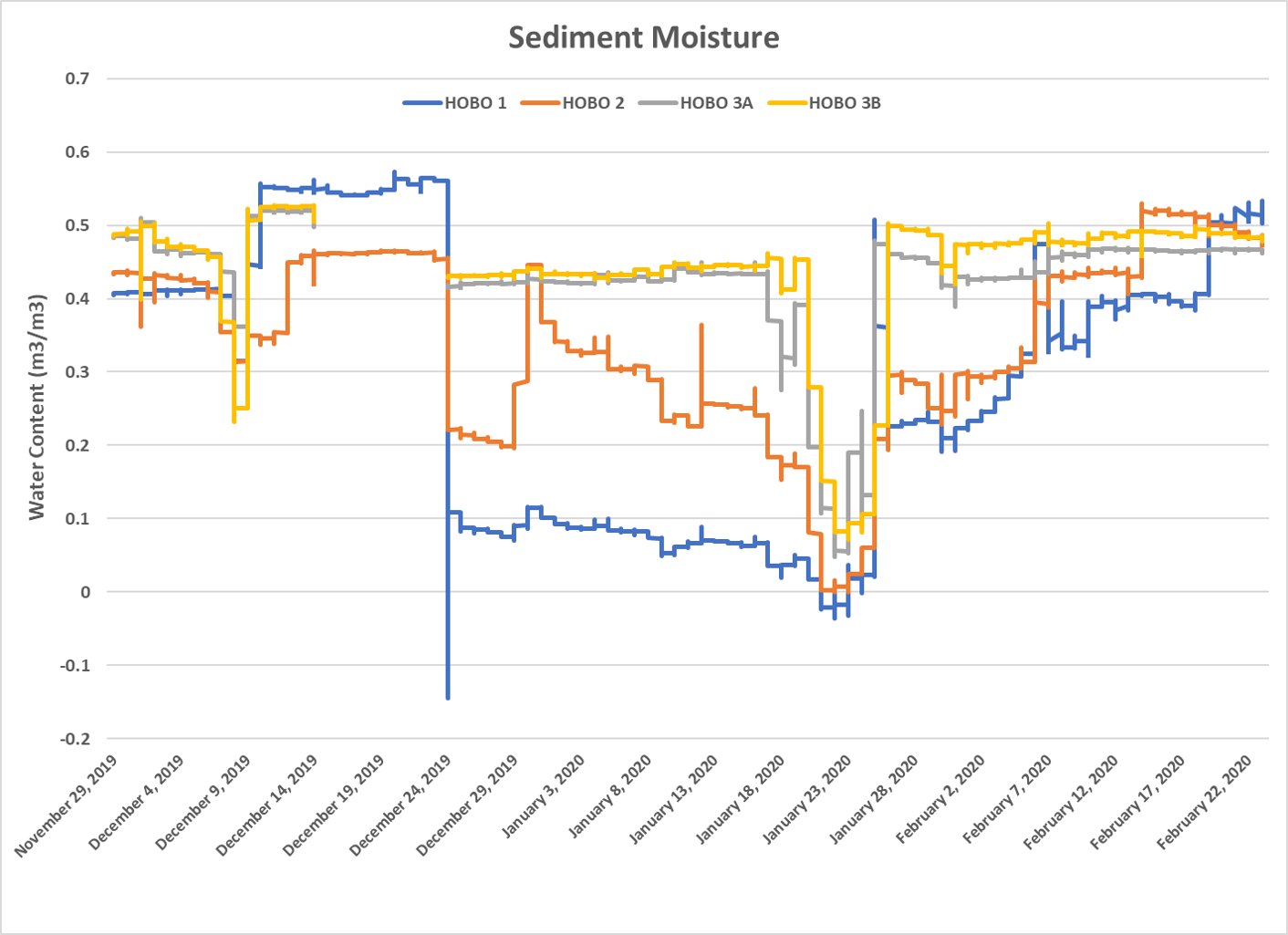
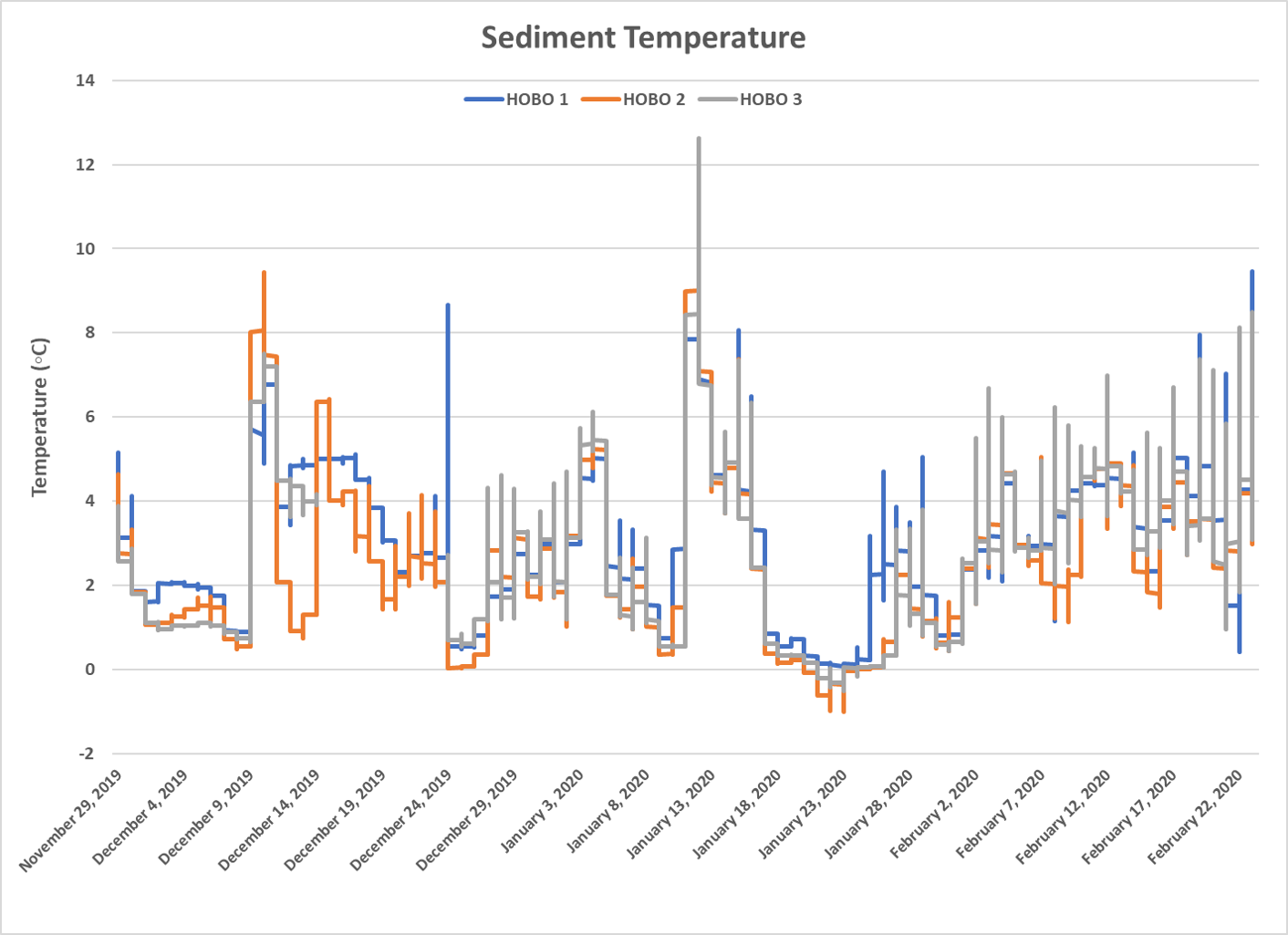
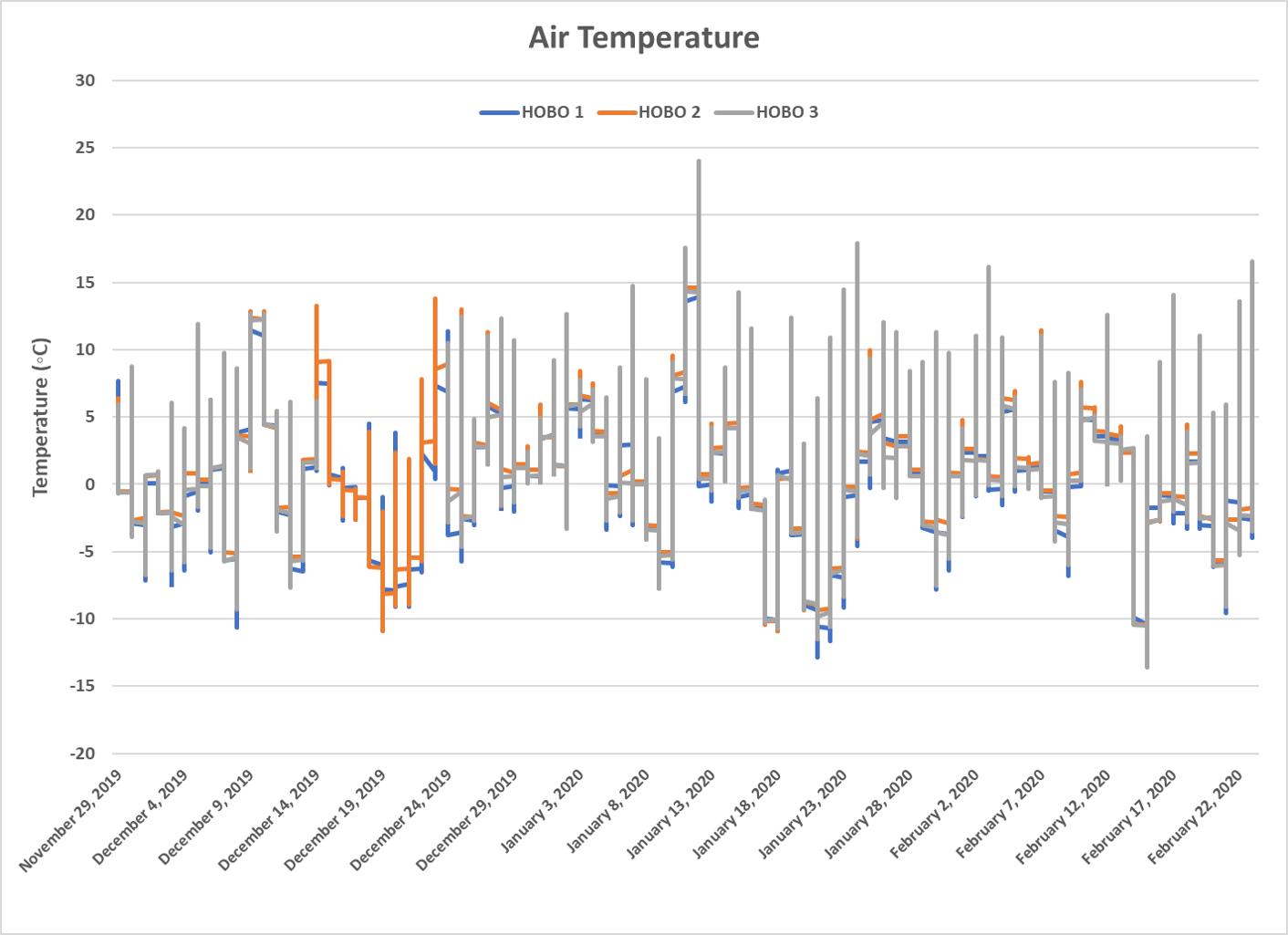
On Friday, November 29, 2019, CAES OAIS placed three HOBO data loggers in Lake Beseck for the first time with the Lake Beseck Environment Committee and Aquatic Ecosystem Research. These data loggers will track air temperature, sediment temperature, and sediment moisture during the winter drawdown of the lake. Below are graphs of the data from November 29, 2019 to February 23, 2020. HOBO Site 3 had two sediment moisture probes, labeled as A and B. HOBO 3 was also removed from December 16 - 24, 2019 because of increasing water levels. The temperature is listed in degrees Celsius, zero is freezing.