

Bureau of Special Education Update, August 2026
In This Issue
From the Director’s Desk

On behalf of the Bureau of Special Education, I would like to wish you all a successful start to the 2026-27 school year! I absolutely love this time of year. It comes with a renewed sense of energy, possibility, and purpose. Across Connecticut, educators, leaders, families, and communities are preparing to welcome students back and begin another year of learning, growth, and opportunity.
The Bureau of Special Education has been working throughout the summer to support districts, strengthen systems, and advance our shared commitment to achieving excellence for students with disabilities. We recognize that this work is taking place amid significant financial pressures, workforce challenges, and increasingly complex student needs. These realities make our collective focus on innovation, collaboration, and building local capacity more important than ever.
There is also much to celebrate as we look ahead. Connecticut recently announced nearly $11 million in competitive grant awards to 41 districts, selected from 116 applicants, to expand local capacity to serve students with intensive special education needs. This investment represents an important step toward strengthening programs and services within our communities and creating more opportunities for students to learn and thrive closer to home.
We are also proud to celebrate Connecticut’s sixth consecutive year receiving a “Meets Requirements” determination through the federal special education accountability system, an accomplishment shared by only 21 states nationwide. While this recognition does not lessen the work that remains before us, it provides an important reminder of what is possible when we remain focused on outcomes for our students, continuous improvement of our systems, and strong partnerships built on trust and transparency.
As we begin the 2026–27 school year, we invite you to join us on September 14 for the Bureau of Special Education’s annual Back-to-School Conference which will be held at the Connecticut Convention Center. This year’s theme, Working Together to Achieve Excellence, reflects both where we have been and where we are headed. We look forward to reconnecting with colleagues from across the state, celebrating progress, sharing ideas, and continuing the important work of building stronger systems and better outcomes for students with disabilities.
There is much work ahead, but there is also much to build upon. Thank you for your continued leadership, partnership, and commitment to Connecticut’s students, families, and educators.
In partnership,

Bryan Klimkiewicz
Division Director, Bureau of Special Education
Connecticut State Department of Education

New Members of the Bureau of Special Education Team

In June, Madelyn (Maddie) Chasse joined the CSDE Performance Office team as a Special Education Data Analyst. Maddie graduated from UConn with their Master’s in Public Policy last year. During that time, they interned in the Performance Office working on a variety of projects including Significant Disproportionality, LEA APRs, and Restraint and Seclusion. They also have prior research experience in transportation safety and urban park design. We are excited to welcome Maddie to the CSDE team and look forward to the year ahead!

We are also excited to share that Elisa Laudati joined the BSE team in July! Elisa has extensive experience in school psychology and special education, including leadership in an independent school. Elisa has also worked in higher education, developing and delivering professional learning, coaching teams of educators, and supporting family partnerships to advance social and emotional learning. Many of you know Elisa from her previous role at SERC where she provided statewide professional learning and technical assistance in IEP Quality, PPT Leadership, MTSS, and a range of other special education-related initiatives. We welcome Elisa to the CSDE and look forward to the year ahead!

General Supervision
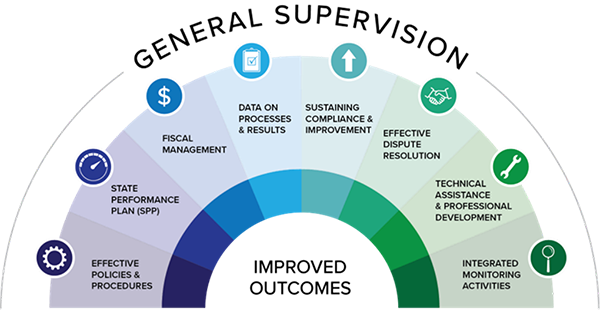
Connecticut Receives Highest Special Education Determination from the Federal Office of Special Education Programs (OSEP)
The Connecticut State Department of Education (CSDE) received a designation of “Meets Requirements” from OSEP for its 2026 annual determination last Thursday (one of only 21 states to achieve this rating). This determination is based on the state’s performance during 2024-25, on a totality of information including State Assessment Participation, National Assessment of Educational Progress (NAEP), Drop Out/Graduation data, Previous Year State Performance Plan (18 special education indicators), fiscal conditions, and timely and accurate reporting of data. This designation is reflective of the collaborative and collective efforts of the CSDE, our educators, and families. It is also an overall reflection of our LEAs’ focus and commitment to supporting our over 94,000 students with disabilities across the state. As we celebrate this designation, we also acknowledge the continued challenges and increasingly complex student needs.
We will look to build on this work in our continued charge to improve outcomes for students heading into the next school year. The final posting of the State Performance Plan/Annual Performance Report can be accessed in the near future: State Performance Plan (SPP) and Annual Performance Report (APR)—Documents
New Autism Eligibility Guidelines
The CSDE is excited to announce our updated Worksheet for Determination of Eligibility for Special Education Services Under the Classification of Autism which were published in late June. These Guidelines/Documents will serve to replace the previous versions and are also posted on our website: Special Education Eligibility Documents. The purpose of the CSDE Autism Eligibility Worksheet is to provide a tool to support PPTs in the process of determining special education eligibility under the primary disability category of Autism.
The Autism Guidelines Document includes an Autism Eligibility Worksheet and Supporting Information, Resources for educators, families, and students after eligibility determinations are made, Background information related to the Purpose of the worksheet including a summary of the revision process, a list of external contributors, important definitions, an Autism eligibility decision guide, validated Autism assessment tools, and references.
The Autism Worksheet is designed for PPTs to utilize during eligibility determinations (as a fillable Word document).
The identified goals with this revision were to:
- Align the updated worksheet to keep current with research and state and federal mandates.
- Provide consistent statewide guidance to PPTs regarding determining eligibility for special education under the disability category of Autism in a way that is current with the research, and state and federal mandates.
- Provide a decision-making framework that facilitates conversations between all members of the PPT.
- Break down the legislation on special education eligibility in terms that are accessible to all members of the PPT.
- Provide clarity around a) best practices in evaluation of Autism, b) determining educational impact, c) ensure documents have accessible language, enough illustrative examples, and functional definitions of key terms.
The CSDE will be providing support to assist special education leaders in the use of this new resource including but not limited to a live (recorded) virtual session designed to provide a high-level overview of the resource, opportunities to submit questions related to the new resource, additional training and support.

Input / Feedback Requested
Transforming Children’s Behavioral Health Policy and Planning Committee Restraint and Seclusion Focus Groups
Connecticut’s Transforming Children’s Behavioral Health Policy and Planning Committee is currently working on a project focused on the use of evidence-based behavioral interventions to reduce the use of restraint and seclusion on students with disabilities and will be holding focus groups to hear from key stakeholders. The Bureau of Special Education would like to encourage you to participate in these focus groups if possible and share this information with your staff. Your expertise and perspective are very important as the Committee works to develop a report and recommendations.
Time Commitment:
Focus groups are designed to last approximately 90 minutes. The conversation will focus on your insights related to evidence-based behavioral interventions for students with disabilities in Connecticut and the feasibility and impact of requiring that Connecticut school personnel be trained in such interventions as well as practices related to monitoring and auditing of the use of restraint and seclusion.
The TCB group will be holding a series of virtual focus groups for the following groups of professionals:
Group 1 – APSEP/Private/RESC School Administrators (Sign up for the APSEP/Private/RESC School Administrators focus group (Group 1))
- August 27, 2:30–4:00 p.m.
- September 16, 2:00–3:30 p.m.
- September 16, 3:30–5:00 p.m.
Group 2 – Public School (LEA) Administrators (Sign up for the Public School (LEA) Administrators focus group (Group 2))
- August 26, 1:00–2:30 p.m.
- September 8, 10:00–11:30 a.m.
Group 3 – APSEP/Private/RESC School Staff (teachers, related service providers, paras) (Sign up for the APSEP/Private/RESC School Staff focus group (Group 3))
- August 31, 2:30–4:00 p.m.
- August 31, 3:30–5:00 p.m.
- September 2, 2:30–4:00 p.m.
- September 9, 3:30–5:00 p.m.
Group 4 – Public School (LEA) Staff (teachers, related service providers, paras) (Sign up for the Public School (LEA) Staff focus group (Group 4))
- September 2, 3:30–5:00 p.m.
- September 9, 2:30–4:00 p.m.
- September 15, 3:00–4:30 p.m.
If you are interested and able to join one of the focus groups, please use the link to share your availability. Once you sign up for a group, you will receive a Zoom link to the focus group. If you need language interpretation or reasonable accommodation, please contact Tom at TCBSped@newhaven.edu.
The Committee aims to engage knowledgeable interest holders in fostering behavioral supports that reflect the needs of students and schools across the state.

Fiscal Matters
High Quality Special Education Incentive Grant
On Monday, August 17, Governor Ned Lamont and Connecticut Education Commissioner Charlene M. Russell-Tucker announced that 41 special education programs across Connecticut are receiving $10.6 million in state grants under Connecticut’s newly established High-Quality Special Education Incentive Grant Program.
This competitive grant program, which was administered by the Connecticut State Department of Education, was created by legislation proposed by Governor Lamont and approved by the Connecticut General Assembly (Public Act 25-93). It is intended to help local and regional boards of education build in-district or regional special education services that support students with disabilities and reduce reliance on out-of-district placements.
The approved grants provide $8.9 million for programmatic costs and approximately $1.7 million for eligible capital improvements. Programmatic funding will support planning and start-up costs, staffing, assistive technology, instructional materials, professional development, and flexible learning models, while capital funding is designated for facilities, renovations, equipment, transportation, and other infrastructure needed to support those programs.
Specific examples for programmatic grant awards include:
- Establishing a new Intensive Learning and Independence Program for Pre-K through Grade 8 students with significant disabilities who require individualized instruction, structured teaching, functional life-skills instruction, and behavioral supports. The program will provide more opportunities for students to learn and participate alongside their peers in their home school.
- Establishing therapeutic social, emotional, and behavioral support programs at two district high schools for students with disabilities to improve attendance and behavior concerns.
- Expanding inclusive co-teaching classrooms, coaching, and professional learning to increase meaningful learning opportunities for students with disabilities in general education settings to reduce out-of-district placements.
Specific examples for combined programmatic and capital improvement awards include:
- Establishing a new community-based Transition Center Education Program for students ages 18 to 22 with disabilities that will return 15 students currently in out-of-district placements to their home community. Grant funding will support construction, rental and equipment costs, instructional materials, and staffing.
- Establishing a new facility for students with emotional disabilities and autism who need additional behavioral and emotional supports, reducing the need for out-of-district placements. The program will serve students from 15 area school districts with grant funding supporting rental costs, construction, staffing, and instructional materials.
The 41 local school boards awarded the grant are required to submit a report to the Commissioner of Education on September 30, 2027, and annually thereafter, that assesses the impact of the grant on student outcomes, including the increase in time with nondisabled peers across the school district and the number of outplaced students, and district expenditures.
Congratulations to the 41 applicants selected for funding and a special thank you to all applicants for their commitment to high-quality programming for students with disabilities.
Fiscal Year 2027 Special Education Expansion and Development (SEED) Grant
Connecticut General Statute (GS) § 10-76ggg (as a result of Public Act 25-67 Sec. 7) entitles each school board to a Special Education Expansion and Development (SEED) grant. The Fiscal Year 2027 (FY 27) SEED grant was funded in the amount of $30,000,000. FY 27 SEED grant funds are to be expended between July 1, 2026, through June 30, 2027. There is no extended liquidation beyond June 30, 2027.
The SEED grant allocations are calculated like the Education Cost Sharing (ECS) formula outlined in Connecticut General Statute § 10-262f.
SEED grant payments are distributed to school districts as an entitlement grant and will not require fund requests in the electronic grant management system (eGMS). Payments are distributed as follows: 25 percent of the total allocation in October, 25 percent of the total allocation in January, and the balance of the allocation by April.
Any school board that receives a SEED grant of $10,000 or more will be required to submit an expenditure report in the eGMS. All subgrantees must maintain an accurate record of the actual expenditures and adhere to grant requirements. NOTE: The legislation outlines penalties for improper use of SEED grant funds.
In accordance with CGS § 10-76ggg(e)(1), SEED grant funds can only be used for “special education purposes”. SEED grant funds may not be used to supplant special education funding but can be used for expansion and development of “special education purposes”. Below is a summary of allowable and not allowable uses of SEED grant funds (this is not an exhaustive list):
Allowable
- Salaries (and benefits) of staff in new positions created on/after 7/1/25 (i.e., special education teachers, paraeducators, behavioral and reading specialists who are responsible for the direct provision of special education/related services or Tier 2/Tier 3 academic/behavioral interventions)
- Interdistrict collaboration or in-district programs (as long as activities adhere to the allowable use of funds)
- New curriculum supplies, including technology-related software/hardware and new assessment materials; new equipment purchases (e.g., new special education transportation vehicle) and maintenance to such equipment (as long as they will be used in the direct provision of special education/related services or Tier 2/Tier 3 academic/behavioral interventions)
Not Allowable
- Administrative Functions
- Operating Expenses
- Professional Development/Training
- Parent Activities
- Third-party Contractors/Vendors
- General Education Staff/Supplies/Equipment
- Tier 1 Intervention Staff/Supplies/Equipment
The FY 27 SEED Grant Subrecipient Application (SA) has been built in the eGMS. Once allocations are calculated and posted, they will be uploaded in the eGMS and the SA will be open. School districts will be notified when the grant is open and will have 30 days to complete the application. Similar to last year, the FY 27 SEED Grant SA has two sections to be completed, the Project Details page to outline the proposed goals/activities, and a corresponding Budget, which must directly align with the identified proposed goals/activities.
Information about the SEED grant, including a Frequently Asked Questions document, can be found on our website: Special Education Fiscal RFPs and Grants. Please address SEED grant questions to Alycia M. Trakas (860-713-6932 / alycia.trakas@ct.gov).
Federal Grant: “Expanding Career Pathways and Workforce Readiness of Special Education Teachers and Early Intervention Personnel Through Registered Apprenticeships”
In July, the Talent Office and Bureau of Special Education submitted a federal grant application titled “Expanding Career Pathways and Workforce Readiness of Special Education Teachers and Early Intervention Personnel Through Registered Apprenticeships”. In partnership with the Office of Early Childhood, the application seeks to achieve three main goals:
- Increase the number of certified special education teachers by creating special education specific apprenticeship programs in collaboration with Educator Preparation Programs.
- Increase the number of Early Childhood interventionists (in partnership with OEC).
- Increase awareness of middle school and high school students of PreK/early childhood and special education professions “Educator Rising”.
The CSDE will be notified in September if the grant application will be awarded.

Early Childhood Education
CT DOTS II Now Available
The 2026 Connecticut’s Documentation and Observation for Teaching System II (CT DOTS II) is now available for download as a PDF on the OEC website:
- CT DOTS II User’s Manual
- CT DOTS II Observation Progression Book
- CT DOTS II Infant/Toddler Flip Chart
- CT DOTS II Preschool Flip Chart
Copies will be available soon, and school districts will be able to place orders through the OEC order form for pickup at their local RESCs. A follow-up announcement will be shared once printed copies are ready to be ordered at each RESC location.
There will be an ECO/CT DOTS II table at the BSE Back to School event on September 14, and there will be a limited number of copies available.
ECO Data System Training
This training will provide participants with the essential knowledge needed to enter pre- and post-data for ECO using CT DOTS II, as well as the Brigance, as we transition away from the Brigance as the assessment tool for ECO data collection. We will review key processes, federal requirements for Indicator 7, data entry procedures, timelines, and commonly asked questions. The session will also highlight guidance documents available to support teams in ECO data collection. Time will be reserved for LEAs to bring their own questions. LEAs are encouraged to have both their primary and secondary ECO Contacts attend.
Registration links below:
- Choice One: Monday, October 5, 9:00–11:00 a.m. (Register for Choice One)
- Choice Two: Monday, October 5, 1:00–3:00 p.m. (Register for Choice Two)
Upcoming Early Childhood Special Education (ECSE) Professional Development Opportunities Throughout the Fall
- Introduction to ELDS for Special Education Teachers and Related Service Providers (asynchronous and virtual)
- Introduction to CT DOTS II for Special Education Teachers and Related Service Providers (asynchronous and virtual)
- Connecting Practice to Purpose: Using CT ELDS & CT DOTS II to Inform Standards Aligned IEPs (asynchronous)
- Strengthening the Early Childhood Outcomes Process through Curriculum Based Assessment (virtual and in-person)
Reminder: Early Childhood Special Education professional development opportunities can be found through the RESC Alliance. Please share this link with your Early Childhood Special Education staff, and it can be bookmarked for easy access for future professional development opportunities.

Abilities in Action
CT-Youth Leadership Forum
The Connecticut Youth Leadership Forum (CTYLF) is a powerful, four-day leadership experience for high school students ages 16–22 with disabilities. Hosted annually at UConn Storrs, CTYLF brings together youth from across the state for skill-building, connection, and self-advocacy as they prepare for life after high school.
Participants explore leadership through team activities, academic workshops, and a structured Life Course Plan, an individualized roadmap to their future goals. The forum promotes independence, community involvement, and peer connection, often leading to lifelong friendships.
Highlights of the week include an interactive team building session with UConn Police, a community service outing, inspiring speakers (many of whom are former delegates), a talent show, and a celebratory dance. The program culminates with a closing luncheon where students present what they learned to sponsors and families.
CTYLF has supported more than 800 young people over the past 25+ years, helping many discover their strengths, advocate for themselves, and become leaders in their schools and communities.
Eligibility & How to Apply
Students must be at least 16, have a disability, and have one year of high school or transition programming remaining. Families and educators can learn more and access the application at www.ctylp.org.
CTYLF continues to be one of Connecticut’s most impactful opportunities for young people with disabilities, a place where confidence grows, friendships form, and futures begin.
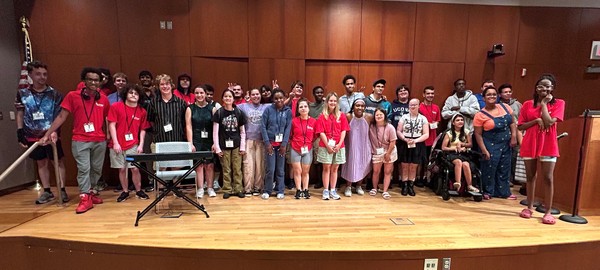
Your district/program could be featured in the next issue! Inspire others by submitting your success stories or achievements! We look forward to hearing from you!
Fill out the Abilities in Action Submission Form (opens in a new window)
Training and Professional Development Highlights
Planning and Placement Team Leadership Institute (PPT LI)
The Planning and Placement Team Leadership Institute (PPT LI) is a relationship-centered, multifaceted professional learning initiative designed to cultivate leaders who inspire collaboration and guide teams in developing compliant, student-centered programming. Grounded in equitable partnerships and shared responsibility, PPT LI supports participants in building the skills needed to facilitate productive meetings, understand foundational legal requirements, and engage in collaborative problem-solving. The institute emphasizes growing team capacity through shared learning, reflective practice, and hands-on application. PPT LI champions a leadership model rooted in the strategic premise that effective school leadership is not merely a function of procedural compliance, but an outcome of high-quality professional relationships. This statewide initiative is funded by the Connecticut State Department of Education (CSDE) Bureau of Special Education (BSE) and offered in partnership with the Connecticut Parent Advocacy Center (CPAC), the RESC Alliance, and the State Education Resource Center (SERC).
PPT LI Offerings Include:
- PPT LI Full Series: A year-long hybrid learning experience for professionals who lead PPT meetings. Through a blend of asynchronous and synchronous sessions, participants balance technical legal knowledge with relational leadership strategies and receive streamlined access to tools and resources.
- PPT LI for General Education Administrators: Designed specifically for general education leaders and their designees, this series strengthens leadership competencies often underrepresented in traditional educator preparation. The format includes two full-day, in-person sessions and two half-day, virtual sessions focused on practical application.
- PPT Leader Community of Practice (CoP): A statewide, collaborative network bringing current and aspiring PPT leaders together for monthly one-hour virtual sessions. Participants explore key concepts, engage in shared problem-solving, learn from trainers and guest speakers, and access a shared folder of curated resources and best-practice tools.
PPT LI offerings will be offered in the 2026-2027 school year with initial sessions beginning early this fall. For more information or registration details, please contact Julia Seymour, Lead Facilitator, at jseymour@eastconn.org, or Elisa Laudati, BSE Point of Contact, elisa.laudati@ct.gov.
IEP Quality and CT-SEDS: Advancing Professional Learning and Support Statewide
The Connecticut State Department of Education’s IEP Quality and CT-SEDS initiative provides a coordinated system of professional learning and technical assistance for educators statewide. Through opportunities tailored to educators’ roles and experience levels, the initiative supports high-quality IEP development, CT-SEDS proficiency, procedural compliance, and improved outcomes for students with disabilities.
Expanding Professional Learning
IEP Quality Training
The IEP Quality School Leadership Series has expanded to include:
- IEP Quality Training for School Leadership Teams;
- Special Education Procedural Foundations; and
- Prior Written Notice Training Extension.
Together, these offerings strengthen leaders’ capacity to support high-quality IEP development, reinforce IDEA procedural requirements, and promote collaboration among special and general educators. To date, the IEP Quality School Leadership Series has 870 registrations across its professional learning offerings.
CSDE is also piloting a Progress Monitoring Training Extension that builds on discipline-specific Goal Development Training. The extension reinforces the connection between measurable IEP goals and sustainable progress-monitoring practices that help teams evaluate student response and ensure meaningful educational benefit.
CT-SEDS Proficiency Training
New CT-SEDS Proficiency Training will include a targeted session on the Gifted and Talented process. The RESC Alliance is also collaborating with CSDE’s Performance Office to provide more consistent training for new and existing OSEP Data Managers.
These additions expand the continuum of support available to educators and administrators responsible for implementing and maintaining effective special education processes within CT-SEDS.
Ongoing Technical Assistance
Professional learning is reinforced by the CT-SEDS Help Desk, maintained by the RESC Alliance in partnership with CSDE. During the 2025–26 school year, the Help Desk responded to approximately 15,000 requests.
This ongoing assistance helps educators address questions, apply professional learning, and navigate CT-SEDS processes with greater consistency and confidence.
Looking Ahead
During the 2026–27 school year, CSDE, the RESC Alliance, and SERC will pilot the Special Education Review and Reflection Tool—Part I: Quality IEP Development. Building on work initiated through the State Personnel Development Grant, the tool provides a structured process for reflection, collaborative review, and continuous improvement. In Fall 2026, select districts will participate in professional learning and special education coaching to help validate the tool as a statewide resource. Publication, accompanied by continued implementation support, is anticipated in Spring 2027.
Explore Available Opportunities
School leaders and certified educators may explore statewide IEP Quality and CT-SEDS professional learning opportunities.
District administrators seeking IEP Quality or CT-SEDS Proficiency Training aligned with local priorities and schedules may submit an in-district training request.
Additional Special Education Professional Development Opportunities
If you’d like to be kept up to date with SERC’s professional development offerings, please join our email list.
SERC offers comprehensive in-district technical assistance and support, online courses and learning modules, resources through the SERC Library and website, and other means to serve the unique needs of the learner. For a list of activities please visit SERC’s event page: Events - State Education Resource Center

Resources
Launch of the Paraeducator Preparation Academy
The Connecticut State Department of Education’s newly launched Paraeducator Preparation Academy begins this month! Funded thanks to allocations in the state budget for educator recruitment from the Governor and the Legislature, this six-week program prepares aspiring paraeducators for the ParaPathways assessment required for employment in Connecticut by providing instruction from certified bilingual educators, covering the full cost of study materials and the exam, and offering Spanish-language support. For more information, please refer to the press release: Governor Lamont Announces Registration Open for Connecticut’s New Paraeducator Preparation Academy.
Special Ed Connection
Don’t forget! CSDE / Bureau of Special Education provides your LEA with free access to Special Ed Connection® (www.specialedconnection.com)
Special Ed Connection® is your one-stop-shop for:
- Ready-to-use charts, checklists and professional development tools to guide and train staff
- Best practices, guidance and strategies for handling everyday challenges - backed by case law
- Quick tips and the latest news and trends in special education
- The most current policy changes coming from the Department of Education, OSEP, OSERS, OCR and other federal agencies
- Searchable access to decisions and rulings from all states and territories
- “What it means” explanation of each case’s key points in a few sentences
If you need your login information, want to update your user list or would like to schedule a webinar orientation for your staff contact the Special Ed Connection® Help Desk Team: specialedconnection@lrp.com or 800-515-4577 x6303.

Upcoming Events
23rd Annual Bureau of Special Education Back to School Session: Monday, September 14, 2026
- Location: The Connecticut Convention Center
- Time: 8:30 a.m.–1:15 p.m.
- Check-in/Registration: begins at 7:30 a.m.
Plenary Session 8:30–10:30 a.m.
- Student Performance
- Welcoming Remarks from Charlene M. Russell-Tucker, Commissioner of Education
- Bureau of Special Education Update from Bryan Klimkiewicz and Katherine Matz
- Keynote Speakers
- Youth Panel
Breakout Sessions 11:00 a.m.–12:00 p.m. and 12:15–1:15 p.m.
Topics:
- Strengthening District Programming in supporting students with intensive needs
- Youth Panel / Student Leadership
- IEP Facilitation
- IEP Quality Rubric
- Eligibility Determination Guidelines
- High-Quality Inclusive Programming Rubric/Self-Assessment
- Recruitment / Retention (Supporting New Special Education Teachers)
- Special Education Workload Analysis Study
For registration and more information, please visit: https://serc.info/bts26reg