Breastfeeding
Breastfeeding

Click above to play video!
In response to a need for resources that also speak to breastfeeding while on Medications for Addiction Treatment/Medications for Opioid Use Disorder (MAT/MOUD), DMHAS collaborated with DPH and local providers to develop resources to disseminate among our pregnant and parenting programs and also statewide for other programs and providers to utilize. By following these recommendations, we can support all people who want to breastfeed.
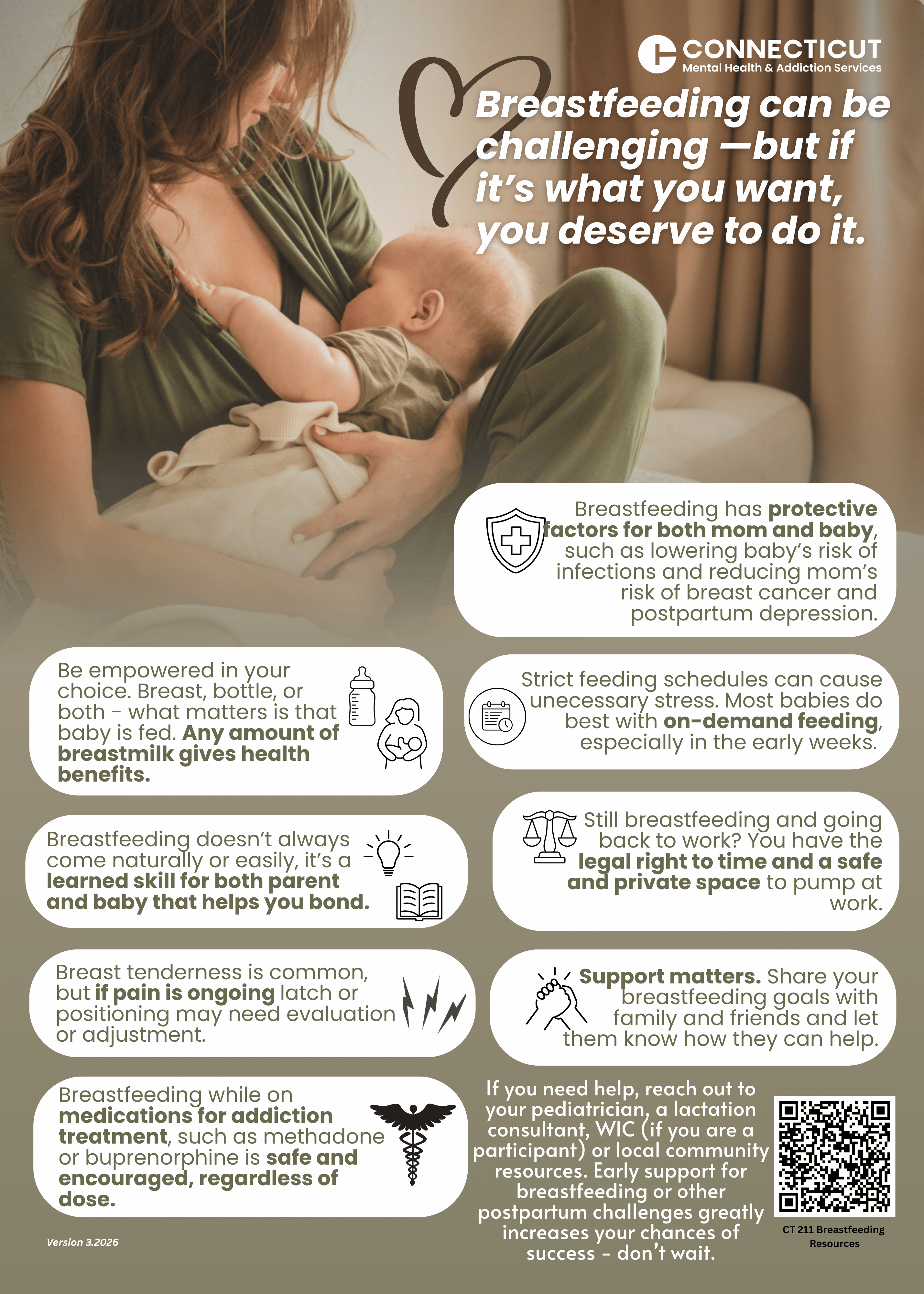
- Be empowered in your choice. Breast, bottle, or both - what matters is that baby is fed. Any amount of breastmilk gives health benefits.
- Breastfeeding has protective factors for both mom and baby, such as lowering baby’s risk of infections and reducing mom’s risk of breast cancer and postpartum depression.
- Breastfeeding doesn’t always come naturally or easily, it’s a learned skill for both parent and baby that helps you bond.
- Breast tenderness is common, but if pain is ongoing latch or positioning may need evaluation or adjustment.
- Breastfeeding while on medications for addiction treatment, such as methadone or buprenorphine is safe and encouraged, regardless of dose.
- Strict feeding schedules can cause unnecessary stress. Most babies do best with on-demand feeding, especially in the early weeks.
- Still breastfeeding and going back to work? You have the legal right to time and a safe and private space to pump at work.
- Support matters. Share your breastfeeding goals with family and friends and let them know how they can help.
If you need help, reach out to your pediatrician, a lactation consultant, WIC (if you are a participant) or local community resources. Early support for breastfeeding or other postpartum challenges greatly increases your chances of success - don’t wait. Visit 211 for local breastfeeding resources.
These recommendations are also outlined in the resources below for programs to share with their clients and patients: