

Kratom
Kratom: What You Need to Know
Legal Status
Kratom is a Schedule 1 controlled substance in Connecticut. Per Sec. 4 of Public Act 25-101 and a regulatory process conducted by the Department of Consumer Protection, kratom (Mitragyna speciosa), including its leaves, stem, extracts, and the synthetic derivative 7-OH (7-hydroxymitragynine), are classified as Schedule 1 controlled substances. Possession, sale, and distribution are prohibited and may result in criminal charges. For more information, please visit this page from the Connecticut Department of Consumer Protection.
What is Kratom?
Kratom is a plant-based substance derived from the leaves of Mitragyna speciosa, a tree native to Southeast Asia. In the U.S., it is widely marketed as an herbal supplement and sold at gas stations, convenience stores, smoke shops, and online – often labeled as an “all-natural” energy aid, pain reliever, or mood enhancer.
Kratom products were available in many forms, including powder, capsules, pre-mixed drinks, gummies, and candy AND were accessible to people of all ages with no age verification, product testing requirements or labeling standards.
The FDA has not approved any kratom products for medical use and warns against its use due to serious health risks.
⚠️ Health Risks and Warning Signs ⚠️
Despite being marketed as a natural supplement, kratom carries significant health risks. Because products were sold without testing or quality controls, potency varied widely from batch to another – making it especially dangerous.
Short-Term Effects
Nausea, vomiting, constipation, dizziness, rapid heart rate, elevated blood pressure, agitation, sedation, and impaired coordination.
Long-Term & Serious Risks
Dependence and addiction, liver toxicity, seizures, psychosis, respiratory depression, and multiple deaths have been associated with kratom use according to the FDA.
Withdrawal Warning
People who have been using kratom regularly may experience significant withdrawal symptoms including muscle aches, insomnia, irritability, anxiety, nausea, and intense cravings. Medical supervision during withdrawal is strongly recommended. Do not stop abruptly without consulting a healthcare provider.
Underlying Mental Health
Clinical data shows that individuals presenting for kratom-related treatment often have underlying mental health conditions including anxiety, depression, and PTSD. Effective treatment addresses both substance use and mental health needs together.
Getting Help: Treatment and Recovery
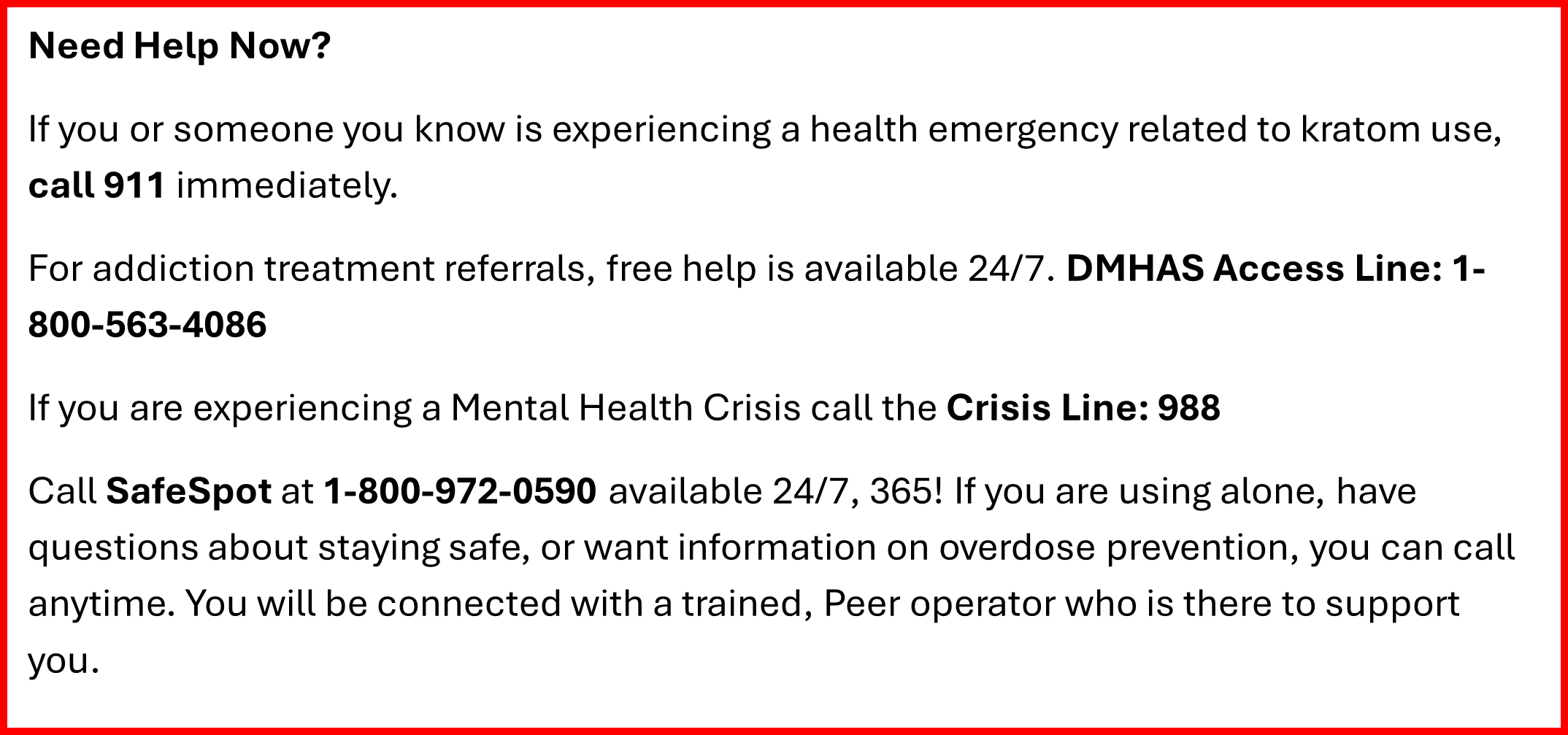
If you have been using kratom regularly and are considering stopping, please reach out to a healthcare provider who can help you manage withdrawal. You can connect with a Withdrawal Management (detoxification) provider by calling the DMHAS Treatment Access Line 1-800-563-4086.
If you or someone you care about has been using kratom regularly and is now struggling, whether it is due to the recent changes in the law, physical dependence, or a desire to stop – you are not alone and help is available in Connecticut.
DMHAS funds a statewide network of community-based addiction treatment providers offering a full continuum of care, including withdrawal management (detoxification), outpatient counseling, medication-assisted treatment (MAT) and residential services.
1. Call the DMHAS Access Line at 1-800-563-4086. This is open 24/7, free and confidential. A trained specialist can connect you to the right level of care.
2. Talk to your doctor or healthcare provider about your kratom use, especially if you have been using daily or in high doses. Medically supervised withdrawal management (detoxification) may be recommended.
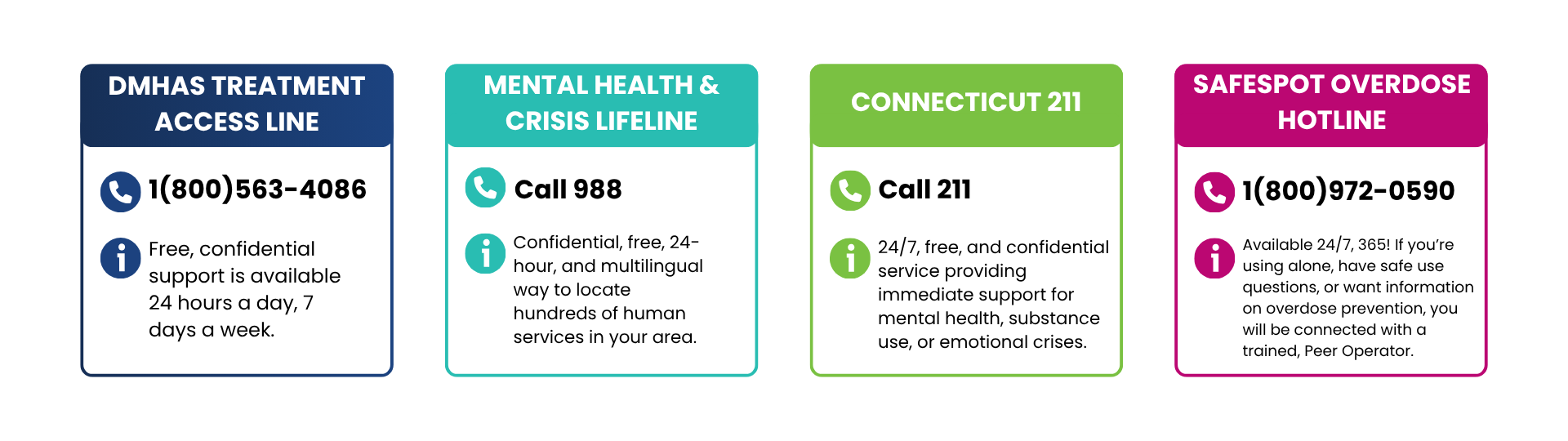
3. Contact your local treatment provider directly. Use 211 Helpline to find programs near you.
4. Consider peer support. Recovery community organizations across the state offer peer coaching, support groups, and recovery coaching.
5. Address underlying mental health needs. Many people use kratom to cope with anxiety, chronic pain or opioid withdrawal. Contact your local treatment provider or call 211 Helpline to find programs near you.
Insurance & Cost: Medicaid/HUSKY Health covers substance use treatment services. Most DMHAS-funded providers offer services on a sliding fee scale and funds providers to serve uninsured individuals with no co-pay. Do not let cost be a barrier to seeking help.
Information for Families and Loved Ones
Learning that a family member has been using kratom can be alarming, especially in light of its new legal status. Here is how you can help.
- Approach the conversation with care and without judgement. Addiction is a health condition. For more information about kratom and other substances go to Substance Use Recovery | Drug Free CT.
- Encourage your loved one to speak with a healthcare provider before stopping kratom suddenly, especially if they use it daily.
- Reach out to Connecticut Community for Addiction Recovery (CCAR) for family support resources and peer coaching.
- Connecticut Addiction Services offers a variety of resources and support systems available for individuals struggling with substance use.
- To Get Support check out Treatment Options | LiveLOUD to find resources across the state.
- If you think someone has overdosed on kratom, call 911 immediately. Stay with the person and give naloxone if you have it. Naloxone is safe to use even if it turns out not to be needed, and it may help in some kratom-involved overdoses.
Get Help Now
Key Resources
Find a CT Treatment Provider: DMHAS Provider Directory
SAMHSA Treatment Locator: findtreatment.gov
DCP Kratom Scheduling: DCP knowledge base
CT Clearinghouse: Substance use education and resources
LiveLoud: Resources and information about opioids